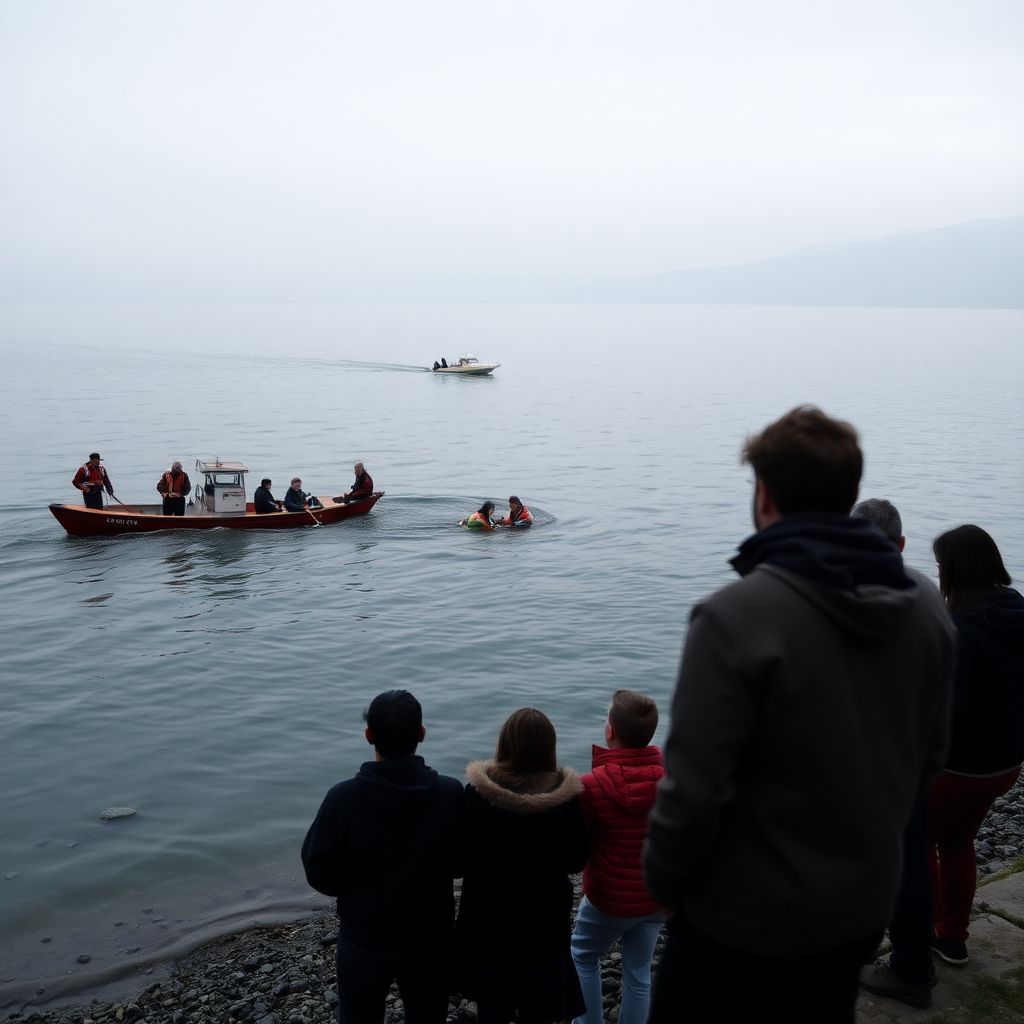
Four friends went to cool off in a lake in Bursa. Within hours, their summer outing had turned into a double tragedy.
Two young men, 21-year-old İsmail İmamoğlu and 19-year-old Bünyamin Kadı, lost their lives after disappearing in the waters of Lake İznik, in the Orhangazi district. Despite desperate efforts by their friends and an intensive search operation by rescue teams, both were later found dead.
According to initial information, the group had traveled from Bursa city center to Orhangazi to spend time together and escape the heat. They chose the Sölöz area of Lake İznik, a popular spot with locals for swimming and picnicking. At some point after entering the water, İmamoğlu and Kadı were no longer visible to the others.
When their friends realized they had lost sight of the two men and could not locate them in the water or along the shore, they immediately raised the alarm. Emergency services were called to the scene without delay. Health teams and gendarmerie units were dispatched first, followed by specialized search and rescue personnel.
Teams from the Gendarmerie Coast Guard Command began scouring the lake, using boats and equipment suited for search operations on inland waters. As minutes turned into hours, the hope of finding the missing friends alive diminished, but the operation continued without interruption.
After sustained efforts by the search and rescue crews, both young men were finally located in the lake. Their bodies were recovered from the water by marine police from Mudanya. The remains of İsmail İmamoğlu and Bünyamin Kadı were transported to the morgue of Orhangazi State Hospital for further procedures and examinations.
What started as a simple plan to swim and relax quickly became a stark reminder of the hidden dangers in natural water bodies. Initial reports do not specify whether the two young men could swim or whether strong currents, sudden depth changes, or a health issue may have played a role. Authorities are expected to examine the circumstances more closely as part of their standard investigation into such incidents.
Residents in the area note that Lake İznik, while visually calm, can have abrupt drop-offs in depth and areas where the bottom is uneven or slippery. In some parts of the lake, the water can become deep very quickly just a few steps from the shore, catching inexperienced swimmers off guard. Even strong swimmers may encounter difficulties if they are not familiar with the conditions.
Experts frequently emphasize that natural lakes and rivers do not have the controlled environment of a swimming pool. There are no lifeguards in many areas, visibility under water is often limited, and hazards such as sudden cold spots, hidden rocks, or entangling plants can increase the risk. In addition, panic in deep water can cause even capable swimmers to tire rapidly and lose control.
Following incidents like this, safety recommendations are again being highlighted:
– Avoid swimming alone or in places without supervision.
– Do not enter the water after alcohol consumption or when extremely tired.
– Stay close to the shore, especially if unfamiliar with the area.
– Be particularly cautious in locations where the depth changes suddenly.
– Keep constant visual contact with the people you are swimming with, especially the youngest and least experienced.
Psychologists point out that accidents of this kind leave deep emotional scars on friends and families. The surviving members of the group who witnessed their friends disappear in the water may struggle with guilt and trauma, even though they did what they could by quickly calling for help. Local support networks and professional counseling can play an important role in helping them process what happened.
While Bursa was dealing with the shock of the lake tragedy, Istanbul was facing a different kind of danger created by severe weather. In the Beşiktaş district, heavy rainfall caused serious disruption and led to life-threatening situations on the streets.
On Ihlamurdere Street, where floodwaters gathered rapidly, a woman attempting to cross the road was suddenly caught in strong, fast-moving water. The flow nearly dragged her away, turning the street into a hazardous channel. Surrounding pedestrians noticed her struggle in time and rushed to pull her to safety, preventing a possible disaster.
The scenes in Beşiktaş once again demonstrated how quickly urban flooding can escalate into an emergency. Even a short, intense downpour can overwhelm drainage systems, flood low-lying roads, and create powerful currents that pedestrians and drivers often underestimate. In such conditions, something as ordinary as crossing the street can become extremely dangerous.
Emergency management experts frequently stress simple but vital rules for heavy-rain situations: avoid attempting to walk or drive through moving water, do not underestimate the depth of flooded areas, and seek higher ground as soon as conditions begin to look unsafe. A layer of water that appears shallow can hide open manholes, debris, or deep spots that can cause a person to lose balance in seconds.
When looking at both incidents together – the drownings in Lake İznik and the near-tragedy in Beşiktaş – a common theme emerges: water-related dangers can arise very suddenly, often during everyday activities that feel routine and harmless. Whether in a natural setting like a lake or in the middle of a busy city street, underestimating water can have fatal consequences.
Local authorities are expected to review safety measures in frequently used swimming areas around Bursa, including clearer warning signs about depth and currents, and possibly increasing patrols or guidance during peak summer months. Public awareness campaigns may also be stepped up, reminding residents and visitors of the basic precautions to take when spending time near lakes, rivers, or the sea.
In cities like Istanbul, infrastructure improvements continue to be a priority, but officials also underline that individual behavior is crucial. People are urged to follow weather alerts, postpone non-essential trips during heavy rain, and prioritize safety over haste. Quick decisions based on habit – such as assuming a familiar road is safe – can be dangerous during severe weather.
Tragedies like the loss of İsmail İmamoğlu and Bünyamin Kadı inevitably spark discussion about prevention. Specialists recommend integrating water safety education more systematically into schools, community programs, and family life. Teaching children and young adults not only how to swim, but also how to recognize risks, assist others safely, and respond to emergencies can reduce the likelihood of similar events in the future.
Ultimately, both the lake accident in Bursa and the flooding incident in Beşiktaş underline the same message: water, in all its forms, commands respect. Awareness, caution, and preparedness are essential – not to create fear, but to allow people to enjoy natural and urban environments without turning moments of leisure or routine into scenes of sorrow.