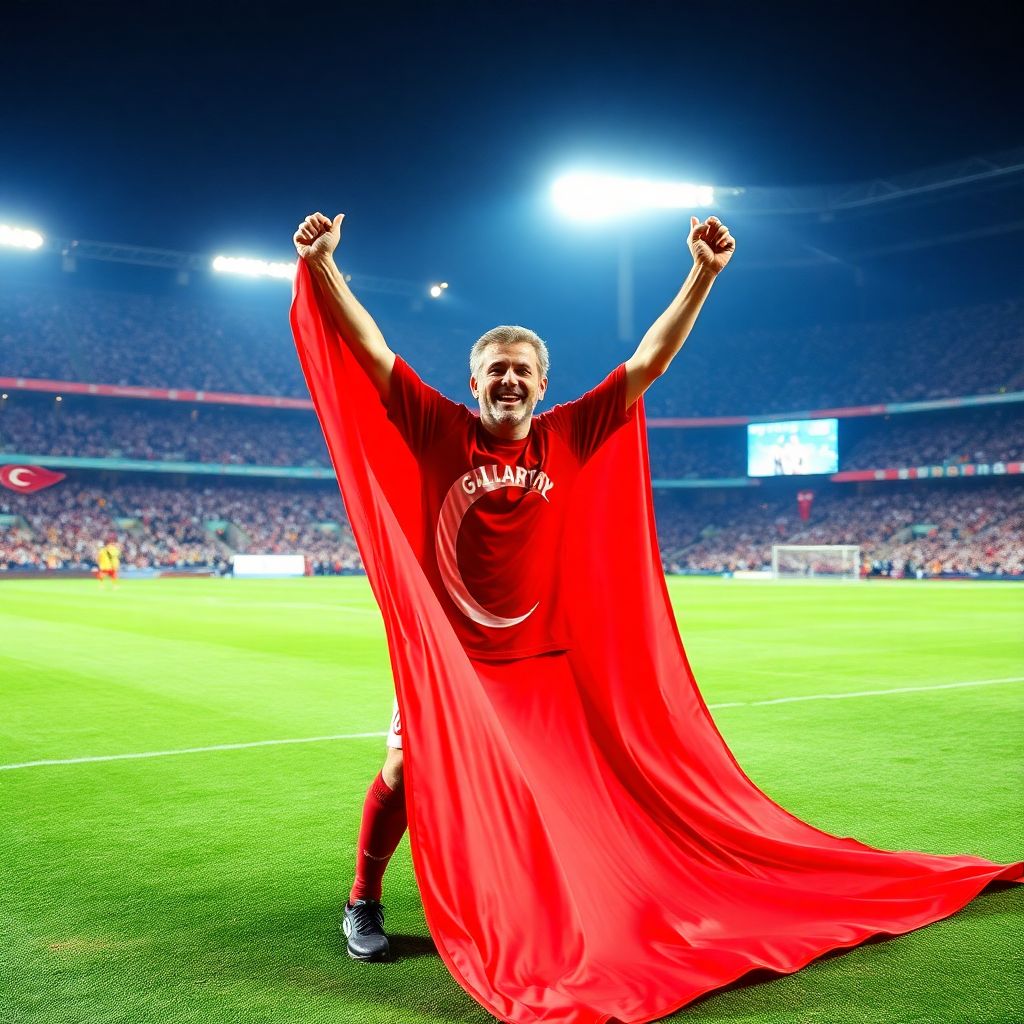
Fenerbahçe are champions again, yet one of the biggest talking points of the celebration did not come from a current player or coach, but from a 71‑year‑old Scottish legend who once turned a football match into a cultural earthquake. Three decades after his infamous flag‑planting at Kadıköy, Graeme Souness has repeated the gesture in Antalya – and the show goes on.
Back in the 1995-96 season, the Türkiye Cup final between Fenerbahçe and Galatasaray produced one of the most iconic images in Turkish football history. After Galatasaray’s triumph at Fenerbahçe’s Şükrü Saracoğlu Stadium, then‑coach Graeme Souness grabbed a giant yellow‑red flag, marched towards the centre circle and planted it in the heart of Kadıköy. The act instantly turned him into a cult hero for Galatasaray fans and a villain for Fenerbahçe supporters, feeding a rivalry that was already among the fiercest in the world.
Thirty years on from that night, Souness has stepped back into the spotlight. This time, the stage was not a hostile stadium in Istanbul, but a beachfront in Antalya during title celebrations. As festivities unfolded, Souness appeared, took hold of a massive yellow‑red flag and drove it defiantly into the sand in the middle of the beach, echoing his legendary Kadıköy gesture. The message was unmistakable: the symbol that defined his Galatasaray legacy is still very much alive.
Videos and images from Antalya spread rapidly, once again dividing opinion. For Galatasaray followers, it was pure nostalgia – a reminder of a triumphant era and of the coach who dared to challenge Fenerbahçe on their own turf. For Fenerbahçe fans, it re‑opened an old wound right in the middle of their own championship joy, proof that the psychological battle between the two clubs never really ends, even when one side has the trophy in its hands.
Souness himself seemed fully aware of the emotional charge behind his action. Just as in Kadıköy, he did not need words. The simple act of raising the flag and fixing it in the ground was enough to evoke three decades of rivalry, resentment and pride. In Antalya, the beach became a symbolic battlefield, mirroring the centre circle he once claimed in Istanbul.
What makes this new flag show particularly striking is the timing. Fenerbahçe have just secured the title, closing a dramatic season in which the balance of power between Istanbul’s giants was once again under the microscope. While the club was celebrating a long‑awaited championship, one of Galatasaray’s most mythologised figures stepped into the frame to remind everyone that history – and provocation – never go out of fashion.
The re‑enactment also underlines how unique Souness’s relationship with Turkish football remains. Few foreign coaches have left such a deep mark on the Super Lig’s narrative. For many supporters, his name is not primarily associated with tactics or formations, but with a single, theatrical act that transcended sport and entered popular culture. Being invited to the celebrations in Antalya and encouraged to repeat that moment shows just how strong his persona still is in the eyes of Galatasaray’s faithful.
At the same time, the Antalya scene speaks volumes about how the Galatasaray-Fenerbahçe rivalry has evolved. What once was a spontaneous, explosive decision by a fiery coach has now become a conscious piece of theatre, replayed for a new generation. Fans who were not even born when Souness first pierced the Kadıköy turf can now connect with that history through this “sequel” performance on the Mediterranean coast.
The reactions from Fenerbahçe’s side highlight the thin line between rivalry and respect. Many supporters will never forgive the original flag incident; for them, it remains an unforgivable insult on their own pitch. Others, however, grudgingly admit that the Souness gesture is part of what makes this derby unique – a symbol of just how much is at stake every time the two clubs collide, both on and off the pitch.
It is also impossible to ignore the psychological dimension. Planting a flag has always been a metaphor for conquest and dominance, and in football that symbolism is amplified. In Kadıköy, Souness declared that Galatasaray had come into enemy territory and left their mark. In Antalya, repeating the movement amid celebration was a way of saying: this story did not end in the 1990s; the colours and the pride they represent are still being defended.
While Souness’s Antalya show dominated the emotional narrative, Turkish football is simultaneously being reshaped by an intense transfer market. Names like Mauro Icardi and Victor Osimhen continue to fuel speculation, with rumours sending Icardi towards Italy and Osimhen being linked with major moves from Madrid to Istanbul. Talk of Galatasaray exploring ambitious options such as Martin Ødegaard irritates observers in England, who see the Super Lig flexing its growing financial and sporting muscle.
At the same time, Beşiktaş are pushing hard to rebuild, completing new signings and targeting players like Leandro Trossard, according to reports, while also being connected with high‑profile defenders such as Nathan Aké. Fenerbahçe, for their part, have been busy fishing in the heart of Florya, drawing talent from under the nose of their arch‑rivals and preparing to dress yet another key player in the iconic yellow‑navy stripes.
Defensive reinforcements are a particular focus. The arrival of a new centre‑back like Nathan Aké has been framed as an answer to both sporting and symbolic needs: a player who can stabilise the back line and embody the club’s ambition. At the same time, questions linger about what happens if important pieces such as Oosterwolde depart. Fenerbahçe’s transfer strategy is being built around preventing that kind of destabilising exit while still raising the overall quality of the squad.
Galatasaray are moving in parallel, scouring tournaments like the World Cup for emerging talent. A young left‑footed centre‑back born in 2005, who impressed on the global stage, is being touted as the next defensive cornerstone in Istanbul. Stories of players like Jhon Durán supposedly accepting minimal or even symbolic wages to wear the yellow‑red shirt reinforce the myth of Galatasaray as a magnet for ambition and prestige rather than just money.
In midfield and attack, Turkish clubs continue to chase players who can immediately shift the balance of power. Orkun Kökçü’s valuation climbing towards 50 million euros is being framed as the kind of transfer that could “save” a team like Beşiktaş almost single‑handedly, while Fenerbahçe are repeatedly linked with strikers considered more exciting than names like Sörloth or Guirassy. The dream is to find that one centre‑forward who can embody the club for a decade, the way past legends have done.
Off the pitch, Fenerbahçe have launched an open confrontation with internet personalities and influencers who, according to the club, have targeted them with orchestrated campaigns. Slogans once screamed in protest, such as “Aziz Yıldırım resign,” are now being revisited as examples of how digital pressure and narrative warfare can shape the public image of a club. The board’s response indicates a new era in which the battle for reputation is almost as fierce as the fight for trophies.
Infrastructure and long‑term planning add another layer to this turbulent landscape. Beşiktaş are reportedly sounding the alarm about the club’s structural limits, with even the iconic Dikilitaş area no longer sufficient for modern demands. Over in Aslantepe, Galatasaray’s stadium and surrounding projects are said to be running three years behind the original schedule, illustrating the gap between grand visions and complex realities.
Amid all these transfers, rumours, and strategic battles, Graeme Souness’s flag in Antalya stands out as a reminder of what ultimately drives everything: emotion. Trophies, signings and stadium projects matter, but it is moments of pure symbolism that carve themselves into collective memory. Thirty years after Kadıköy, a simple yellow‑red flag planted in the sand is enough to revive old arguments, spark new debates and prove that in Turkish football, history is never just in the past – it is continuously being replayed, reinterpreted and relived.
Fenerbahçe’s title will go down in the record books; that is the factual, measurable part of the story. What people will talk about, however, years from now, may well be the image of a Scottish coach on a sunny Antalya beach, flag in hand, once again challenging the boundaries of rivalry. In a country where football is a way of life, the Souness show is still very much in progress.