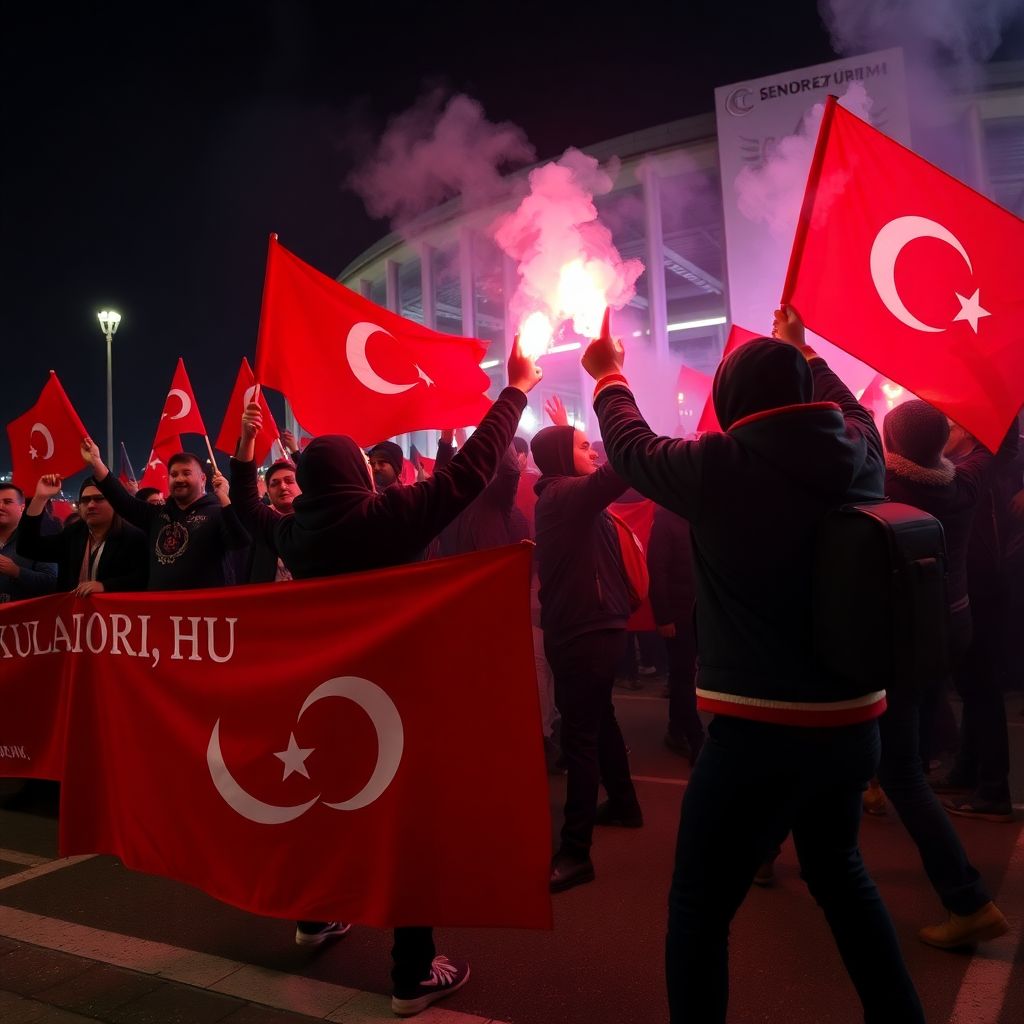
3 July flashpoint: Fenerbahçe and Trabzonspor reignite the war of words
Fifteen years after one of the most controversial chapters in Turkish football history, the 3 July 2011 process is still shaping the agenda. The so‑called “3 July Case” has once again brought Fenerbahçe and Trabzonspor face to face, this time in a fierce exchange of messages on social media that turned into a symbolic time‑tunnel duel.
What started as an anniversary remembrance quickly evolved into a new front in the long‑running dispute over the 2010‑2011 Süper Lig title. Both clubs used powerful, emotionally charged slogans to underline their own version of history and to remind everyone that, for them, this story is far from over.
—
Fenerbahçe: “We stood tall against the plot, our trophy is in our museum”
Fenerbahçe opened the latest round of statements by returning to the narrative they have consistently defended since 2011. In their posts, the club emphasised that on 3 July, “they thought they could destroy us with a plot,” but that the Fenerbahçe community answered in unity.
The club reminded supporters of the scenes from that period: tens of thousands in the streets, crowds gathering in front of courthouses, full stands in the stadiums. According to Fenerbahçe, these were the days when the slogan “One voice, one heart” gained its deepest meaning and when the “FenerbahçeYıkılmaz” (“Fenerbahçe cannot be destroyed”) motto was born and internalised.
By underlining “our cup is in our museum,” Fenerbahçe once again highlighted a key point: the club considers the 2010‑2011 league title to be indisputably theirs, both statutorily and morally. For them, the events of 3 July were an operation aimed at the club’s existence, and the eventual legal outcomes are perceived as confirmation that they were the victims of a conspiracy rather than perpetrators of match‑fixing.
—
Trabzonspor’s sharp reply: “You were caught on the radar, we are the spotless champions”
Trabzonspor did not let Fenerbahçe’s messages go unanswered. The Black Sea club responded with posts that were just as sharp, reasserting their own unyielding stance on the 2010‑2011 season. Using the slogan “You were caught on the radar, we are the spotless champions,” Trabzonspor framed themselves as the rightful winners of that campaign.
In their communication, the club emphasised the term “Tertemiz” (“spotlessly clean”), signalling that they see their own path to the title that season as free of any ethical or legal stains. The message “We will never forget! We will always shout it out! The champion of the 2010‑2011 season is us!” was designed to mobilise their supporters and underline that, regardless of the official records, they view that trophy as morally theirs.
With this response, Trabzonspor not only countered Fenerbahçe’s claims but also reminded everyone that they feel they were the victims of a systemic injustice, one which they believe cost them a championship that should have been theirs.
—
A 15‑year‑old wound that refuses to heal
The renewed messaging war shows that 3 July 2011 remains an open wound for Turkish football. Rather than being a closed legal case stored in dusty archives, it is still an emotional and political battleground where identity, justice and sporting success are tightly intertwined.
For Fenerbahçe supporters, that period is remembered as a coordinated hit against the club’s very existence, an attempt to marginalise and punish one of the biggest institutions in the country. The phrase “plot” has become central to their collective memory, and the sense of having “resisted and survived” is now part of Fenerbahçe’s modern identity.
For Trabzonspor, the same process is remembered as the moment when they believe a deserved championship slipped through their hands under the shadow of alleged irregularities. Their insistence on the word “clean” reflects a deeply rooted need for recognition and historical correction. To them, insisting on the 2010‑2011 title is not only about a trophy but about honour and the moral record of Turkish football.
—
Social media as the new stadium of conflict
What once played out in stadiums, tribunals and on television panels has now moved decisively onto digital platforms. The latest 3 July anniversary made this clear: club accounts, slogans, visuals and videos have turned social media into a virtual stadium where the stands are filled with comments and shares instead of chants.
Fenerbahçe’s posts leaned on archival footage, crowd images and strong slogans such as “We will not forget, we will not let it be forgotten” to strengthen the feeling of resistance. Trabzonspor countered with assertive visuals that placed the 2010‑2011 season front and centre, using the “spotless champion” narrative to rally their base.
This digital confrontation also reflects a broader trend: in modern football, communication strategies are almost as important as tactical plans on the pitch. Narratives, symbols and collective memory are managed through carefully designed messages, and anniversaries like 3 July become opportunities to reaffirm identity and shape public opinion.
—
Why the 2010‑2011 title matters so much
To outsiders, a dispute over a title from 15 years ago might look like an obsession. But for both Fenerbahçe and Trabzonspor, the 2010‑2011 season represents much more than a line in the record books.
For Fenerbahçe, that championship is intertwined with survival. They finished the season on top and then immediately found themselves at the centre of criminal investigations and sporting sanctions. The club’s claim is that, despite every obstacle, that trophy was rightfully earned on the pitch and therefore belongs in their museum as a symbol of resilience.
For Trabzonspor, that same season is seen as the culmination of years of struggle to break Istanbul’s dominance. The Black Sea club and its fans argue that without the off‑field controversies, they would have been crowned champions. Therefore, holding onto the claim “we are the true champions” is a way of protecting what they see as stolen history.
This clash of perceptions explains why neither side is willing to soften its language, even after a decade and a half. Every new anniversary, every commemorative message, becomes another chapter in this ongoing struggle for narrative control.
—
The broader impact on Turkish football culture
The 3 July case did not only pit two big clubs against each other; it fundamentally reshaped how fans all over the country perceive justice, institutions and the integrity of the game. It triggered deep mistrust towards governing bodies, legal processes and even media narratives.
For a new generation of supporters who were children or teenagers in 2011, the 3 July events have become a foundational story, passed down through family conversations, fan forums and matchday chants. This means the conflict is constantly renewed, as fresh groups of fans embrace the same slogans and emotional positions their predecessors held.
As a result, Turkish football often finds itself locked in debates about the past while struggling to build a calmer, more stable future. Every refereeing decision, every controversial moment in a title race is quickly tied back to the memory of 3 July, turning sports discussions into arguments about old wounds.
—
Symbolic language: “plot”, “spotless”, “unbreakable”
The wording used by both clubs is not accidental. Each term has been carefully chosen and repeated so many times that it now functions like a brand.
– “Plot” and “conspiracy” place Fenerbahçe in the role of a victim resisting a powerful, hidden enemy.
– “Unbreakable” and similar phrases present the club and its supporters as a fortress that cannot be toppled, no matter the pressure.
– “Spotless” and “clean champion” present Trabzonspor as the embodiment of moral clarity, suggesting that whatever happened off the pitch, their own performance was ethically unquestionable.
These slogans do more than summarise positions: they turn complex legal and sporting processes into simple, emotionally powerful narratives that can be easily shared, chanted and remembered.
—
Can this rivalry ever move beyond 3 July?
One of the central questions now is whether relations between Fenerbahçe and Trabzonspor – and more broadly, the atmosphere in Turkish football – can ever be fully normalised while the 3 July debate remains unresolved in the minds of millions.
On the one hand, legal processes and federation decisions have created an “official” reality that appears unlikely to change. On the other hand, the “unofficial” reality embraced by fans, based on their own beliefs and moral judgements, is just as strong and perhaps even more influential in shaping behaviour.
Without a shared narrative or at least a mutually accepted minimum consensus, every anniversary risks reopening old scars. The messaging war around this 15th year shows that, for now, both clubs see more benefit in reinforcing their own version of events than in seeking a middle ground.
—
The road ahead: identity, memory and responsibility
As Turkish football looks to the future – new stadiums, growing international visibility, bigger commercial deals – the legacy of 3 July remains a heavy burden. Fenerbahçe and Trabzonspor, as two of the main protagonists of that era, carry a particular responsibility.
How they choose their words, which values they highlight and how they address not only their own fans but also the wider football public will play a major role in shaping the next decade. They can either continue to escalate the narrative battle every anniversary, or gradually look for ways to keep their memories alive without turning every commemoration into a new conflict.
What is clear is that the 2010‑2011 season and the 3 July process will not simply disappear from the agenda. For both clubs, that period has become part of their core identity. The latest flurry of posts – “We were not destroyed by the plot, our cup is in our museum” on one side, “You were caught on the radar, the spotless champions are us” on the other – is yet another reminder that this is not just a debate over a trophy, but a long‑running struggle over truth, justice and the right to define history.
In that sense, the 3 July messaging clash between Fenerbahçe and Trabzonspor is not just about revisiting the past. It is about deciding how the story of Turkish football will be told for years to come.