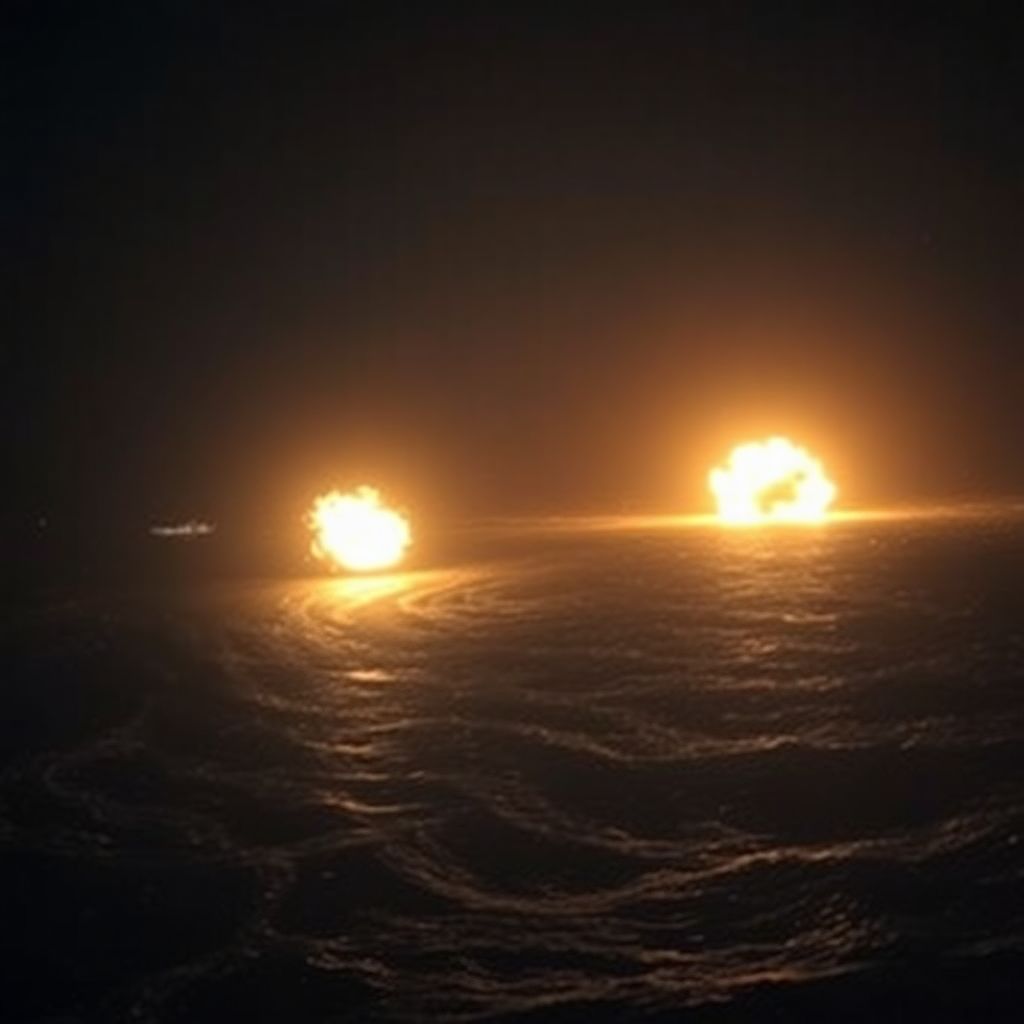
Ukraine claims strikes on three ships of Russia’s ‘shadow fleet’ in the Black Sea
The Ukrainian military says it has carried out overnight strikes against three vessels allegedly belonging to Russia’s so‑called “shadow fleet” in the Black Sea, including an oil tanker and two dry cargo ships. According to Kyiv, the operation was aimed not only at the vessels themselves but also at Russian air defence and radar infrastructure supporting naval activity in the region.
Robert Brovdi, commander of Ukraine’s Unmanned Systems Forces, announced in a written statement on social media that the attack took place during the night of 8 to 9 August. He stated that Ukrainian forces had targeted ships believed to be part of a covert Russian logistics network used to bypass sanctions and support the war effort.
Brovdi reported that an oil tanker and two dry bulk carriers were struck in different parts of the Black Sea. He did not specify the exact coordinates or the names of the vessels, nor did he provide visual evidence in the statement. However, he underlined that these ships had been previously identified by Ukrainian intelligence as elements of a clandestine fleet used for transporting fuel, raw materials and military‑related cargo.
In addition to the maritime targets, Ukrainian forces also claimed to have hit Russian air defence systems and radar installations in separate areas. These sites, according to Brovdi, were engaged as part of a broader effort to degrade Russia’s ability to protect its naval assets and to monitor Ukrainian movements over the sea and along the coastline.
Kyiv has repeatedly vowed to disrupt what it describes as Russia’s “shadow fleet” – a network of tankers and cargo vessels operating under complex ownership and flag structures. Ukrainian officials argue that this fleet plays a key role in helping Moscow circumvent international restrictions, particularly in the fields of energy exports and military logistics.
The Black Sea has become one of the central theatres of the war, with Ukraine increasingly relying on unmanned surface and aerial systems to offset Russia’s numerical and technological superiority at sea. Attacks on ships and port infrastructure, as well as on coastal radar and air defence sites, have turned the region into a zone of almost constant tension and sporadic high‑risk engagements.
Operations targeting tankers and bulk carriers are especially sensitive because of the potential environmental consequences and the risks to international shipping. Ukrainian officials contend that they focus on vessels directly or indirectly supporting Russia’s military machine. At the same time, independent verification of each individual strike, its targets and its consequences often remains difficult due to limited access to the area and the information war being waged by both sides.
Russia has not immediately confirmed or detailed the purported damage to the ships or shore‑based systems mentioned by Brovdi. In previous similar incidents, Moscow has tended either to deny significant losses or to downplay the impact of Ukrainian attacks, while emphasizing retaliatory measures against Ukrainian infrastructure.
For Ukraine, striking what it calls the shadow fleet serves several strategic purposes. Militarily, it aims to disrupt supply lines that deliver fuel and other critical materials to Russian forces. Economically, it seeks to raise the costs and risks for Russian energy exports carried by sea. Politically, such operations are intended to signal that Russia cannot rely on the Black Sea as a safe rear area.
The focus on air defence and radar systems is also part of a broader pattern. By hitting these assets, Ukrainian forces attempt to open corridors for further drone and missile strikes and to make it harder for Russia to control the maritime airspace. Successful suppression of such systems can have cumulative effects, reducing the effectiveness of Russian early warning and interception capabilities over time.
The notion of a Russian “shadow fleet” predates this particular operation but has gained prominence since the full‑scale invasion of Ukraine. Many of the vessels associated with this network are said to operate under flags of convenience, with opaque ownership structures and limited insurance clarity. That complexity complicates efforts by other states to monitor, sanction or detain suspected ships, and increases the political stakes of any military action against them.
Ukraine’s expanding Unmanned Systems Forces, led by Brovdi, are central to these types of missions. The unit coordinates the use of sea drones, reconnaissance and strike UAVs, as well as other remote platforms that allow Kyiv to project force beyond the immediate front line. These tools have become a hallmark of Ukraine’s attempts to offset conventional disadvantages by leveraging technology, agility and detailed intelligence.
However, targeting shipping in contested waters carries legal and diplomatic risks. Each such strike is scrutinized through the lens of international maritime law, questions of proportionality, and concerns about civilian crews or third‑country interests. This places additional pressure on Ukraine to justify that the chosen targets have a clear military or sanction‑evasion role directly beneficial to Russia’s war effort.
If confirmed, the latest attacks would add to a growing list of Ukrainian operations against Russian naval infrastructure and logistics in the Black Sea and surrounding regions. Over recent months, Ukraine has increasingly demonstrated its ability to strike not only warships and military ports but also the broader logistical ecosystem that sustains Russian operations afloat.
At the same time, the full impact of these strikes often becomes clear only over weeks or months, as patterns of traffic, insurance costs, rerouting of cargo, and changes in Russian naval posture gradually reveal themselves. The contest over the Black Sea is thus not limited to headline‑grabbing explosions, but extends to a prolonged struggle over energy, trade, surveillance and freedom of movement in one of the world’s key maritime corridors.