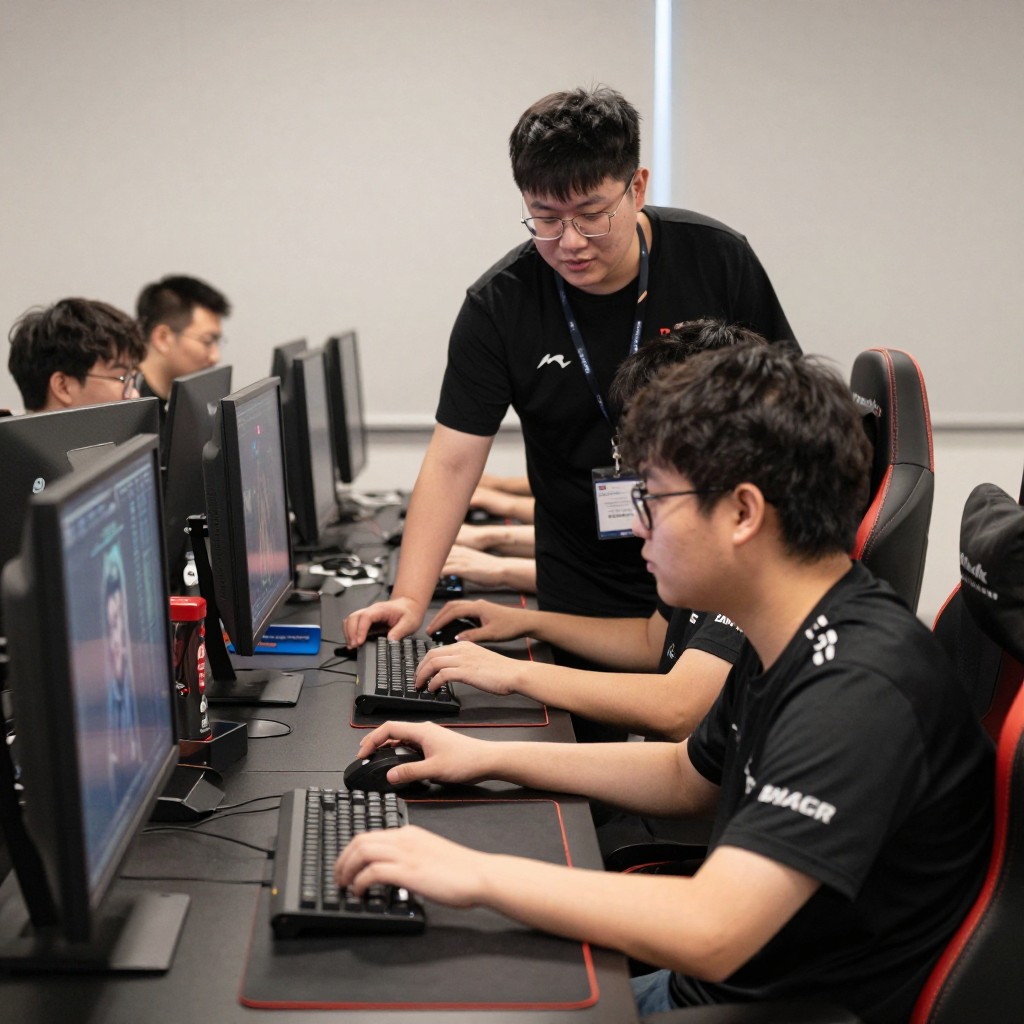
Esports organizations scout future professionals by combining observable in-game performance with communication, adaptability, and consistent practice habits. They identify candidates through ranked play, tournaments, community networks, and referrals, then verify potential in structured trials. A development plan should set clear goals, protect player wellbeing, and use repeated evidence-not a single match or rank-to guide decisions.
The Talent Pipeline at a Glance
- Scout in the specific game, role, and competitive region the organization supports.
- Use rank to find candidates, then assess decision-making, teamwork, and improvement.
- Review multiple matches and communicate expectations before arranging a tryout.
- Train with a defined schedule, individual feedback, and regular progress reviews.
- Make promotion, role changes, or release decisions using documented evidence.
Where Organizations Find Promising Players
Scouting suits organizations with a clear game, roster need, and capacity to assess and support prospects. It also helps players understand how to become a professional esports player by showing that recruitment involves more than reaching a high rank.
Potential sources include ranked ladders, open tournaments, amateur leagues, team referrals, community events, and player-submitted match footage. Professional esports teams recruiting players should follow the rules of each competition and platform, and contact candidates respectfully through appropriate channels.
Do not recruit or trial someone if the organization cannot explain the role, time commitment, selection process, and support available. Avoid pressuring minors, requesting account passwords, or promising contracts or earnings that are not confirmed. If a candidate is underage, follow applicable safeguarding requirements and involve a parent or guardian where appropriate.
Which Performance Signals Matter Beyond Rank
Set up a consistent evaluation process before reviewing candidates. Rank can help narrow a search, but it does not show how a player communicates under pressure, responds to coaching, or contributes to a team plan.
- Game-specific evidence: Recent match replays, role history, tournament results, or other records that can be reviewed in context.
- Communication: Clear, timely callouts; listening; and constructive discussion after mistakes.
- Decision quality: Awareness of objectives, timing, positioning, risk, and the team’s agreed strategy.
- Consistency: Comparable effort and decision-making across multiple sessions, not just a strong highlight.
- Coachability: Ability to understand feedback, test a change, and reflect on the result without becoming dismissive.
- Professional readiness: Reliability, respectful conduct, and the ability to follow a realistic practice schedule.
- Safe evaluation tools: Approved voice or video calls, lawful replay tools, and a shared document for notes and goals. Never request passwords or private account access.
An esports talent scouting process should record observations against the same criteria for every candidate. Explain what will be collected, who can see it, and how long it will be retained.
How Scouts Verify Skill, Team Fit, and Coachability
-
Define the roster need.
Specify the game, role, level of competition, availability, and traits the current team needs. This keeps scouting focused on a genuine vacancy rather than a general search for impressive players. -
Build a candidate shortlist.
Review public competition results, referrals, and player-submitted footage. Check that the evidence is relevant to the role and competition level; do not treat clips as proof of sustained performance. -
Review several matches.
Watch full replays where possible and note decisions, communication, consistency, and response to setbacks. Compare candidates using the same role-specific criteria. -
Hold a transparent conversation.
Explain the tryout format, schedule, expectations, and selection timeline. Ask about the player’s goals, preferred role, availability, and support needs; allow them to ask questions as well. -
Run a structured trial.
Use a small number of planned scrims or practice tasks, with clear objectives and a consistent team setup. Observe how the candidate applies the game plan and communicates with teammates. -
Test coachability with one specific adjustment.
Give clear, respectful feedback on an observable behavior, then provide an opportunity to apply it. Evaluate whether the player understands and attempts the change, not whether they respond with a particular personality style. -
Compare evidence and decide.
Review notes with relevant staff, separate observed behavior from assumptions, and document the reason for the decision. Give the candidate a timely, respectful update and explain next steps where appropriate.
Fast-Track Scouting Route
- Write down the role and two or three evaluation criteria.
- Shortlist candidates using relevant match evidence and appropriate referrals.
- Review replays, then explain the trial format and expectations.
- Run structured scrims, give one actionable coaching point, and observe the response.
- Compare notes, make a documented decision, and communicate it clearly.
What to Test During a Tryout or Scrim Review
Use this checklist before concluding that a candidate is ready for a roster or academy place:
- Does the player understand and execute the team’s agreed objective?
- Are callouts relevant, clear, and timed to help teammates act?
- Does the player adapt when the opponent or match situation changes?
- Can they explain the reasoning behind important decisions during review?
- Do they recover constructively after errors and remain engaged?
- Do they apply the coaching point in a later round or session?
- Is their role fit supported by repeated evidence across the trial?
- Can the player meet the stated schedule without compromising wellbeing?
Keep the trial limited, planned, and respectful. Share the evaluation criteria in advance, avoid excessive unpaid work, and do not make promises about selection until the decision is confirmed.
How Academy Programs Turn Potential into Pro-Level Habits
An esports player training program should connect practice to a specific development need. An esports academy for aspiring players can provide structure, but the label alone does not guarantee quality: check coaching standards, safeguarding, costs, time demands, and what participants actually receive.
Common development mistakes include:
- Practicing for long sessions without a clear objective or review.
- Using rank as the only measure of progress.
- Giving vague feedback such as “play better” instead of naming an observable action.
- Changing several habits at once, making it difficult to see what helped.
- Ignoring communication, role understanding, or teamwork in individual training.
- Copying a professional player’s routine without adapting it to the trainee’s needs.
- Failing to schedule rest, school, work, or other responsibilities.
- Continuing a plan that causes avoidable stress, pain, or persistent fatigue.
Set one or two measurable practice goals at a time, review progress regularly, and adjust the plan when evidence or wellbeing indicates a change is needed.
When to Promote, Reposition, or Release a Prospect
- Promote: When repeated performance, role readiness, communication, and reliability meet the next level’s stated expectations.
- Reposition: When evidence shows the player’s strengths fit another role better and both the player and team agree to test the change.
- Extend development: When potential is clear but specific, coachable gaps remain; set a review date and concrete goals rather than leaving the trial open-ended.
- Release: When roster needs and demonstrated fit do not align, or agreed expectations cannot be met. Explain the decision respectfully and follow any contract or competition rules.
Use consistent criteria, document decisions, and give the player a clear explanation of what happens next.
Practical Answers on Building an Esports Career
Does a high rank guarantee a professional tryout?
No. Rank may help a player get noticed, but organizations also assess role fit, match decisions, communication, and consistency. A tryout depends on roster needs and the organization’s evaluation process.
What should a player include when contacting an organization?
Share the game, preferred role, relevant competition history, availability, and links to suitable match footage or public records. Keep the message professional and never send passwords or sensitive account details.
How long should a trial last?
There is no universal duration. Set a reasonable schedule that gives staff enough comparable evidence, disclose it in advance, and avoid open-ended or excessive unpaid trials.
Can a player improve without joining an academy?
Yes. A player can follow a structured practice plan, review replays, and seek feedback from trustworthy coaches or teammates. Check the cost, safety, and claims of any paid program before committing.
What makes feedback useful during development?
Useful feedback identifies an observable behavior, explains its impact, and gives the player a chance to practice a specific adjustment. Review whether that adjustment appears in later sessions.
When should an organization stop developing a prospect?
Reassess when agreed goals are repeatedly unmet, the role no longer fits the roster, or the schedule is harming wellbeing. Communicate the decision respectfully and follow relevant agreements and competition rules.