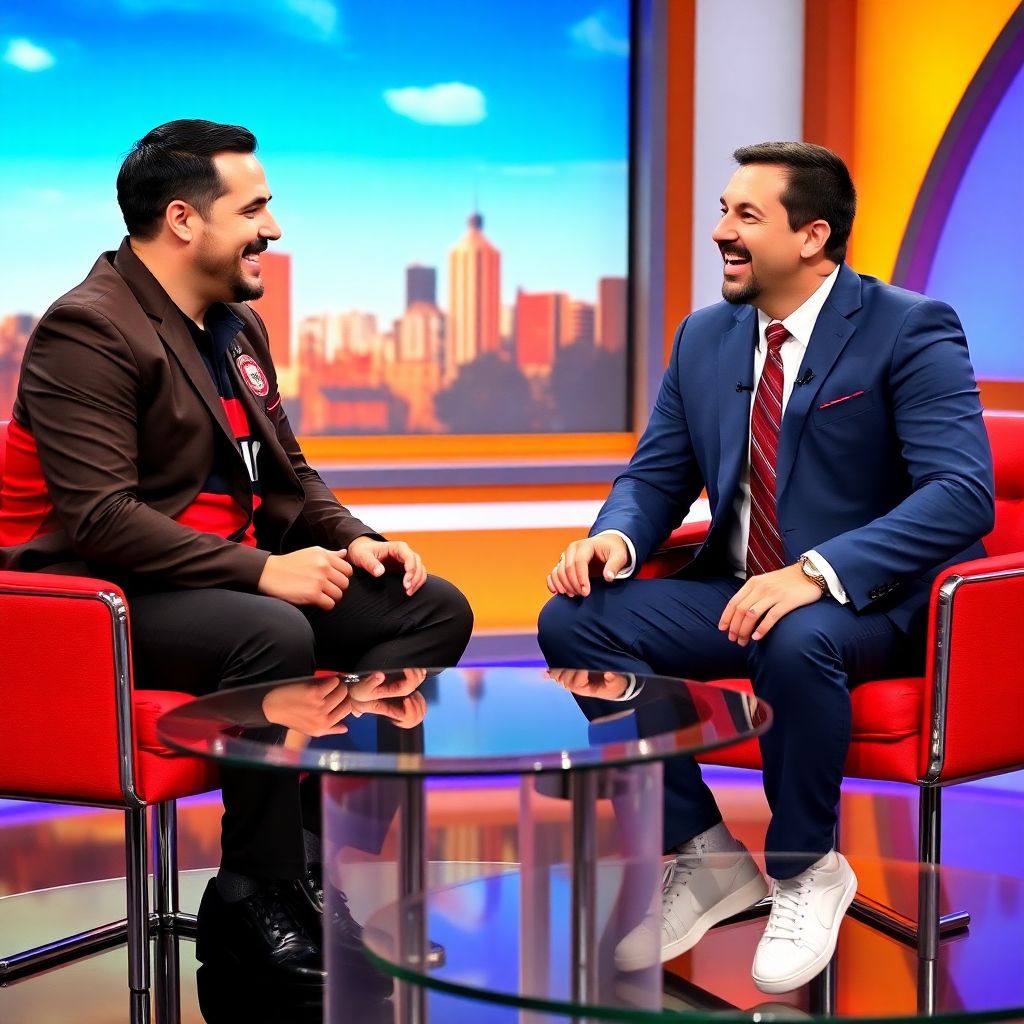
Yunus Akgün branded a “traitor”, Abdülkerim Bardakcı confesses what really happened – and that was only the start of a night full of revelations from Galatasaray and Turkish football stars.
During a light‑hearted TV appearance, Galatasaray and Turkey defender Abdülkerim Bardakcı and his club and national teammate Yunus Akgün delivered a show that had fans laughing non‑stop. The duo, known for their close friendship, did not hesitate to tease each other in front of the cameras. At one point, Abdülkerim jokingly called Yunus a “traitor”, a line that instantly went viral among supporters.
The “traitor” tag, of course, had nothing to do with betrayal in a serious sense. It came up in the context of inside jokes from the dressing room and friendly competition within the squad. Abdülkerim explained that Yunus sometimes “switches sides” in group games, training ground challenges or banter sessions, and that among teammates this kind of move quickly earns you a mock accusation of treason. The defender admitted that the phrase had become an ongoing gag in the team, and the TV show simply brought that dressing‑room humor to the public.
Pressed to elaborate, Abdülkerim confessed what he had actually gone through with Yunus behind the scenes. He talked about days when the winger would promise to back him in playful arguments or small bets in training, only to end up playfully siding with another teammate at the last minute. “He always finds a way to talk his way out of it,” Abdülkerim admitted with a smile, underlining that this “betrayal” is exactly what keeps team spirit high. Their dynamic reveals much about the current Galatasaray dressing room: competitive, loud, but ultimately united.
Yunus Akgün, for his part, played along with the label and didn’t shy away from giving it back. He teased Abdülkerim about his intensity in matches, saying that the centre‑back sometimes takes training duels so seriously that “you’d think it was a Champions League final.” The winger insisted that if anyone feels “betrayed”, it’s the forwards who have to go past Abdülkerim in small‑sided games. These mutual jabs helped paint a picture of a cohesive squad where stars of the club and the national team maintain strong personal bonds.
Another highlight of the broadcast was the image of Okan Buruk and Arda Turan together. Seeing the Galatasaray head coach side by side with a club legend who has transitioned into coaching himself created a powerful symbol of continuity. It underscored how one generation of Galatasaray icons is gradually handing the torch to the next, both on the pitch and on the bench. Their presence in the same setting, shoulder to shoulder, reinforced the idea that the club’s footballing philosophy survives through people who deeply understand its culture.
The program also touched on the mental pressure of representing both Galatasaray and the Turkish national team. Abdülkerim described the emotional weight of walking out with the national jersey and how it differs from club football. Yunus added that the expectations at a big club like Galatasaray prepare players for the intensity of international tournaments. They both emphasized that the daily competition for places inside the squad is as tough as many official matches, which is why their internal banter and jokes are so vital in keeping the mood balanced.
In addition to the candid talk from the Galatasaray stars, the evening in Turkish basketball brought its own drama. In the league clash between Bahçeşehir Koleji and Beşiktaş GAİN, the scoreboard froze at 71-73 by the final buzzer. Beşiktaş GAİN edged out a narrow win in a tight contest where momentum swung several times. The result gave Beşiktaş a precious victory and added another chapter to the growing rivalry between the two clubs on the hardwood.
Turkish sports fans also witnessed a different kind of show in Antalya, where Premier League excitement took center stage. Club owner and media figure Acun Ilıcalı met Hull City supporters in the coastal city, turning what could have been a routine visit into a fan festival. Hull City jerseys, flags and chants created an English‑style atmosphere on Turkish soil, illustrating how globalized club loyalties have become and how Turkish investors are increasingly influential in foreign leagues.
On the transfer front, the future of several high‑profile names is being actively discussed. One of the striking talking points is Jhon Duran’s situation. The forward is said to be effectively “waiting” on Mauro Icardi’s status, with everything depending on the Argentine star. Any move involving Duran appears closely tied to what happens with the prolific “tango” striker, whose decisions continue to shape attacking transfer plans.
Galatasaray’s interest in Gedson Fernandes has also resurfaced. The club is reported to want the dynamic midfielder, but the intention is described as “not at the maximum level.” In other words, Gedson is on the list of targets, yet not at any price and not as the absolute priority. This cautious stance suggests Galatasaray are monitoring the market and budget, weighing Gedson’s potential impact against other positions they may need to strengthen more urgently.
For Galatasaray, Aykut Kocaman’s historical record remains a talking point. His “report card” against the club is far from spectacular: only four wins to his name. Whenever his name comes up in connection with big‑match scenarios, that statistic is cited as proof that Galatasaray have often found a way to neutralize his teams. It is one of those numbers that follow a coach around and color the narrative of any future contest.
Over in Kadıköy, Fenerbahçe’s search for a lethal striker seems to be hitting repeated obstacles. Several reported forward targets have slipped through their fingers or chosen alternative destinations, raising questions about negotiation strategies and timing. For a club whose supporters demand an elite goal scorer each season, every missed opportunity is scrutinized heavily and fuels debate about the direction of recruitment.
Within the Fenerbahçe camp, political and administrative maneuvering is equally intense. A notable development is the reported alignment between Aziz Yıldırım and Hakan Safi. The two figures are said to be converging around a common name who could unify otherwise competing candidacies. Such a move would significantly reshape the election landscape, as Yıldırım still commands strong backing among a portion of the fanbase.
Aziz Yıldırım is repeatedly portrayed as arriving “with his fortune” and potentially bringing major good news to Fenerbahçe in October. Talk of a “huge announcement” later in the year has created speculation about possible investments, landmark signings, or structural changes at the club. Supporters are already circling that month in their calendars, hoping it will mark the beginning of a new era.
Not all commentary in the Turkish football environment is flattering. Some voices have sharply criticized individuals accused of “distracting the agenda with empty promises” and allegedly using the club’s name simply to expand private business ventures. The claim is that certain actors seek publicity and commercial growth by attaching themselves to big institutions without delivering concrete sporting benefits. This type of critique reflects a broader concern about transparency and accountability in club governance.
Elsewhere, Trabzonspor continues to be a genuine “nuisance” for Italian opposition. Turkish media highlight how often Trabzonspor have popped up to complicate paths for Italian teams, whether in direct encounters or in the transfer market. The club’s presence and negotiating style ensure that their name keeps appearing in contexts where Italian sides might prefer a simpler scenario.
The behind‑the‑scenes tension in Fenerbahçe’s corridors has been dramatized with phrases like “first crisis, first punch” and images of Aziz Yıldırım “turning over the table.” These expressions capture the idea that discussions have quickly escalated into heated confrontations, leaving no doubt that power struggles around the club are intense. Yıldırım himself has fueled that image by declaring, “If it’s war, then war,” a statement interpreted as a vow not to retreat in the face of internal opposition.
The striker issue returns again with the prospect of Vedat Muriqi. Rumours suggest he could come to Fenerbahçe primarily as a back‑up option rather than a guaranteed starter. Former footballer and coach Oğuz Çetin has been asked directly whether Muriqi would accept such a role, offering his own evaluation of the player’s mentality and suitability. The idea of a proven scorer returning in a secondary role is sparking debates about squad hierarchy and expectations.
Another high‑profile pursuit involves young talent Can Uzun. Reports claim that Fenerbahçe are prepared to go as high as 45 million euros to secure his signature. That figure, if realized, would place him among the most expensive transfers in the club’s history and underline the level of faith in his potential. Such a bold investment would also send a strong message to domestic and international rivals about Fenerbahçe’s ambition.
In defense, Merih Demiral’s stance has been described as “purely emotional.” He is portrayed as being ready to make financial sacrifices and “let it be a sacrifice for Fenerbahçe” if necessary. For supporters, hearing that a national‑team defender is willing to prioritize the club over personal gain taps into a powerful narrative of loyalty and passion, reinforcing the emotional bond between player and fans.
Aziz Yıldırım is also said to have taken a concrete step regarding Mason Greenwood. According to the information circulated, he has already held an initial meeting with the player’s representatives. While nothing is definitive at this stage, the very fact that contact has been made ignites discussions about sporting risk, moral responsibility and the potential impact of such a signing on both the pitch and the club’s image.
On the other side of the city, the door appears firmly shut for Hakan Çalhanoğlu in terms of a move to Galatasaray. Any scenario involving the national team playmaker returning to Turkey to wear the yellow‑red jersey is currently regarded as closed. Whether due to financial realities, personal plans or club strategy, this closure removes a long‑standing dream for part of the fanbase.
Inside Yıldırım’s camp, descriptions of his “table on fire” and “very limited time” suggest a climate of urgency. Negotiations, planning and electoral tactics are all operating against the clock, with the sense that one misstep could alter the balance of power. Every meeting, every call and every promise is weighed not only for its immediate effect but also for how it will play on election day.
Meanwhile, Beşiktaş have managed to leave a particular mark on Italian football circles. Their exploits-both on the field and in the market-have reportedly “shocked the Italians,” who are said to still be struggling to fully digest certain outcomes. Whether through unexpected results or aggressive transfer moves, Beşiktaş’s actions have forced Italian clubs and media alike to reassess their assumptions about Turkish sides.
Returning to Abdülkerim Bardakcı and Yunus Akgün, their playful exchange encapsulates the human side of this high‑pressure environment. Behind headlines about millions of euros, furious meetings and intense rivalries, there are friendships forged in training, locker‑room jokes and mock accusations of treason that actually strengthen camaraderie. Abdülkerim’s admission of what he experienced with Yunus, and his willingness to share it publicly, offer supporters a rare glimpse into how top professionals stay grounded and connected.
For Galatasaray fans, seeing their stars joke freely while also speaking openly about responsibility and pressure helps explain recent successes on the pitch. Strong relationships, aligned leadership represented by figures like Okan Buruk and Arda Turan, and a competitive but supportive dressing room all contribute to consistent performances. In that sense, the night when Yunus was branded a “traitor” and Abdülkerim “confessed” may be remembered less for the joke itself and more for what it revealed about the state of Turkish football’s biggest clubs.