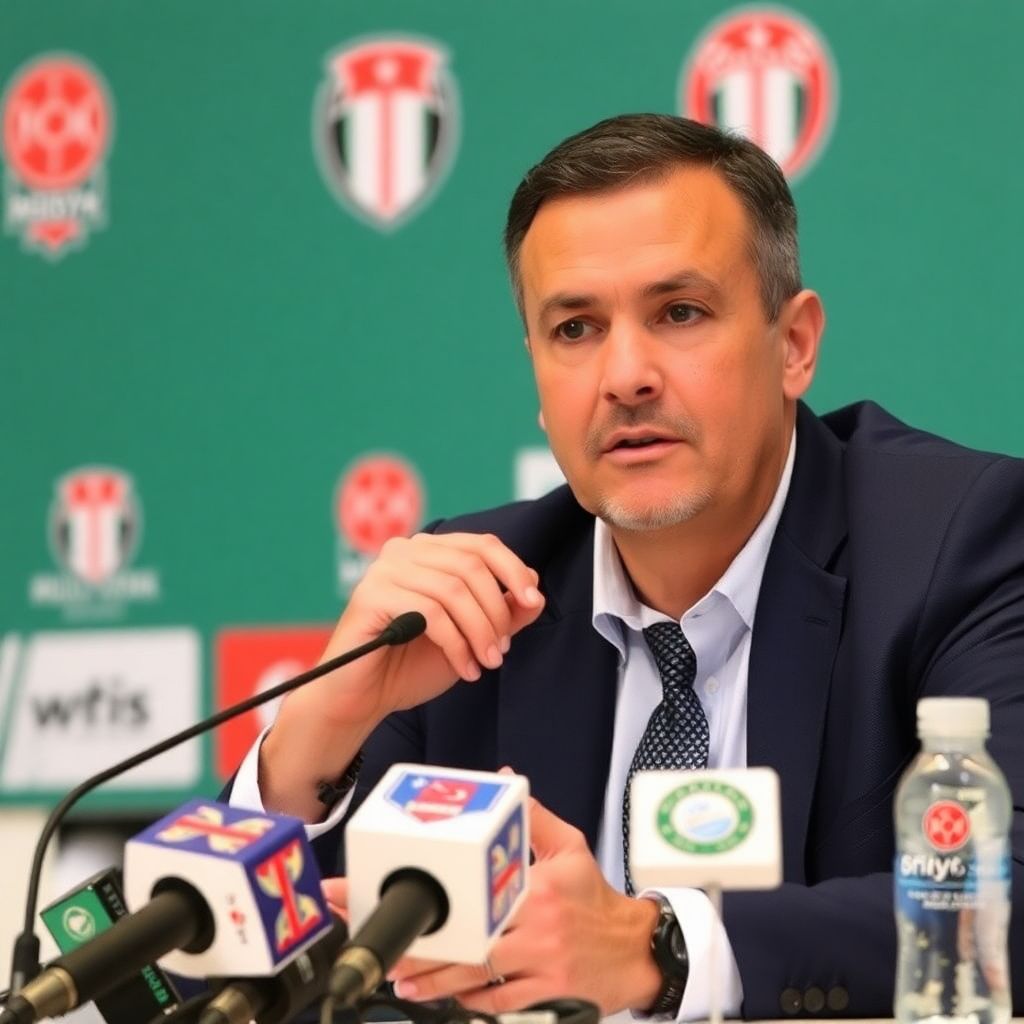
Serdal Adalı breaks silence on Dusan Vlahovic and transfer strategy
Beşiktaş president Serdal Adalı has outlined the club’s transfer roadmap and confirmed that contact has been made with Serbian striker Dusan Vlahovic, while underlining how the World Cup calendar has complicated negotiations across Europe.
Adalı, speaking about the latest developments inside the squad, stressed that the board and technical staff are working under intense pressure to reshape the team before the new season:
“We are putting in an enormous amount of effort on transfers,” he said. “It’s not just about filling gaps; we’re trying to build a squad that will carry our long‑term plans.”
“The World Cup has tied our hands”
According to Adalı, the biggest obstacle in the transfer market right now is the timing of the World Cup, which has stalled conversations with clubs and players on multiple fronts.
“The World Cup has effectively tied our hands,” he admitted. “This isn’t a problem unique to us; almost every club is facing the same issue. But I can say honestly that I’m the one feeling it most.”
Adalı explained that both players and their representatives are reluctant to make definitive decisions while the tournament is ongoing:
“We are thinking about 7-8 additions. Almost everyone we approach says, ‘Let the World Cup finish first.’ Despite that, we’re not standing still for a moment; we’re constantly moving, talking, preparing.”
Priority positions already defined
The Beşiktaş president underlined that the transfer strategy is being built strictly around the needs defined by the head coach. Rather than random opportunities, there is a clear positional plan:
“Our coach has set certain priority areas,” Adalı noted. “As you know: the goalkeeper, left‑back and the wings are at the top of the list. After that comes the centre‑forward position.”
He emphasized that each reinforcement is being evaluated not only in terms of quality, but also suitability for the coach’s game model:
“We are working with many alternatives simultaneously. We do not want any transfer that doesn’t fit our football identity, even if the player is a big name.”
“We have made contact with Vlahovic”
One of the most striking points in Adalı’s statements was the confirmation that Beşiktaş has already been in contact with Dusan Vlahovic, one of Europe’s most highly regarded centre‑forwards.
“Vlahovic is one of the names we’ve established contact with,” he confirmed. “He is among the forwards we are following and negotiating with. We are carrying out a very broad, multi‑optioned study.”
While Adalı avoided going into financial details, just acknowledging direct contact with a striker of Vlahovic’s stature illustrates the level of ambition in Beşiktaş’s transfer policy.
Physical intensity and tactical discipline at the core
The president also praised the new technical team, highlighting the coach’s reputation for building physically dominant, tactically disciplined sides:
“Our coach has a very strong staff,” he said. “At his previous clubs, the main distinguishing feature has always been physical conditioning. When that is combined with technical and tactical quality, very good work emerges.”
Adalı made it clear that expectations from the coaching staff are high and that he is confident those expectations will be met:
“I have no doubt he will give even more than he has done elsewhere. Supporters will see a team that fights to the very end in every competition.”
—
Why the World Cup really complicates transfers
The president’s remarks on the World Cup reflect a wider reality in modern football. When a major international tournament falls close to the transfer window:
– Many players want to wait, hoping a good tournament will increase their value or open doors to bigger clubs.
– Selling clubs prefer to delay final decisions, expecting better offers once the tournament generates a global showcase.
– National team coaches often ask their players not to finalize club changes during the competition to avoid distractions.
For a club like Beşiktaş, which needs multiple reinforcements in a short period, that means deals that would normally take weeks can stretch into months. Even players who are not at the World Cup are indirectly affected, because their clubs are waiting to see how the market shifts once the tournament ends.
The logic behind 7-8 new signings
Adalı’s statement about planning 7-8 reinforcements points to a near‑complete refresh of key areas of the squad. Such a large number usually indicates:
– Certain players will be sold or loaned out to balance the wage bill.
– The coaching staff believes the current core is not fully compatible with the desired style of play.
– The club is trying to lower the average age of the team while increasing resale value.
In practice, bringing in that many players also carries risk: team chemistry can suffer, adaptation periods can be long, and early‑season results might fluctuate. This is why Adalı keeps underlining the importance of working within a clear positional and tactical framework, instead of making purely opportunistic signings.
Why a striker like Vlahovic fits the profile
The fact that Beşiktaş has contacted Vlahovic is not random. A forward with his characteristics answers several needs at once:
– Physical presence: A strong, tall striker who can both hold the ball and attack crosses fits a system that values physical duels.
– Finishing quality: In a league where many matches are decided by small margins, a clinical finisher can be worth 10-15 extra points over a season.
– Age and potential: A relatively young forward with room to grow aligns with a model that aims not only for sporting success but also for potential future transfer profit.
Whether the transfer materializes or not, the profile itself shows what kind of striker the club is targeting: mobile, strong, technically skilled and capable of pressing from the front.
Rebuilding the spine: from goalkeeper to centre‑forward
Adalı’s reference to the goalkeeper, left‑back, wings and striker positions essentially describes the spine and structure of the team. Strengthening these roles affects every phase of play:
– A reliable goalkeeper allows the defensive line to play higher and take more risks.
– An attacking left‑back adds width and supports overloads on the flanks.
– Dynamic wingers stretch defenses, create one‑on‑one situations and open passing lanes inside.
– A complete centre‑forward links all these pieces, acting as a finishing point and reference in transitions.
By targeting these roles first, the club is effectively trying to rebuild the framework of the starting XI, then complement it later with rotational and depth signings.
The balance between ambition and realism
The mention of a star name like Vlahovic naturally raises expectations among supporters. However, modern football is shaped by financial regulations, wage caps, and fair‑play rules. Clubs must navigate:
– High transfer fees and commissions.
– Long‑term wage commitments that can block future moves.
– Competition from wealthier leagues and clubs offering higher salaries.
Adalı’s insistence on “many alternatives” suggests that the board is trying to manage this balance: they are in touch with top‑level options while also preparing realistic backup plans to avoid being left empty‑handed late in the window.
What supporters can expect in the coming weeks
From Adalı’s statements, several concrete expectations can be drawn for the near future:
1. Sequential announcements: Priority positions like goalkeeper, left‑back and wings are likely to be addressed first, followed by a marquee signing up front if conditions allow.
2. Physical, aggressive team identity: Transfers will be filtered through the coach’s demand for high intensity and strong conditioning; “static” players will be avoided.
3. Late‑window activity: Due to the World Cup effect, some deals – especially involving players at big clubs – may only be concluded toward the end of the window.
4. Flexible squad planning: The 7-8 signings target may shift slightly depending on outgoing transfers, academy promotions, and pre‑season performances.
The long‑term vision behind the current window
Beyond immediate results, Adalı’s language points to a broader project: building a side that does not merely “participate” but consistently competes to the last week of every competition. A physically powerful team, guided by a clearly defined tactical identity and complemented by younger, high‑potential signings, is central to this vision.
The contact with Vlahovic, the emphasis on physical fitness, and the insistence on multiple alternatives all fit within a strategy that aims to restore Beşiktaş to a position where it can both challenge domestically and re‑establish itself as a serious presence in Europe.
Adalı’s closing message, in essence, was a promise: under this technical staff and with the planned reinforcements, Beşiktaş supporters will watch a team that does not concede any race before the final whistle of the final match.