World talks about Turkey: the burst of the “Amazing Turks balloon”
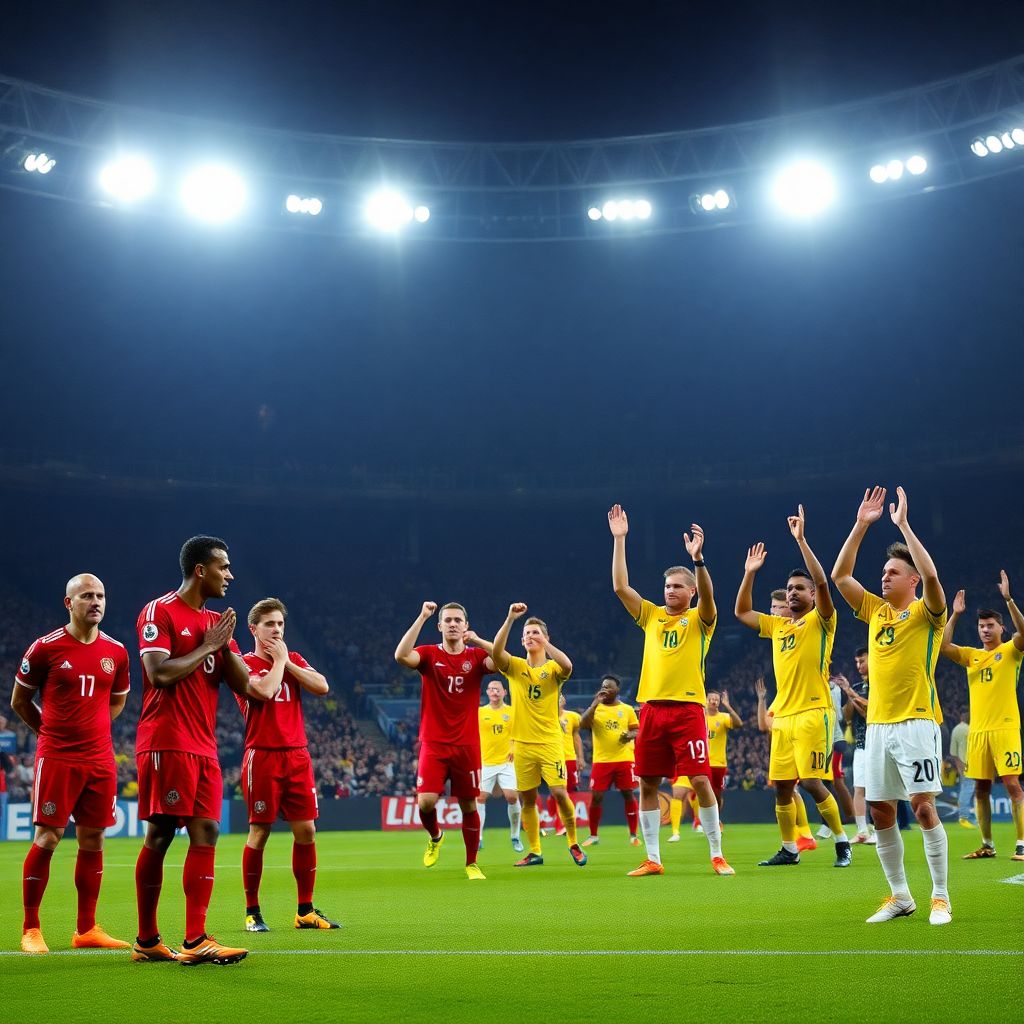
Turkey’s long‑awaited return to the World Cup stage ended in a way nobody had scripted. After finally ending a 24‑year absence from the tournament and being spoken of as one of the “dark horses” of 2026, the national team stumbled badly in its opening match, losing 2-0 to Australia. The result itself was a shock; the manner of the defeat turned it into a global talking point.
Despite controlling 72% of possession, Turkey never managed to turn that dominance with the ball into meaningful danger. The sterile, predictable attacking play drew a wave of harsh analyses in the international sports press. From the United States to Italy, from Spain to Germany, headlines swung between disbelief and sarcasm, with some commentators referring to the “Amazing Turks balloon” that had inflated for months – only to explode at the first serious test.
A “hidden favorite” that forgot how to bite
Before the tournament kicked off, many analysts highlighted Turkey as a “hidden favorite”: young, technically skilled, with enough star power to trouble any rival. The squad looked deep, the qualifying campaign had been solid, and there was a feeling that the team finally had the maturity to go beyond the role of mere outsider.
All of that optimism ran into a stubborn, disciplined Australian side. The statistics painted a curious picture: Turkey dictated the tempo, completed thousands of passes, but rarely broke through the last line. The Australians, compact and ruthlessly efficient, waited for their moments and capitalized on Turkish mistakes. For neutral observers, it was a textbook example of how control without verticality can be a trap.
Inside the Turkish camp: responsibility and frustration
In the dressing room and in post‑match reactions, Turkish players did not hide their disappointment. Defender Ferdi Kadıoğlu tried to lay a foundation for recovery, insisting that the team will regroup and learn from the setback. His message was one of calm defiance: the tournament is long, and one defeat, however painful, does not have to define a campaign.
Merih Demiral summed up the feeling of helplessness with a resigned “sometimes it just doesn’t happen,” hinting at the psychological weight the team had carried into the match. The captain emphasized that the goals conceded were “unnecessary” – avoidable errors rather than inevitable moments of brilliance from the opponent – and stressed that at this level such lapses are unforgivable.
Kerem Aktürkoğlu, heavily scrutinized after the match, openly accepted responsibility for his own performance and the lack of cutting edge in the final third. However, his role became a separate point of debate, as many pundits argued he was misused in a position that did not suit his natural qualities.
The Montella dilemma: stubbornness or conviction?
Head coach Vincenzo Montella’s post‑match comments triggered almost as much noise as the result itself. Surprisingly, he described himself as “satisfied” with parts of the performance and claimed that Turkey should “continue playing this way.” For critics, this sounded like wilful blindness. For supporters, it was a coach refusing to panic after one upset.
The controversy largely revolves around tactical rigidity. Commentators argued that Montella “did everything he should not have done”: insisting on a structure that over‑emphasized possession, forcing players into unfamiliar roles, and leaving the team short of penalty‑box presence when it mattered most. The phrase “What more should Montella do wrong?” became a popular rhetorical question, encapsulating the frustration.
One of the most pointed discussions focused on Kerem Aktürkoğlu’s deployment. Many analysts insisted that “he is not, and will not be, a true center‑forward.” Pushing him into a striker role, they argued, blunted both his own game and the team’s attacking patterns. Without a natural number nine to occupy defenders, Turkish possessions became easy to defend: plenty of ball circulation, but little threat.
A clash with tradition: nine wins out of ten, then a fall
The defeat also revived an old narrative about Turkey’s footballing “tradition”: impressive form in preparation, followed by dramatic stumbles when it truly counts. References emerged to a familiar pattern – flying through qualifiers and friendlies, only to crash once the world’s eyes are watching.
“Turkey’s exam in world football: is a team of stars enough?” became a recurring theme in analysis pieces. The consensus leaned toward “no.” Individual talent, no matter how bright, cannot compensate for structural flaws, tactical confusion, and a lack of mental resilience. In this sense, the Australian defeat was interpreted as a brutal but clear diagnosis.
International reaction: irony, disbelief, and cautious warning
Outside Turkey, reaction combined amusement with caution. Some outlets poked fun at the hype, highlighting how a team talked up as a secret contender could look so toothless when forced to break down a well‑organized opponent. Others focused on the danger of writing Turkey off too quickly.
Australian coverage in particular reflected genuine surprise. Even there, many expected a hard‑fought battle with Turkey’s quality eventually tilting the balance. Instead, the Socceroos walked away with a comfortable 2-0, leaving even home pundits saying that “no one expected it to be this one‑sided.”
Yet several foreign analysts warned against over‑interpreting a single game. Tournaments are riddled with big nations starting slowly, adjusting, and then surging deep into the knockout rounds. The question is whether Turkey can do the same – and whether the staff and players have the courage to change what is not working.
The star who wasn’t there: the Arda Güler debate
A separate storm broke out around the absence or limited role of creative prodigy Arda Güler. Many fans and commentators repeated a single question: “Why didn’t you bring Arda?” – a shorthand for a broader criticism of decision‑making in squad selection and in‑game management.
To some, not fully integrating such a unique playmaker was a symbolic error: a sign that the team was trapped between generations and ideas, unsure whether to commit to a daring, offensive identity or revert to caution and hierarchy. In a match where Turkey dominated the ball but lacked imagination between the lines, that decision looked increasingly costly.
Energy lost in the wrong battles
Another line of criticism addressed the mental and emotional state of the group. Observers pointed out that “we wasted our courage and energy on political football,” a phrase used to describe distractions, internal debates, and off‑field agendas that can drain focus before a ball is even kicked.
Instead of channeling their collective fire into the 90 minutes on the pitch, the team appeared burdened, as if still fighting unresolved battles. At a World Cup, where margins are razor thin, such intangibles become decisive. Confidence and clarity are as important as tactics; without them, even technically superior teams can look strangely fragile.
Individual flashes, collective shortcomings
Alongside the tactical autopsy, individual performances were dissected in detail. Barış Alper Yılmaz drew attention with his tireless runs, reminiscent for some of the old Ümit Davala style – relentless, aggressive, always looking to push the game forward. Yet even that energy could not mask broader structural weaknesses.
Some assessments captured the contrast with biting irony: “hair style 10 out of 10, football minus 5.” The message was that good intentions, personal charisma, or isolated flashes are irrelevant if the system fails to maximize them. Football at this level is mercilessly collective.
Meanwhile, the absence of goalkeeper Uğurcan Çakır in the starting plans became a metaphor in itself. Comments joked that he was “on vacation, with visitors never ending” – a barbed way of saying that rotation and planning may not have been rooted in clear sporting logic.
Transfer markets and mixed priorities
The timing of the World Cup, overlapping with transfer rumors and negotiations, opened another uncomfortable discussion: are players and agents more focused on moves than on matches? The phrase “national team is an excuse, transfer is the real show” encapsulated the suspicion that for some, the tournament is as much a shop window as a patriotic mission.
This perception – fair or not – adds pressure on both players and staff. Any hesitant performance is scrutinized not only on tactical grounds but also through the lens of ambition and commitment. To rebuild trust, the team will need not just better results but also clearer signs that collective goals outweigh personal agendas.
How can Turkey respond? Key steps after the shock
To transform this defeat from a crisis into a turning point, several concrete changes are being widely suggested:
1. Reclaim verticality: Possession must become a weapon, not a statistic. Faster, more direct transitions and more runs in behind are essential. Keeping the ball for its own sake only helps the opponent rest and reset.
2. Clarify roles in attack: Playing wingers as strikers or forcing creative players into purely positional tasks has clearly not worked. The team needs at least one natural finisher, with support from midfielders arriving in the box.
3. Put creativity on the pitch: Whether it is Arda Güler or others with similar profiles, Turkey must dare to place its most imaginative players in central zones, even at the risk of losing some defensive stability. Without unpredictability between the lines, dominant possession becomes easy to defend.
4. Simplify the game plan: Overly complex instructions often leave players hesitant and slow. A more straightforward approach – press together, attack in waves, trust combinations developed in training – can restore confidence.
5. Rebuild mental resilience: Sports psychologists, internal workshops, and strong leadership from within the squad are crucial. The team needs to see the Australia game as a painful lesson, not a prophecy.
Lessons from other “dark horses”
History offers enough examples of so‑called dark horses that stumbled early yet recovered. Teams that learned quickly from tactical misjudgments, accepted criticism, and adapted often ended up going much further than initially expected. The key difference lies not in talent but in flexibility.
Turkey’s situation now is similar: a promising squad, a coach under pressure, and a public torn between anger and hope. If staff and players manage to turn external criticism into internal motivation rather than defensiveness, the “Amazing Turks balloon” might not be a cautionary tale, but the prelude to a genuine rise.
Beyond the result: redefining Turkey’s football identity
Ultimately, this defeat is about more than three points. It forces a deeper question: what kind of team does Turkey want to be on the world stage? A collection of stars waiting for individual brilliance, or a coherent, aggressive collective capable of imposing its style on anyone?
The 2-0 loss to Australia has stripped away illusions but also opened a window. Behind the sarcastic headlines and the ruthless foreign commentary lies a recognition: Turkey has enough quality to matter. Whether that potential turns into reality will depend on the next decisions – tactical, psychological, and structural.
If those decisions are brave, this World Cup could still become a milestone rather than a missed opportunity. If not, the story of 2026 may be remembered only as the tournament where the “Amazing Turks balloon” floated high for a moment, then vanished with a loud, hollow pop.