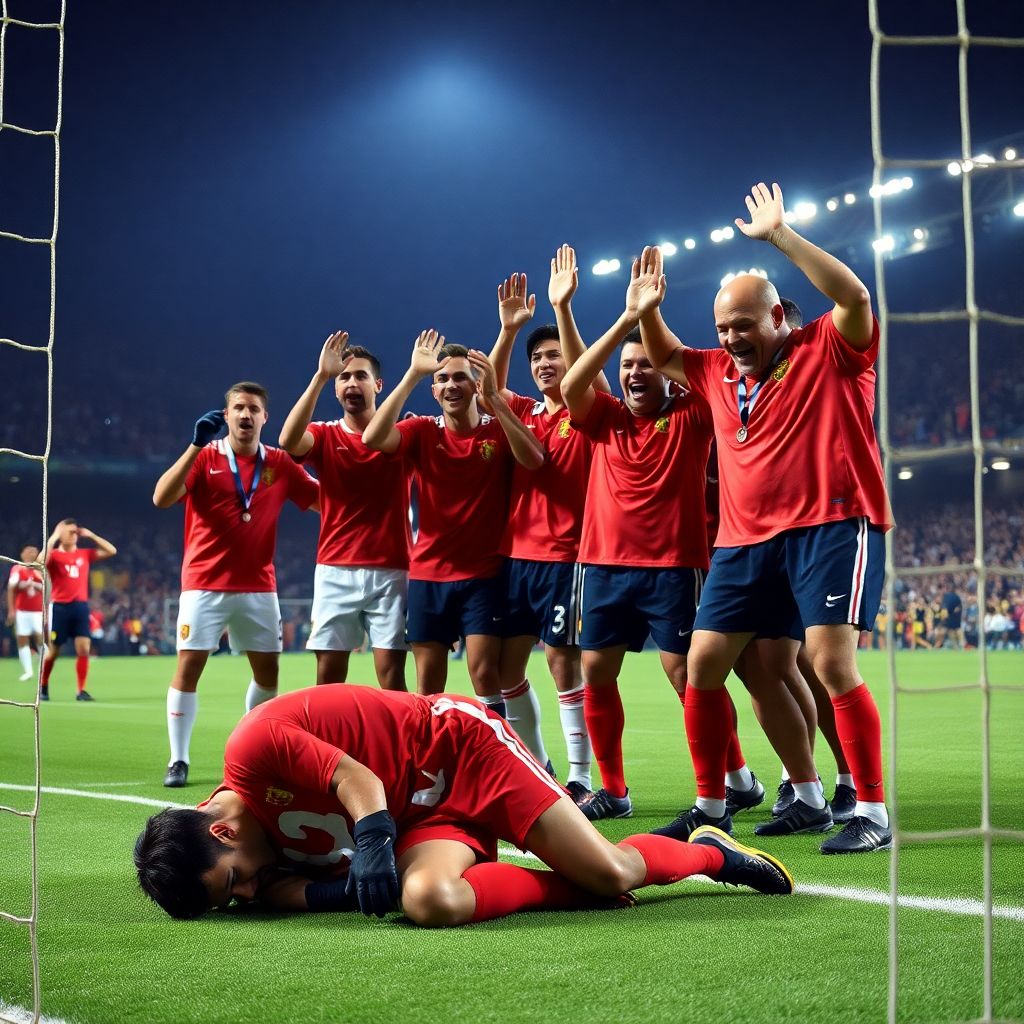
World Cup nightmare for Muslera: Spain win, Uruguay out
Criticised heavily for his form in recent matches, Fernando Muslera experienced one of the most painful evenings of his long career at the 2026 FIFA World Cup. The veteran goalkeeper’s error directly decided the result of Spain-Uruguay and left his team outside the knockout stages, while also triggering a new wave of reaction from football fans.
In Group H, Spain and Uruguay met in a clash that would determine the fate of the group. Spain needed at least a draw to finish top, while Uruguay desperately chased a victory after dropping crucial points earlier in the group. In the end, Spain took a 1-0 win, securing first place, while Uruguay remained stuck on 2 points and were eliminated from the tournament.
The only goal of the match came in the 42nd minute through Alex Baena. Spain built patiently from the back, moved the ball into the final third and Baena found space to shoot from outside the box. His effort was powerful but not unstoppable. Muslera appeared to have the shot under control, getting both hands behind the ball, but in a shocking twist, it slipped straight through his grasp and crossed the line. What should have been a routine save turned into a decisive mistake.
That single moment radically changed the match scenario. Uruguay, who had been defending compactly and looking to exploit transitions, suddenly had to open up and take more risks. Spain, now leading, calmly controlled possession and limited Uruguay to half-chances. The mental impact on Uruguay’s players was evident: the team’s composure dropped after the goal, while Spain grew in confidence and started dictating the tempo.
Uruguay head coach Marcelo Bielsa reacted swiftly to the error. When the teams came back out for the second half, Muslera was no longer on the pitch. Bielsa opted to substitute his experienced goalkeeper at the break, an extremely rare decision in a World Cup match and a clear indication of how costly the staff considered that mistake. The change was as much about psychology as tactics; Uruguay needed a reset, both mentally and emotionally.
This was not Muslera’s first troubled performance at this tournament. In the previous match against Cape Verde, the goalkeeper had already drawn attention for two major errors that resulted in goals. Those lapses raised early alarms about his form and reflexes, and placed him under considerable pressure even before facing Spain. The error against Baena effectively confirmed the fears: Muslera’s World Cup had turned into a sequence of misjudgments at the worst possible time.
The combination of the Cape Verde match and the Spain blunder transformed Muslera from a symbol of reliability into the main target of criticism. Many observers pointed out that Uruguay, traditionally known for defensive solidity and battling spirit, had been undone by uncharacteristic mistakes from the player who once embodied that stability. For a team that collected just 2 points and failed to win a single group game, those goals conceded after clear individual errors became a major talking point in post-match analysis.
The reactions to Muslera’s performance have been harsh. Fans, pundits and former players have highlighted how far he appears to have fallen from his prime years. Comments asking “Were you ever the kind of player to end up like this?” captured the sense of disbelief. Just a few seasons ago, Muslera was praised for decisive saves in high-stakes matches; now, his name is associated with costly blunders on the biggest stage.
What makes this decline particularly striking is the contrast with Muslera’s earlier career. He built his reputation on strong tournament performances, leadership from the back and an ability to deliver in clutch moments. For years, Uruguay relied on him as an anchor, particularly in knockout matches where a single save could decide everything. That same experience was supposed to be his advantage in 2026. Instead, his age, timing and decision-making have become the focus of discussion.
The debate around Uruguay’s goalkeeping choices is now inevitable. Many are questioning whether the federation should have transitioned to a younger goalkeeper before the tournament rather than putting so much responsibility on a veteran nearing the end of his career. Others argue that, given his track record and influence in the dressing room, leaving Muslera out would have been just as controversial. The Spain match, however, is likely to accelerate a generational shift in the national team setup.
From a psychological perspective, the episode also highlights the pressure goalkeepers face. Outfield players can make several mistakes in a match without necessarily deciding the scoreline, but a single goalkeeping error is almost always magnified. Muslera’s slip against Spain will be replayed endlessly, overshadowing other aspects of the game: Uruguay’s pressing structure, their missed chances and Spain’s effective game management. For the goalkeeper himself, recovering mentally from such a moment will be one of his toughest personal challenges.
Tactically, Spain did what elite sides do when gifted an advantage: they managed the game with maturity. After going 1-0 up, they refused to overcommit, circulated the ball intelligently and used possession as a defensive tool. Uruguay’s attempts to chase an equaliser left them exposed, but Spain rarely overextended; they appeared satisfied with a narrow win that guaranteed top spot. In that sense, Muslera’s mistake not only decided the score but shaped the entire second half.
For Uruguay, the early exit will trigger broader questions beyond one player’s error. Analysis will focus on why a team with experienced names and a respected coach failed to adapt during the group stage, why their attacking output was limited and how their defensive organisation crumbled at key moments. Muslera’s mistake is the most visible symbol of failure, but it sits within a larger picture of a national team that did not deliver when it mattered.
On a personal level, the 2026 World Cup may ultimately become a painful chapter in Muslera’s otherwise distinguished career. Many great goalkeepers have one infamous moment that defines a tournament, even if it does not define their legacy as a whole. How Muslera responds from this point-whether he chooses to retire from international duty or fights to end on a better note-will play a big role in how this period is remembered.
In the end, Spain march on as group winners, reinforced by the sense that even when not at their sparkling best, they have enough quality to capitalise on any weakness. Uruguay, meanwhile, leave the tournament with regrets and the image of a ball slipping through Fernando Muslera’s hands in the 42nd minute-a single, haunting scene that encapsulates their World Cup disappointment.