Morocco’s football revolution: Netherlands sent home in World Cup shock
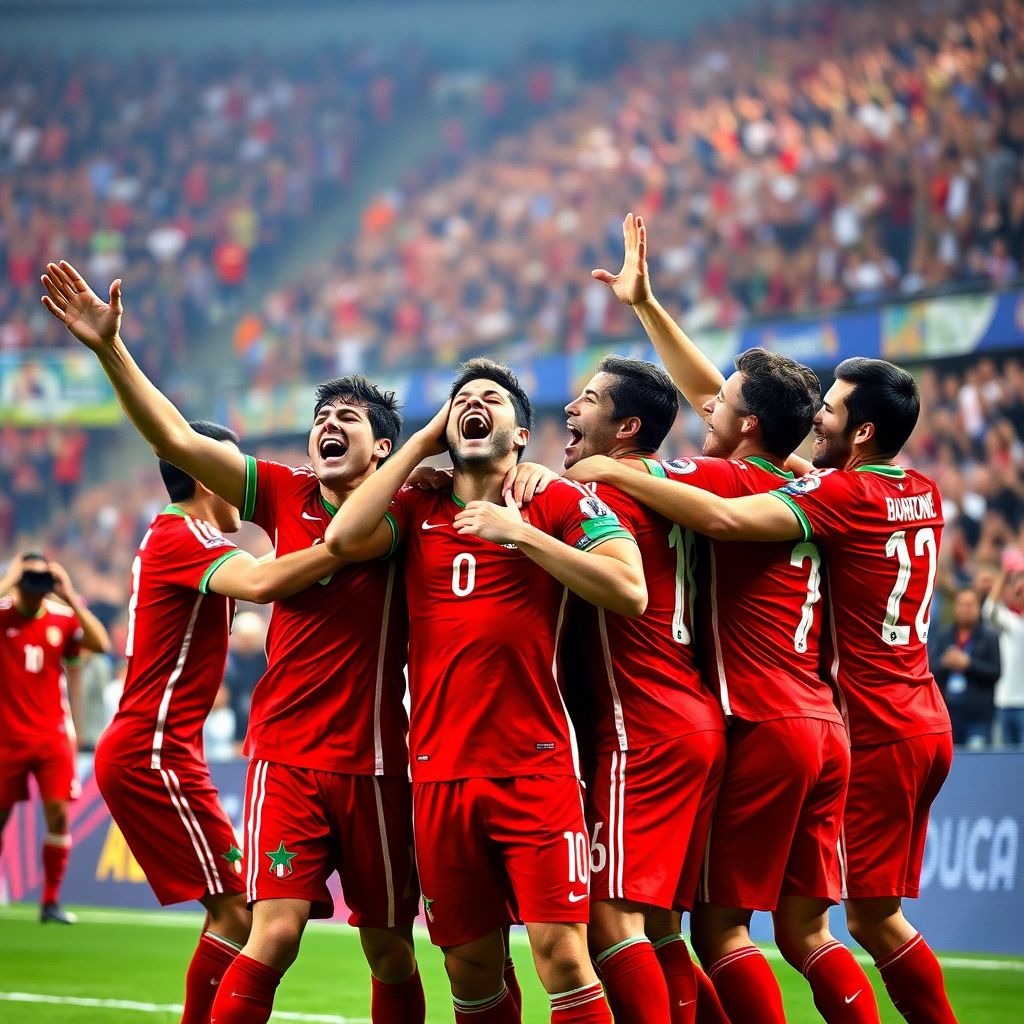
Morocco have rewritten the script of world football. In a night that will be remembered for years, the North African side knocked out one of the giants of the game, eliminating the Netherlands on penalties after a gripping 1-1 draw in regular time. What was supposed to be a straightforward step for one of the tournament’s main title contenders turned into a landmark moment for a nation that is steadily transforming into a global force.
A clash of philosophies
From the first whistle, it was clear this would not be a typical underdog story. Morocco did not arrive to simply defend deep and hope for a miracle. They pressed intelligently, closed passing lanes, and constantly targeted the space behind the Dutch full-backs. The Netherlands, with all their individual quality and long-standing football heritage, found themselves trapped in a tactical web.
The opening goal reflected this dynamic. Morocco capitalised on a sloppy Dutch buildup, turning defence into attack within seconds. A quick combination in midfield and a perfectly timed through ball were enough to slice open the back line, leading to a composed finish that stunned both the stadium and viewers around the world.
The Dutch response came as expected – relentless pressure, overlapping runs, and wave after wave of attack. They finally broke through to make it 1-1, dragging the match into a tense, exhausting battle in midfield. Yet even after conceding, Morocco did not collapse. Instead, they showed maturity often associated with established football heavyweights: calm on the ball, disciplined off it, and emotionally stable in the biggest moments.
Extra time drama and penalty perfection
The longer the match went on, the more psychological it became. In extra time, fatigue took over, but Morocco’s compact structure held firm. The Netherlands enjoyed more possession, but real clear-cut chances were rare. Moroccan defenders threw themselves into tackles, blocked shots, and dominated aerial duels. The goalkeeper, unflinching under pressure, managed his area like a veteran of countless finals.
Penalties were where the revolution became undeniable. Morocco approached the shootout with the confidence of a side that believed destiny was on their side. Every step in the run-up suggested preparation, repetition and mental strength. The Dutch, usually composed in such situations, looked oddly fragile.
Morocco’s takers struck with precision and nerve. The goalkeeper became the hero, reading body language, waiting that split second longer, and making the decisive saves that turned a dream into reality. When the final penalty was converted, the Moroccan bench exploded onto the pitch – a mixture of tears, smiles, and disbelief.
One of the tournament’s main favourites was out. Morocco were through, not as a lucky outsider, but as a team that out-thought and out-fought an established powerhouse.
Why this win matters beyond one match
This is more than a result; it is a statement. Morocco’s success showcases a new model for countries outside the traditional European and South American elite:
– Modern tactics instead of sheer defending
– Deep, well-scouted squads rather than reliance on one star
– Diaspora talent integrated smartly into a clear system
– Mental resilience that survives the pressure of a penalty shootout against giants
For years, the World Cup conversation revolved around the same names. Morocco’s run forces analysts to expand that circle. They have shown that with investment, organisation and belief, nations once considered outsiders can challenge anyone on the biggest stage.
A new benchmark for African and Arab football
Every major upset in football leaves a legacy, and Morocco’s triumph over the Netherlands instantly becomes a benchmark for African and Arab teams. It sends a powerful message: it is no longer enough for established favourites to simply turn up with big reputations and expect lesser-known sides to fold.
Morocco’s disciplined structure, collective running, and tactical intelligence stand as a counter-argument to the idea that only traditional powers understand high-level tournament football. Their success will inspire a new generation of players from Casablanca to Rabat and far beyond, convincing them that the top of the pyramid is not reserved for others.
Pressure rising on traditional favourites
The shockwaves from Morocco’s victory reach far beyond this single tie. Critics and fans are now questioning preparation methods, squad selection and tactical decisions of the traditional favourites. The Netherlands are facing serious introspection: how did a team packed with world-class talent fail to handle Morocco’s intensity and organisation?
Even other giants feel the heat. Zlatan Ibrahimović’s striking comment, “They pushed Brazil to the edge of the cliff,” perfectly captures how these so‑called outsiders are no longer content with honourable defeats. Whether it is pushing Brazil to their limits or sending the Netherlands home, the new reality is clear: reputations count for less than ever before.
Mentality as the real game-changer
What truly separates this Moroccan side is not only tactics but attitude. They do not play with fear. Instead of shrinking in front of elite opposition, they look energised by the challenge. Their body language during crunch moments – organising each other, encouraging, staying focused – reflects a culture of accountability and collective belief.
Where other teams might crumble after conceding a late equaliser or missing chances, Morocco stay emotionally balanced. This is the essence of a football revolution: it starts in the mind before it shows on the pitch.
The wider football landscape: transfers, finances and shock results
While Morocco are rewriting World Cup history, club football continues to evolve in the background, and the news cycle remains just as intense.
– Singo’s positive update has offered some relief to his club, with reports indicating that his situation is improving and he is on the right path physically. For a side heavily reliant on his pace and defensive presence, this is a crucial boost.
– Zlatan’s Brazil verdict underlines another broader shift: traditional favourites like Brazil are being dragged into battles they are no longer guaranteed to win. Being “pushed to the edge of the cliff” symbolises how even the biggest football nations must now endure relentless pressure from increasingly fearless opponents.
– Beşiktaş revealing their season ticket prices, ranging from 20,000 TL to 143,000 TL, paints a clear picture of how elite football is becoming a premium product. From standard seats to luxury boxes, the club is targeting every segment of its fanbase. The figures also show the financial pressures of remaining competitive domestically and in Europe.
– Robert Lewandowski has finally put pen to paper, closing the door on speculation and confirming his next chapter. His signature remains one of the most significant in modern football: a proven goalscorer whose mere presence changes opponents’ game plans and reshapes his new club’s ambitions.
Turkish football in transition: transfers, controversy and injuries
Turkey’s big clubs are navigating their own turbulent period:
– Galatasaray’s pursuit of Jhon Durán appears to have reached an agreement. The structure of the deal reportedly includes performance bonuses, with a special focus on goal tallies. One key clause states that if Durán hits the 20‑goal mark, additional conditions in the agreement will be triggered in favour of his current club. Even Mauro Icardi is understood to be open to the transfer, seeing Durán as a complementary attacking option rather than competition.
– Fenerbahçe’s financial and sporting tensions are mounting. Comparisons have emerged suggesting Durán’s cost is roughly a quarter of what Fenerbahçe might spend on similar attacking options, raising questions about the club’s strategy in the transfer market.
At the same time, comments about the club being “dependent on Chobani” and demands such as “Give 10 million euros so we can make transfers” highlight the growing reliance on external financial power to stay competitive. This fuels debates about sustainability, spending discipline and long-term planning.
– Milan Škriniar’s price tag, reportedly set at 40 million euros, shows how central defenders who can both defend and build up play have become premium assets. Any club willing to “pry him away” at that figure must be absolutely convinced he is the missing piece in a title or Champions League push.
– The Barış Göktürk situation at Fenerbahçe has become another headache, reportedly affecting harmony and decision-making. For a club already under pressure, internal issues like this only add to the sense of instability and have reportedly even dampened the mood for key figures such as Aziz Yıldırım.
Sidelined stars and rising controversies
Injuries and legal battles continue to shape the narrative:
– The claim that Vedat Muriqi was “clearly injured in full view of everyone” has reignited debates around medical protocols, workload and how much pressure players face to remain on the pitch. Fenerbahçe’s ongoing injury problems have supporters and analysts asking why the club is “constantly losing players to fitness issues” and whether something is fundamentally wrong in training, recovery or squad rotation.
– İbrahim Hacıosmanoğlu’s “don’t you dare” confession, directed at his own decision to take legal action against Erman Toroğlu in the past, exposes the tensions that can arise when football clashes with judiciary processes and media criticism. By publicly discussing his case and the dialogue with Toroğlu, he has pulled back the curtain on an uncomfortable but very real side of the sport.
Tactical evolution and transfer gambles
Elsewhere, the transfer market and tactical experiments are redefining squads:
– Greenwood’s situation being used as a pretext while Gonçalves shines has turned into one of the season’s most talked‑about storylines. Fenerbahçe’s move to secure Gonçalves is being labelled the “transfer bomb of the year,” as his performances begin to overshadow any original plans involving Greenwood. It is a classic example of how a seemingly secondary target can become the main star once given the right role.
– The notion that Fenerbahçe publicly align themselves with Okan Buruk on certain issues shows that, despite fierce rivalry, clubs and coaches can find common ground when faced with shared structural problems in the game, whether related to refereeing, scheduling or administration.
Shock scores and historic exits
On the international front, surprising results continue to accumulate:
– Brazil’s 2-1 victory over Japan may, at first glance, look expected, but the narrow margin and intensity of the match suggest the gap is closing. Japan’s ability to push Brazil into uncomfortable territory underlines the same theme Morocco have now made impossible to ignore: there are fewer easy games at the top level.
– Germany’s early exit and Paraguay’s historic run add further proof that the balance of power is shifting. Paraguay’s success story, built on collective effort and tactical discipline rather than household names, mirrors Morocco’s achievements and highlights a new era in international football where structure often beats status.
– Trabzonspor’s “scandalous wing” signing has provoked debate within Turkish football circles. The move is viewed by some as a major risk, either due to the player’s profile, past behaviour or the financial package, and could become a defining moment in the club’s season depending on how it unfolds on the pitch.
What Morocco’s triumph tells us about football’s future
Taken together – Morocco’s elimination of the Netherlands, Brazil and Germany being pushed to the limit, Paraguay’s rise, and the turbulent club dynamics across Europe and Turkey – a larger picture emerges.
Football is entering a phase where:
– Tactical preparation and collective identity often outweigh star names
– Financial muscle still matters, but smart scouting and structured planning can close the gap
– Underdogs are less fearful and more sophisticated than ever
– Established giants are under constant pressure to evolve or risk being exposed
Morocco’s victory is not an isolated fairy tale; it is a symbol of this transformation. Sending the Netherlands home after a 1-1 draw and a flawless penalty shootout is both a reward for years of development and a warning shot to every traditional favourite still clinging to old certainties.
From the packed stands to living rooms around the world, one message is now impossible to ignore: the hierarchy in world football is no longer fixed. Morocco have proved that revolutions do not always start in boardrooms or super-clubs – sometimes they begin on the pitch, with a fearless team that refuses to accept its assigned place in the story.