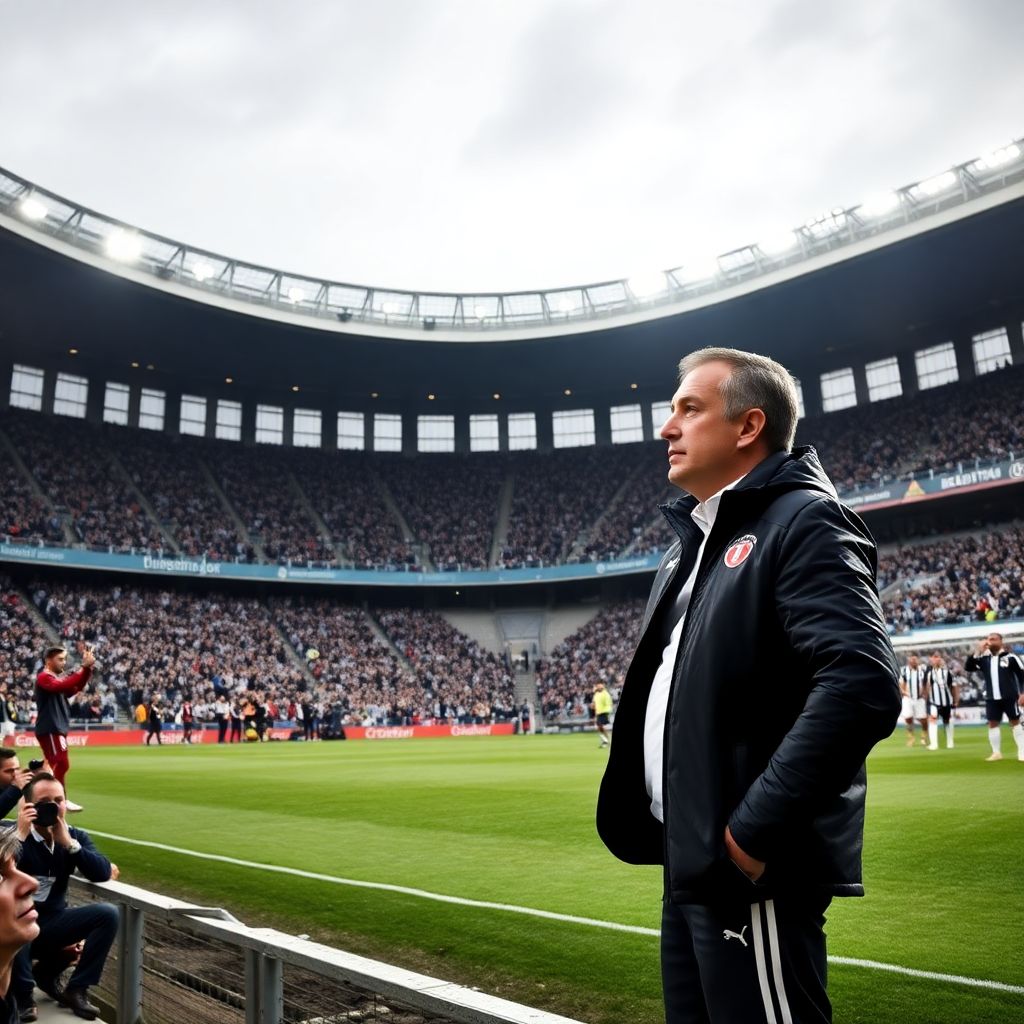
A COACH WHO BUILDS A FOOTBALLING IDENTITY
A new chapter is opening at Beşiktaş. With Vincenzo Italiano taking over the dugout, the black-and-white club is not just changing its coach; it is attempting a structural reset. At first glance, this appointment looks exactly like the “reconstruction move” the club has been crying out for after several erratic seasons.
When you trace Italiano’s career path, you do not see a standard, linear rise powered only by big-name clubs and big budgets. You see a coach who started in the lower leagues, climbed step by step and left his imprint wherever he worked. In every team he has managed, a clear, recognizable way of playing has emerged. That, more than anything, is what makes him intriguing for a club that has struggled badly with its own football identity.
Reaching a European final with Fiorentina and delivering long-awaited cup joy with Bologna were not accidents. These achievements are the product of a methodology: a coach who knows how to build systems that maximize the potential of the squad he has, instead of wishing for the players he does not. Italiano’s hallmark is his capacity to adapt his structure to his resources without sacrificing an overarching idea of football.
Beşiktaş’s biggest problem last season was precisely this lack of a clear idea. For long stretches, the team did not project an image of knowing what it wanted to play. Match to match, even half to half, the approach shifted: pressing or retreating, possession-based or purely reactive, narrow or wide. The result was a side that rarely inspired confidence, regardless of the final scoreline.
In that sense, Italiano’s arrival targets the core of the issue. His teams are known for playing at high tempo, pressing aggressively in advanced zones, forcing opponents into mistakes and attacking with conviction. The football he preaches is proactive, front-foot and courageous. It also happens to be exactly the style Beşiktaş supporters have been yearning to see: a side that dictates, not one that simply reacts.
Of course, like any managerial appointment, this choice carries risks. The Super Lig is not an easy environment for foreign coaches, no matter how competent they are. From the outside it may look like a league where big clubs rule by default, but the reality is far more complex. Difficult away grounds, emotionally charged atmospheres, contentious refereeing debates and relentless media scrutiny have derailed many well-intentioned projects in the past.
Italiano is about to experience all of this for the first time. Working in Turkey will be a new world for him, with different mentalities in the dressing room, different expectations in the stands and a different rhythm to the season. An adaptation period is inevitable. And everyone knows Beşiktaş is not a place where patience is abundant; a brief run of poor results is typically enough to start a storm of criticism around the coach, whoever he is.
Yet when you zoom out from the week-to-week noise, Italiano looks very much like the profile Beşiktaş must bet on. In the immediate term, aiming straight for the title against Galatasaray and Fenerbahçe-both boasting deeper and more settled squads-does not look realistic. The objective in Year One should not be a desperate sprint to the top, but a controlled, intelligent rebuild that narrows the gap.
With smart recruitment, Beşiktaş can become more compact, better organized and significantly tougher in duels and transitions. A team that does not collapse at the first sign of adversity, and that can repeat its performance patterns from one match to the next. In that kind of framework, success in the Turkish Cup and a consistent run in European competition emerge as achievable short-term targets. These would both restore belief and provide proof of concept for Italiano’s ideas.
The decisive factor, however, will not be only tactics or transfers; it will be the level of patience shown by the board. If the management stands firmly behind their new coach, resists short-term pressure and aligns the squad-building process with his footballing vision, the odds of Beşiktaş gaining not just results but a long-missing identity increase dramatically. This is the difference between a coach being just another name on a long list and becoming the architect of a new era.
In essence, Beşiktaş have brought in more than a head coach. They have brought in a football project. The real question now is whether the club as a whole-directors, players and supporters-will allow this new story to be written without tearing up the pages at the first setback.
There is also the human side of the appointment. Italiano appeared highly emotional, excited and genuinely motivated in his first statements. Phrases like “I can’t wait to start” and “I am living very emotional moments” were not empty soundbites; his energy and hunger came across clearly even in a short appearance. Signing off with a heartfelt “Forza Beşiktaş” was a small detail, but it resonated. He already seems to understand that at this club, passion is not optional; it is mandatory.
Why a Playing Identity Matters So Much for Beşiktaş
For a club of Beşiktaş’s size, results alone are never enough. Supporters demand a style, a sense of belonging, a way of playing that they can recognize and defend even when the scoreboard is not favorable. Recent years have stripped the team of that sense of self. Coaches came and went, systems changed constantly, and no clear football language emerged.
This is exactly where Italiano’s profile becomes crucial. He is not a “firefighter” coach hired only to stabilize the table position. He is a coach whose work is judged by patterns: pressing structures, positional attacks, distance between the lines, collective reactions to losing the ball. When these patterns become ingrained, an identity forms. Fans begin to say, “This is how this team plays,” regardless of who fills which position.
In practical terms, this means Beşiktaş must be prepared for some growing pains. Implementing a complex, high-intensity game model cannot be done in two weeks of pre-season. Players will need time to understand spacing, pressing triggers and rotations. Mistakes will be made, especially in the build-up phase. The temptation to abandon the project after a few bad results will be strong; resisting that temptation will define whether the club truly changes direction.
The Type of Squad Italiano Needs
If Beşiktaş are serious about building a team in Italiano’s image, certain profile requirements are non-negotiable. High pressing and proactive attacking football demand:
– Central defenders comfortable defending large spaces behind them, brave enough to hold a high line.
– A goalkeeper who can contribute to build-up and handle a high defensive block without panicking.
– At least one defensive midfielder with mobility, tactical intelligence and the ability to receive under pressure.
– Wingers and attacking midfielders willing to press hard, sprint repeatedly and participate in counter-pressing, not just in the glamorous final-third actions.
– A striker who can both finish and lead the press from the front, directing teammates and closing passing lanes.
If the current squad does not fully match these criteria-and it clearly does not in every position-then the gap must be reduced through deliberate, targeted transfers rather than opportunistic signings. Quantity will not fix this; quality of fit will.
Equally important is depth. Italiano’s game asks a lot physically. Over a long season, you cannot maintain that intensity with only eleven or twelve reliable players. Backups must be ready to compete at the same standard, or at least close to it, so that rotation does not cause the system to collapse. This is where the club’s scouting and financial discipline will be tested.
The Reality of Turkish Football for a Foreign Coach
Another dimension that cannot be ignored is the specific culture of Turkish football. The emotional peaks and valleys are far sharper than in most European leagues. A coach can be celebrated as a genius one week and declared a failure the next. Media narratives can swing wildly. Refereeing controversies dominate discussions and add extra pressure to every high-stakes match.
Italiano must quickly understand that managing Beşiktaş is not just about training sessions and match plans. It is about handling the mental resilience of the squad, managing relationships with the local press, and keeping a clear head while the environment around him fluctuates between euphoria and crisis. His calmness and consistency will be just as important as his tactical board.
Language and communication will also be key. Even if he works through translators at first, he will need to develop direct connections with his players and the fanbase. Simple gestures-learning basic phrases, trying to understand the club’s traditions and symbols-will make it easier for people to buy into his project when the inevitable difficult periods arrive.
Short-Term Goals vs. Long-Term Vision
It would be unwise to demand an immediate league title in Italiano’s first season, especially given the current strength of the main rivals. Instead, the season should be judged along two parallel lines.
Short term:
– Clear improvement in organization with and without the ball.
– Greater resilience in tough away matches.
– A serious push for the Turkish Cup.
– Competent, consistent performances in European competition.
Long term:
– A recognizable, stable playing style that does not change drastically with every setback.
– A core of players who internalize this style and stay for several seasons.
– A structure in which youth players can be integrated without destabilizing the team.
If these foundations are laid, challenging for the league title in subsequent seasons becomes a realistic and sustainable target rather than a one-off miracle.
The Role of the Board and the Supporters
No tactical blueprint can survive if the environment does not protect it. The board must set clear, realistic objectives internally and communicate them honestly. If they publicly promise an instant title and then panic when it does not arrive, they will undermine the very project they have started.
Supporters also have a role to play. Demanding ambition is natural; this is Beşiktaş. But there is a difference between healthy pressure and destructive impatience. A team that is just learning a new system will have off days. If every dropped point is met with calls for a new coach, no identity will ever take root. The stadium atmosphere, especially during difficult stretches, can either fuel the project or suffocate it.
What Success Would Look Like Under Italiano
Success under Italiano does not have to mean winning everything immediately. In his first stage, success would mean:
– Watching a Beşiktaş side that plays with courage, intensity and structure, regardless of the opponent.
– Seeing players who previously looked average become more effective within a coherent system.
– Observing a team that, over time, opponents fear and prepare for specifically because of its tactical patterns and pressing power.
If the club can reach the point where rival fans and players admit, “This Beşiktaş is hard to play against,” the foundation will be in place. Trophies often follow once that psychological shift occurs.
In summary, Vincenzo Italiano arrives as a coach whose main promise is not a quick fix, but a footballing identity that Beşiktaş have long been missing. His emotions and enthusiasm at the start are encouraging, but the real test will come when the first storms hit. If the club stands firm, gives him the right tools and the necessary time, “Forza Beşiktaş” may turn from a nice phrase at a press conference into the slogan of a genuinely new era.