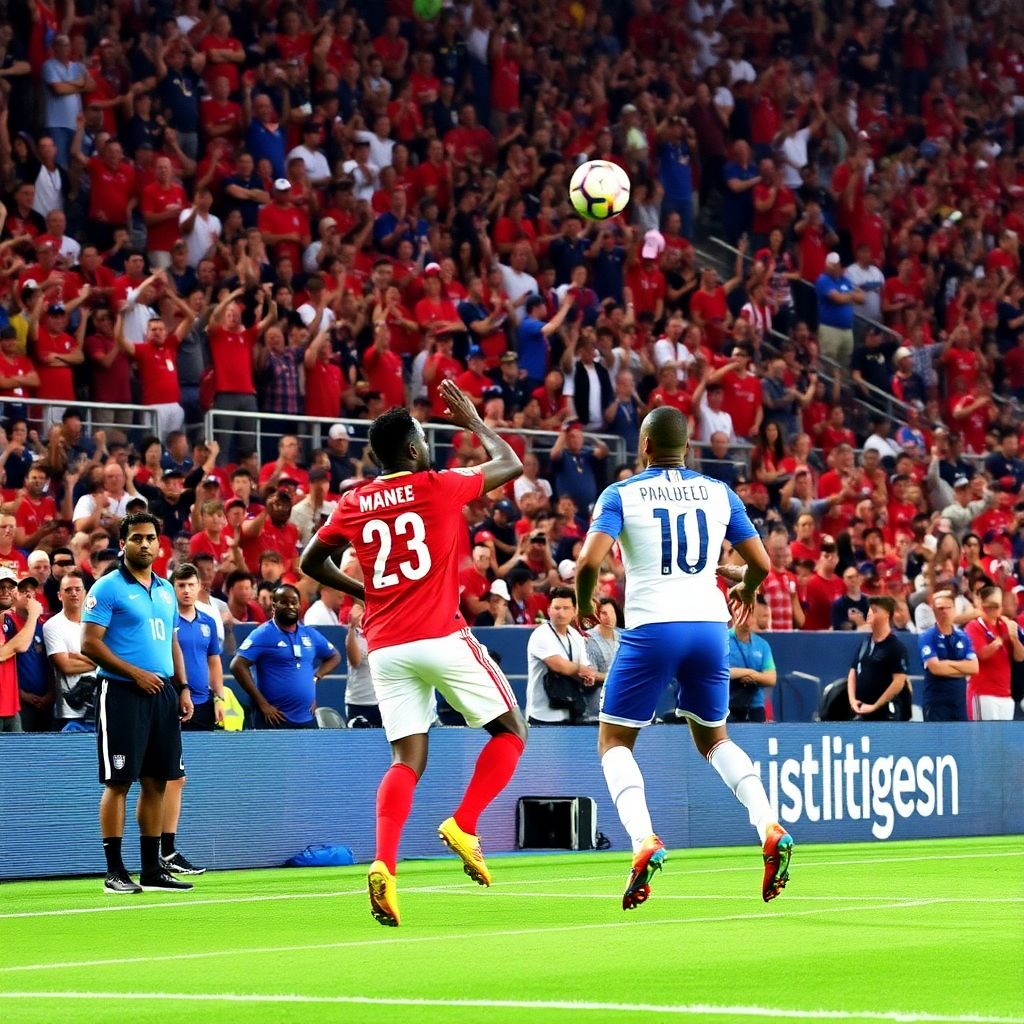
Did we really receive a warning shot from the USA? The question has been echoing since the wild friendly that ended with five goals, defensive chaos and a serious reality check before the World Cup. Our future opponent in the tournament turned a simple preparation match into a statement, forcing everyone to ask: are we genuinely ready for this level, or was this just the first crack in the façade?
The game started with a shock. Early goals shattered the balance of the match, exposing structural problems in defense and transitions. Even Sadio Mané, who stepped up with a brilliant brace, could not drag his team out of the fire. His two goals kept the scoreline respectable, but not the performance. For a side with World Cup ambitions, conceding so many chances in a “test” match feels less like an experiment and more like a red flag.
From the American side, the message was clear: high tempo, physical intensity and relentless pressing. They attacked the flanks, exploited the spaces between the lines and punished every positional mistake. It wasn’t just about the result; it was about setting the tone. The question “Did we get intimidated by the USA?” is less about fear and more about respect for an opponent that looked far more organized than expected.
The worrying part is that this wasn’t a one-off defensive collapse caused only by individual errors. It pointed to deeper issues: late reactions in midfield, poor coordination between full-backs and center-backs, and a lack of collective pressing. When early goals shake a “big” match like this, they often reveal who has a clear plan and who is still improvising.
Amid the chaos, Sadio Mané’s double reminded everyone why he is still considered one of the most decisive forwards in world football. His movement, composure in front of goal and leadership were at a different level. Yet the harsh reality is this: if your star scores twice and you still walk away with a feeling of defeat, your problems lie far beyond the attacking line. Mané’s heroics were a bandage on a much deeper wound.
That is exactly why Hakan Safi’s declaration – “We will build the most ambitious squad in our history” – suddenly carries extra weight. The friendly exposed what kind of squad depth, tactical flexibility and mental toughness will be required. Safi is not just talking about a standard rebuild; he’s hinting at a transformation that will shake the team from top to bottom.
Victor Osimhen also stepped into the spotlight, breaking his silence after a period marked by rumors and misquoted comments. “My words were exaggerated,” he insisted, downplaying some of the headlines that painted him as frustrated or disengaged. His camp sent a similar signal: the noise around him doesn’t reflect the reality inside the dressing room. Still, the mere need for such a clarification shows how intense the pressure is on top-level forwards today.
Transfer gossip continues to fuel the fire. At Beşiktaş, the future of Semih Kılıçsoy has finally become clearer. The club sees him as a cornerstone, not a trade asset, and is shaping its project with him at the core rather than planning a quick sale abroad. For a fanbase tired of watching its brightest talents leave too early, this stance is a rare and crucial change of direction.
Another name hovering around Beşiktaş is Noa Lang. Speculation has linked him to a move, but the Dutch winger’s first choice appears to be elsewhere. His priority, according to those close to him, is to make a step that keeps him in the spotlight of the biggest European stages. That doesn’t rule out a Turkish adventure in the future, but for now, Beşiktaş looks more like Plan B than a dream destination.
Hakan Safi, however, has set his sights on several specific targets and is poised for direct talks with the club’s hierarchy. His transfer wish list is bold, sometimes controversial, and clearly designed to push the team into a new era. Negotiations with the board will determine whether his vision turns into reality or remains a collection of ambitious ideas on paper.
One of the hottest transfer battles in recent months has surrounded a young Ukrainian talent. Galatasaray appear to have taken the lead, but Trabzonspor were also tracking the player closely. The attraction is obvious: a technically gifted, modern profile who can operate in multiple positions and fit both a pressing game and a more controlled possession style. Whichever club secures his signature won’t just gain a promising name, but a potential long-term jewel.
At Fenerbahçe, internal debates are no less intense. The “Lewandowski discussion” keeps growing: is signing a legendary but aging striker a visionary move or a dangerous gamble? Supporters are split. One side dreams of a superstar who can immediately lift the team’s profile and scoring power. The other fears a costly short-term solution that could block the path for younger forwards and disrupt the wage structure. The club’s next step will say a lot about its long-term strategy.
In the middle of this storm, Hakan Safi is again at the center of attention for a potential transfer move that many label as “the deal that will drive feminists crazy.” The description hints at a player whose past behavior, public statements or off-field controversies make him a lightning rod in debates about gender, equality and role models in sport. Bringing in such a figure would not just be a football decision, but a cultural one, forcing clubs and fans to choose between pure on-pitch output and off-pitch values.
Meanwhile, the Osimhen saga refuses to die. Another fresh statement on his future hit the headlines, with a high-profile transfer insider confirming renewed interest from several major clubs. The message is consistent: Osimhen is on the market’s radar, and his next move will be one of the defining transfers of the coming window. His current club knows it holds a premium asset, and will only let him go if an exceptional offer arrives.
Beşiktaş, aware that transfer budgets alone won’t close the gap with the elite, is preparing to bring in a “talent-hunter” head coach. The profile they are targeting goes beyond classic tactical expertise. They want someone who can identify, develop and maximize emerging players, transforming raw potential into market value and on-pitch production. Such an appointment could reshape the club’s identity over the next five years.
It’s not just football where the pressure is boiling over. In tennis, a second Turkish player has decided to renounce citizenship, directly pointing to the federation as the main reason. The criticism is harsh: lack of support, inadequate planning and an environment that, in their view, suffocates growth instead of nurturing it. Two athletes taking such a radical step is more than a personal decision; it’s a loud alarm bell for the entire system.
Back on the football side, Barış Alper Yılmaz finally opened up about his “secret agenda.” Long surrounded by speculation about his next move and career priorities, he chose to clarify things in his own words. He outlined his personal goals, the timeline he envisions for a possible move abroad, and what he expects from his current club. The surprise was not in his ambition – everyone knew he had that – but in his careful, almost meticulous planning for each step.
At Fenerbahçe, the political side of the game is nearing a decisive moment. The club’s election campaign is all but over, with insiders already claiming the winner is essentially known. Sunday’s vote is described as a formality, not a battle. Yet that “guaranteed” outcome also raises another question: if UEFA sanctions were to hit Fenerbahçe, who would be held responsible? The board, the sporting director, or the coaches who signed off on risky decisions? Accountability is becoming a central theme in every discussion around the club.
This is where the debate about Aykut Kocaman becomes relevant again. His legacy is being reassessed: were his positives greater than his negatives? Some highlight his organizational mindset, discipline and the stability he brought in difficult times. Others point to conservative football, missed opportunities and a lack of adaptability at key moments. The truth, as usual, probably lies somewhere in between, but the conversation itself shows how much Fenerbahçe is still searching for a clear identity.
Aziz Yıldırım, a name that has defined an era, appears ready to return with a defensive revolution. Words around the club speak of him “building a wall” at the back, assembling a dream center-back duo that would finally end years of instability in defense. Such a move would be symbolic: returning to basics, strengthening the spine and sending a message that no title can be won without a rock-solid back line.
Hakan Safi’s list of “bomb” transfers includes two names that make any fan’s heart race: Hakan Çalhanoğlu and Can Uzun. Çalhanoğlu brings world-class playmaking, set-piece mastery and the authority of a player who has proven himself at the highest level. Can Uzun, on the other hand, represents the future: dynamic, fearless, and with a ceiling that seems to rise with every match. Uniting these two profiles in one project would be a powerful statement of both present and future intent.
But the transfer market is also entering a new era, where decisions are increasingly influenced by image, content and public perception. That is why Serdal Adalı’s rumored plan to consult “phenomena” – high-profile online personalities – about potential signings caused such a storm. Supporters are divided between those who see it as a modern, marketing-savvy approach and those who consider it a dangerous surrender of sporting decisions to popularity metrics. The club will have to strike a careful balance between engagement and seriousness.
Behind the scenes, one of the most intriguing stories involves Paolo Maldini. His recent moves, career decisions and low-profile influence on certain transfers all have one common denominator: Beppe Riso, the agent reportedly acting as the key link. Understanding this relationship offers a rare glimpse into how modern football power structures actually work, far from the cameras. Maldini’s next project, heavily shaped by Riso’s network, could create yet another “prince” of Hakan Safi’s footballing universe – a player groomed to become the new face of a team built with bold, sometimes risky, but always ambitious choices.
In the end, the crazy 5-goal friendly against the USA did more than just entertain. It forced coaches, directors and players to confront hard truths. It revealed vulnerabilities, magnified transfer needs and pushed decision-makers like Hakan Safi, Aziz Yıldırım, Serdal Adalı and others to take clear, sometimes controversial positions. If there was a “warning” from the USA, it was this: the era of half-measures is over. Those who want to compete at the top must build with conviction, accept the backlash, and stand by their choices – on and off the pitch.