Turkey crash out of 2026 World Cup after record‑early goal against Paraguay
The Turkish national team’s 2026 World Cup journey ended with a bitter statistic: three games, zero points, zero goals and a place among the first confirmed teams to leave the tournament alongside Haiti. The final blow came in San Francisco, where Paraguay defeated Turkey 1-0 in a Group D clash decided almost before it had begun.
A record that nobody wanted
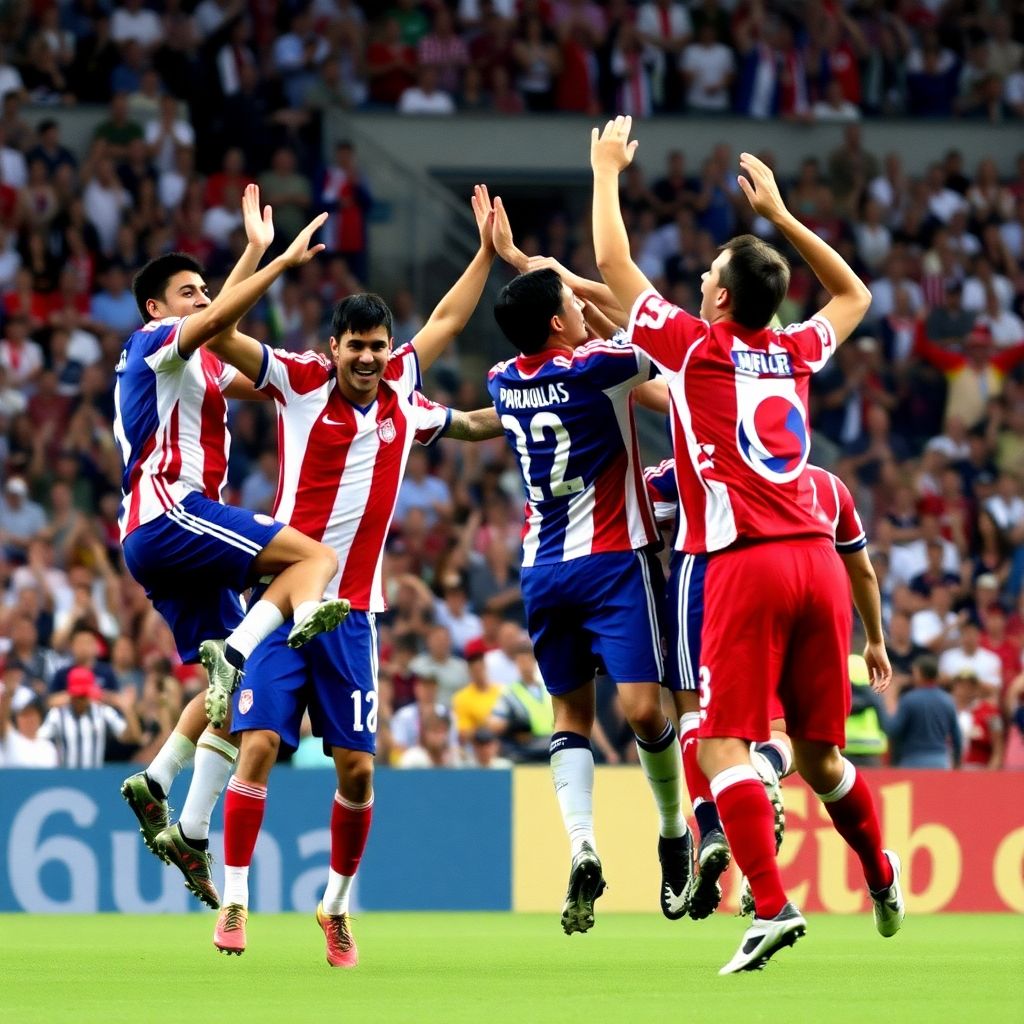
Turkey conceded what is, so far, the earliest goal of the 2026 World Cup. In just the 64th second, Paraguay’s Matías Galarza punished a disorganised Turkish defence, putting his team 1-0 up while some fans were still taking their seats.
That strike erased the previous tournament record, held by Ismael Saibari, who had scored for his team against Scotland in the 71st second. Now, it is Galarza’s name that will be attached to the competition’s fastest goal – and Turkey’s World Cup memories.
Despite having nearly the entire match ahead of them to react, the Turkish side never properly recovered from the early shock. The game ended 1-0, Paraguay taking all three points and Turkey completing the group stage without a single goal scored.
The worst World Cup campaign in Turkey’s history
This was Turkey’s third appearance at a World Cup. Statistically, it is now the worst:
– 3 matches
– 0 wins, 0 draws, 3 defeats
– 0 goals scored
– 0 points collected
For a football nation that still lives off the memories of its 2002 World Cup bronze medal, the 2026 performance marks a painful low. Many supporters had feared the team would struggle, but few expected such a total collapse in both results and performance.
Tactical confusion and lack of leadership
On the pitch, Turkey looked like a team without a clear identity. Conceding in the first minute against Paraguay highlighted a recurring problem: poor concentration and shaky organisation at the back. The defensive line was caught cold, the midfield failed to screen passing lanes, and there was no immediate reaction from leaders on the field.
In attack, the issues were just as obvious. The choice of centre-forward was heavily criticised even before the tournament, and the Paraguay match reinforced those doubts. Crosses and long balls rarely found a target, link‑up play was disjointed, and players who at club level claim to be “stars” for sides in Madrid, Milan or Turin struggled to assume responsibility in crucial moments.
Supporters later pointed out that the problem was not just finishing; it was the complete absence of a coherent attacking plan. The team moved the ball slowly, failed to stretch defences and seemed to rely more on individual flashes than collective patterns.
Montella under fire
Head coach Vincenzo Montella has emerged as the central figure of criticism. A significant section of fans argue that, in a “national cause”, a foreign coach is hard to accept – especially when results are so poor. For many, an international head coach can only be justified if he builds a clear identity and delivers success. Neither appeared in this tournament.
One of the recurring accusations is that Montella leaned too heavily on players from certain clubs and agents, giving the impression that the squad was shaped by lobbying rather than merit. Several names – especially from Galatasaray and Fenerbahçe – were singled out by angry supporters who described them as “protected” or “untouchable” despite underperforming.
The choice to start players like Kerem Aktürkoğlu and Yunus Akgün in key matches was branded by some as a declaration of tactical incompetence. “Going into a World Cup match with that attacking line is like saying, ‘I don’t understand football,'” was a sentiment frequently echoed among critics.
Selection debates and accusations of favouritism
Fans did not just criticise who played – they also raged about who did not. Many argued that more in‑form or more balanced options were left out or ignored until it was too late.
Names like Emirhan Topçu and certain domestic defenders were mentioned as players who, according to supporters, could have done a better job than those who actually featured at the back. One repeated claim was that the national team had turned into a “favouritism XI” rather than a true selection of the best Turkish talents.
Only a few players, such as Kenan and Orkun, were spared from the harshest criticism. They were often described as doing what they could in a dysfunctional system, while others “hid” during big moments. The general feeling: the squad didn’t reflect the country’s true player pool, but rather the power balance of agents and big clubs.
The Orkun factor and club priorities
The case of Orkun Kökçü became a symbol of the clash between national duty and club interests. Some Beşiktaş‑minded supporters openly said they were relieved that Turkey had been eliminated, because it meant Orkun could join his club’s pre‑season camp earlier and regain his rhythm away from the toxic atmosphere around the national team.
There was anger over the way he was used as well. In matches where others clearly struggled, particularly when opponents were down to ten men, Orkun was introduced only in the final minutes – like the 86th minute cameo that many described as an insult to his quality. For those critics, if a creative midfielder is kept on the bench until the last moments while an out‑of‑form teammate stays on the pitch, elimination is “deserved”.
Domestic football, foreign players and a deeper crisis
A broader structural issue surfaced repeatedly in fan reactions: the overwhelming number of foreign players in the Turkish league. According to many supporters, allowing up to 15 foreign footballers per squad has stifled the development of local talent.
Veteran fans in their 60s pointed out that they had predicted this kind of collapse long ago. Their argument is straightforward: if your domestic league is flooded with foreigners, your own players get fewer minutes, and when the time comes for a World Cup, you don’t have enough battle‑hardened Turkish footballers ready to perform.
There were also harsh words for modern players’ mentality. Several comments described them as “euro millionaires” for whom playing for the national team is just another fixture, not a matter of pride. Questions were raised about their connection to the country, their willingness to fight under pressure, and whether some even feel truly “Turkish” in footballing identity.
Federation, politics and calls for a reset
The anger was not limited to the coaching staff and players. The federation leadership and domestic power structures came under heavy fire. Accusations included:
– Being too closely aligned with specific big clubs
– Making decisions under political and commercial influence
– Ignoring warning signs from previous tournaments and qualifiers
Some supporters proposed an almost complete reset. There were loud calls for figures like Serdal Adalı to become federation president and for a more football‑centric structure, with names such as Serkan Reçber floated for the role of sporting or technical director. The idea is clear: football people, not political appointees, should run the game.
Others insisted that from now on, only a domestic coach should lead the national team – someone who understands local realities, feels the emotional weight of the jersey and is not perceived as an outsider.
The Berke incident and questions of dressing‑room culture
One episode repeatedly mentioned was goalkeeper Berke’s exclusion from the squad by an administrative decision. Critics argued that, instead of trying to suppress or punish players, authorities should have looked more deeply into the reasons behind his public claims of being subjected to mobbing alongside Emirhan Topçu and Can Uzun.
When Berke left the national team camp, much of the reaction focused on condemning him for “abandoning” the cause. However, some now say that the refusal to investigate his claims is part of the culture that led to the team’s collapse: problems are swept under the rug, dissent is silenced and real issues inside the dressing room are never addressed.
For these fans, those who shouted “no one is more Turkish than anyone else, the camp cannot be abandoned” without asking why a player felt forced to leave are just as responsible for the football seen on the pitch.
Image vs. substance: the cost of empty spectacle
Another element causing frustration is the perceived gap between image and reality. In recent years, the national team has been presented with dramatic videos, drones, military‑style visuals, mehter marches and heavy symbolism. For some supporters, this turned the team into a glossy brand rather than a serious football project.
They argue that behind the patriotic music and visual effects, there was little substance: no tactical evolution, no clear long‑term plan, no humility. That mixture of overhype and underperformance, combined with a media environment accused of flattering and protecting players, has made the national team “unlikeable” in the eyes of part of the fan base.
Several supporters admitted they felt no sadness at the elimination – and even a certain satisfaction – because the team, in their view, needed a shock to be forced into real self‑criticism.
What needs to change?
Looking forward, there is a broad, if informal, consensus among critical fans about the main steps that must follow this World Cup disaster:
1. An honest audit of the campaign – not just on tactics, but on squad selection, dressing‑room culture, medical and physical preparation, and the influence of agents and clubs on national team decisions.
2. Clear selection criteria – based on form, fitness and suitability for the game model, not club politics or media hype.
3. A rebalanced foreign‑player policy – to ensure young Turkish players get enough competitive minutes, without completely closing the door to quality imports.
4. A new footballing identity – an agreed style of play, starting from youth levels up to the senior team, so that each generation fits into a consistent framework.
5. Stronger leadership on the pitch – captains and experienced players who take responsibility in difficult moments instead of disappearing behind gestures and social‑media statements.
Whether these reforms actually happen will define if 2026 is remembered as rock bottom or just another step in a long decline.
Between disappointment and opportunity
For the players, the staff and the federation, the 2026 World Cup will remain a painful chapter: a record‑early goal conceded, a winless and goalless group stage, and widespread public anger. Yet even some of the fiercest critics recognise one positive: the shock is so strong that it leaves no room for self‑deception.
Clubs will now get their internationals back earlier than expected, which in some cases, like Orkun’s return to Beşiktaş, is seen as a silver lining. But the greater question lies beyond club interests: can Turkish football learn from this failure, or will it respond with the usual changes of names without touching deeper problems?
If the reaction is limited to replacing the coach and a few players, the next World Cup cycle may look depressingly familiar. If, however, the anger in the stands and at home is channelled into structural reform, 2026 could yet become the starting point for a genuine rebuilding of the national team – one based less on noise and spectacle, and more on competence, merit and a clear footballing vision.