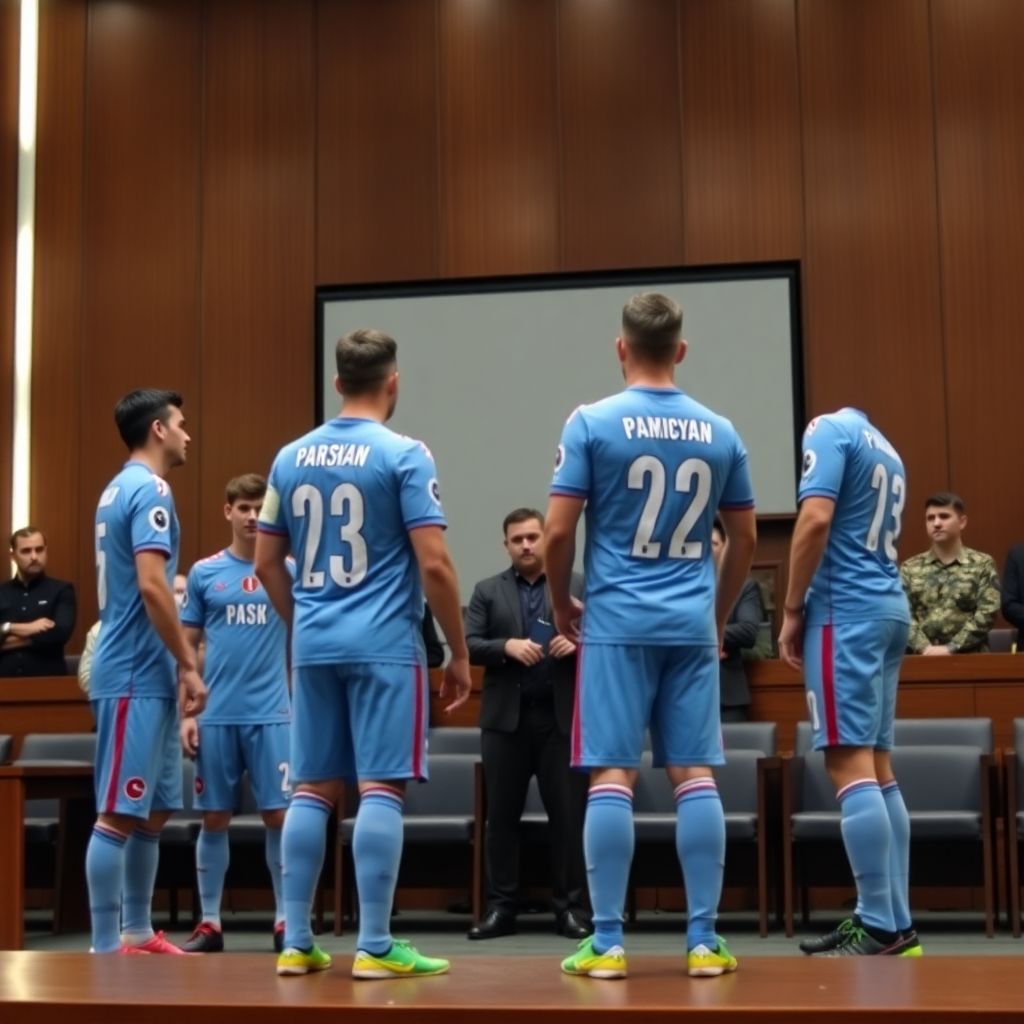
Our boys are striking back: compensation to be donated to the Mehmetçik Foundation
After the World Cup exit that turned into a national disappointment, the Turkish national team is no longer limiting its response to the pitch. Following the harsh social media campaign that snowballed into insults, slander and systematic defamation, the players of the A National Team are preparing to launch a massive legal offensive against those hiding behind anonymous accounts. According to information from football circles, every lira obtained from these lawsuits is planned to be donated to the Mehmetçik Foundation, giving the process a symbolic as well as moral dimension.
The legal initiative is expected to focus not on criticism of performance, but on messages that clearly contain swearing, insults, threats and heavy defamation. Lawyers acting on behalf of the players are said to be compiling screenshots, IP traces and the digital footprints of the most active accounts in the lynch campaign. In this context, complaints will be filed individually for each player, but the process will be coordinated in a joint strategy.
TFF President Yıldırım Demirören’s successor, Mehmet Büyükekşi, had already spoken broadly about digital hate speech. Now, current TFF President İbrahim Hacıosmanoğlu has taken the issue one step further and publicly called on the Ministry of Justice for an urgent legal regulation. Hacıosmanoğlu argues that existing laws are not sufficient to combat organized digital lynching and that clearer, heavier sanctions must be introduced, especially in the field of sports.
In his meetings with legal experts, Hacıosmanoğlu reportedly underlined that the issue has gone beyond football and turned into a public problem. According to him, national team players who wear the jersey of “Bizim Çocuklar” and represent the country on the world stage should not be left defenseless against online mobs. In this sense, the planned donation of possible compensations to the Mehmetçik Foundation is meant to send a double message: a stand against digital abuse and concrete support for the soldiers who protect the country.
The Mehmetçik Foundation, which has long been associated with aid to veterans and the families of fallen soldiers, is viewed as one of the most trusted institutions in the country. The fact that the national team players have chosen this foundation for their donations is widely interpreted as an attempt to restore unity at a time when social polarization has infiltrated even football. Instead of turning the lawsuits into a personal financial gain, the players are trying to transform the anger directed at them into a social contribution.
Behind this initiative lies more than just personal honor. In recent years, many footballers in Turkey and abroad have complained of systematic harassment and threats on social media. While some preferred to remain silent, others chose to deactivate accounts or step back from public interaction. The national team’s decision to respond through legal channels, and then donate the money, could set a precedent both for domestic leagues and for other branches of sport.
Legal experts warn that the process will not be easy. Identifying anonymous accounts, obtaining user data from platforms, and processing files one by one through the justice system can be lengthy and costly. However, lawyers involved in the initiative state that the main goal is not to chase thousands of accounts but to win landmark cases against a smaller number of clear offenders, thereby sending a deterrent signal.
In parallel with these developments, the “morality operation” in football is gaining momentum. Discussions are not limited to insults against the national team; the ugly posts targeting global stars also remain under scrutiny. Cristiano Ronaldo, for example, has been bombarded with epithets such as “hunchback, selfish, old man, egoist, thief” in various languages on social media. Football authorities are increasingly considering whether special provisions are needed to protect athletes from such systematic character assassinations.
The Ministry of Justice is now under the spotlight: will it respond to Hacıosmanoğlu’s call? In Ankara, the idea of making hate speech, defamation and threats against athletes and sports officials into a specific category of crime is being seriously discussed. If such a step is taken, both criminal and financial sanctions could be significantly tightened. In addition, there is talk of establishing fast-track procedures for online abuse involving athletes, so that lawsuits will not be buried under the usual court backlogs.
While the national team fights its off-field battle, the domestic transfer market is boiling over with familiar controversies. One of the most talked-about topics is Alexander Nübel, the German goalkeeper. To those pushing him towards Istanbul giants, some voices have sarcastically suggested, “Rather than move to Beşiktaş, go to Amedspor,” hinting at the intense pressure and high expectations surrounding two very different clubs. This kind of commentary illustrates the polarized atmosphere in Turkish football, where even transfer rumors ignite political and social debate.
At Fenerbahçe, coach İsmail Kartal is said to have crossed out Mattéo Guendouzi from his transfer notebook, turning instead to a new profile being compared internally to Rade Krunić. The plan is to bring in a central midfielder who can contribute both defensively and in build-up play, but with a more balanced wage and transfer fee structure than previous high-profile pursuits. Supporters are impatiently asking, “Where is the KAP announcement, where is Aziz Yıldırım?” as the numbers thrown around for potential signings swing wildly between 42 and 70 million euros.
On the attacking front, the debate around Deniz Undav continues. Some voices claim, “Turkey doesn’t need Deniz Undav, Tiago Çukur is enough for us,” pointing to the need to give more responsibility to younger, domestic or already contracted forwards. Former president Aziz Yıldırım’s old “laws” and principles on transfer policy are still quoted frequently: not overpaying for players, avoiding unnecessary commission payments, and refusing to let agents dictate the club’s direction. Yet, in practice, the market dynamics seem to drag clubs back toward inflated fees.
This tension is visible in other positions as well. It is whispered that even certain defenders, mockingly labeled “wrestler-type” or “dwarf stoppers” because of their physiques or play styles, are being rejected by technical committees who want more versatile, modern profiles. The days when a center-back could be evaluated only by physical strength and aerial duels are over; today’s coaches demand ball-playing ability, speed, and flawless positioning.
Across the Bosphorus, Galatasaray appears to have resolved internal frictions and restored relative peace in the dressing room. With calm restored behind the scenes, the club has put its foot back on the transfer gas pedal. The first reports emerging about new signing candidates such as Wilfried Singo have not been entirely encouraging, leading to a cautious wait. Nevertheless, a new target has already been put on the agenda: Ilaix Moriba. Negotiations are reportedly circling around a 5 million euro fee, with Galatasaray trying to lower the fixed cost by adding performance-based bonuses.
Club president Dursun Özbek has drawn a public red line on transfers: offers deemed “funny” and demands described as “astronomical” will not be entertained. This stance reflects the bitter lessons learned from past windows, when expensive signings failed to deliver on expectations. Galatasaray aims to maintain competitiveness in Europe without crippling its budget, and that requires discipline in the face of aggressive agent tactics.
Beşiktaş, meanwhile, is preparing for a complete overhaul in goal. The black-and-whites are said to have put Bilal Bayazıt at the top of their list. The club, eager to find a long-term solution between the posts, views Bayazıt as a profile with upside who can grow with the team. In attack, Beşiktaş is allegedly readying a final offer for Dušan Vlahović, a move that would be sensational if realized. The Italian press has already picked up on these rumors, noting that a substantial package is on the table even if the chances remain slim.
At Fenerbahçe, Serdar Dursun is on the verge of a return. After Vedat Muriqi, he would become the second striker brought back as a “familiar face” to deepen the forward line. The club hopes his knowledge of the league and dressing-room chemistry will provide an immediate impact, unlike high-priced foreigners who sometimes need long adaptation periods.
On the international scene, the Egyptian national team is catching the eye. Commentators are saying there is now a “Salah greater than the Pharaoh,” as Egypt sends strong signals of advancing to the next round with confident performances. Similarly, the story of the Cape Verde national team – often jokingly called a literal “neighborhood” team due to the country’s tiny population – continues to fascinate neutrals. What began as a football fairy tale now looks like a genuine possibility: they might actually progress from their group.
Back in Turkey, Fenerbahçe supporters keep repeating a famous phrase about Aziz Yıldırım: “The president’s word is as good as a promissory note.” This belief fuels expectations that bold transfer moves and structural reforms are imminent whenever his name resurfaces on the agenda. Fans are eagerly waiting to see whether the next board will reconstruct the squad in line with his long-cherished principles.
In the midst of all these transfer sagas, polemics flare up off the pitch as well. TFF President Hacıosmanoğlu’s response to Fatih Terim has been widely circulated. To those claiming Terim “cannot express what is truly in his heart,” Hacıosmanoğlu retorted that people who fail to reflect their inner thoughts in their words cannot expect their intentions to be correctly understood. The exchange epitomizes the ongoing power struggle among prominent figures in Turkish football, where every press statement is dissected for hidden meanings.
At the core of everything, however, lies the same demand: ethics, accountability and respect. From the national team’s legal war against anonymous abusers, to the moral reckoning over insults directed at global icons like Cristiano Ronaldo, to the financial and sporting integrity of transfer dealings, Turkish football is grappling with questions that go far beyond 90 minutes. Whether through the courts, through new regulations, or through cultural change in stadiums and online platforms, the game is searching for a new balance.
If the planned lawsuits succeed and the compensations do indeed flow to the Mehmetçik Foundation, a powerful symbol will emerge: a national team that turns the hatred thrown at it into tangible support for the country’s soldiers. That gesture could become a turning point in how athletes, institutions and fans understand responsibility – on social media, in boardrooms and on the field.