New offer for Mason Greenwood: the race intensifies
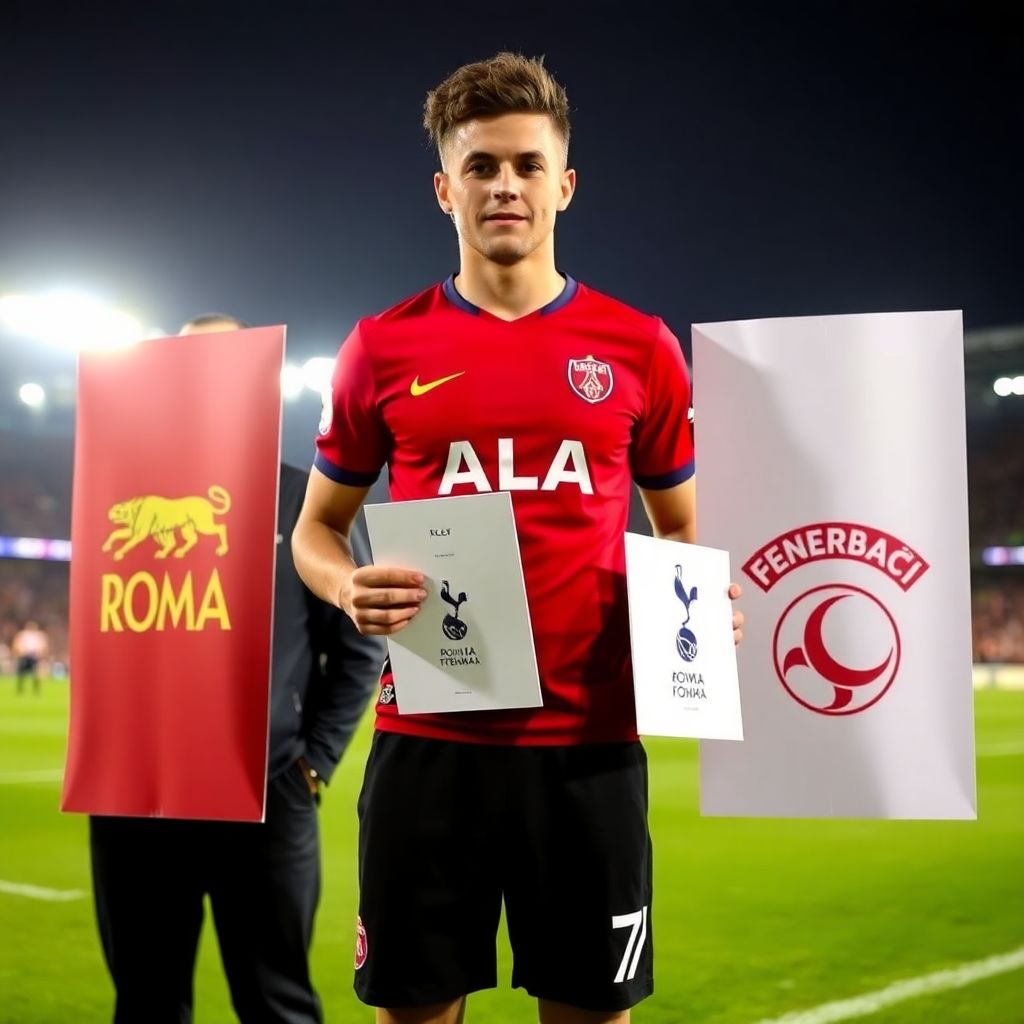
Mason Greenwood’s resurgence in Marseille has turned him into one of the hottest names of the summer transfer window, and the list of suitors is growing by the day. After a standout season in Ligue 1, the 24‑year‑old forward is now at the center of a three‑way tug of war involving Roma, Tottenham and Fenerbahçe, with negotiations accelerating behind the scenes.
In Turkey, Fenerbahçe presidential candidate Hakan Safi has publicly claimed that he has already reached an agreement with the player. According to him, the club has laid out a long‑term project with Greenwood as a cornerstone of the attack, hoping to make a statement both domestically and in European competitions. For Fenerbahçe, signing a high‑profile forward of this caliber would be more than a sporting move; it would also be a political message in the heated atmosphere surrounding the club’s presidential elections.
Roma, however, are not prepared to step aside. The Italian club, which has been searching for a reliable scorer to lead the line, has reportedly accelerated talks in recent days. Roma see Greenwood as a versatile attacker who can operate both centrally and on the wings, offering tactical flexibility to fit different game plans in Serie A and in Europe. The club’s management believes that his current market value, while high, could still be a bargain if he continues his upward trajectory.
Tottenham have now officially joined the chase as well. After a season in which they often lacked a consistent goal source in crucial matches, Spurs are looking for a forward capable of both finishing chances and creating space for others. Greenwood’s profile fits perfectly with their high‑tempo, attacking brand of football. The Premier League remains a familiar environment to him, and that, in Tottenham’s view, could reduce adaptation time compared to a move to another league.
Behind all these negotiations lies a simple fact: Greenwood’s numbers in Marseille have forced big clubs to pay attention. His goals, assists and overall involvement in the final third have shown that he has put the most turbulent period of his career behind him on the pitch. In France, he has not only scored but also demonstrated maturity in decision‑making and movement without the ball, convincing scouts that he can once again be a decisive player at the highest level.
At the same time, the financial side of the deal is far from simple. Each of the interested clubs is operating under different budget constraints and strategic priorities. For Roma, investing heavily in one player could limit their options elsewhere in the squad. Tottenham, though wealthier, are trying to avoid overpaying after several expensive transfers in recent years that did not fully deliver. Fenerbahçe, for their part, must balance ambition with realism, knowing that they are competing with clubs from the top five European leagues in terms of both wages and sporting appeal.
This is where the criticism about “numbers showing incompetence” starts to appear in the background. For many observers, Turkish clubs too often enter transfer races without a clear plan, paying high wages to aging stars or overpaying in desperation when European options dry up. Greenwood, however, represents a different kind of opportunity – a player entering his prime, with resale value and the potential to elevate the league’s profile. If Fenerbahçe mishandles this negotiation, it will once again raise questions about the long‑term strategy and financial discipline of Turkish football’s biggest institutions.
National team coach Vincenzo Montella, who has become a central figure in Turkish football debates, has also been at the heart of several controversies unrelated to Greenwood. In public comments, he has attributed some of the national team’s recent setbacks to a combination of bad luck and structural issues rather than just poor performances on the pitch, wrapping it in the word “fate”. Critics, however, point out that “fate” does not explain the cold statistics: missed chances, defensive errors and tactical decisions that have cost Turkey dearly in major tournaments.
Those statistics paint a harsh picture. Wasteful finishing in key matches, individual mistakes at the back, and a lack of composure in the final minutes have repeatedly turned winnable games into painful defeats. Analysts have argued that these numbers are not accidental but a reflection of planning errors, inconsistent squad selection and an inability to manage pressure at the highest level. When you continuously lose by fine margins, it starts to look less like misfortune and more like a pattern of mismanagement.
Montella’s squad choices have only fueled the debate. The inclusion of Salih in the final 26‑man squad, for example, has been interpreted by some as an attempt to put him in the shop window and help facilitate a transfer. While this kind of decision is not unusual in international football, it raises questions about the balance between sporting merit and market considerations. At the same time, four players who were already on the fringes have effectively been told they will no longer be part of the national team picture, a harsh but clear message from the coaching staff.
The futures of key figures like Hakan Çalhanoğlu and Merih Demiral have also come under scrutiny. For Çalhanoğlu, the discussion revolves less around his club form, which remains strong, and more around how effectively he is being used in the national setup. Merih, on the other hand, sits at the intersection of form, discipline and tactical fit. Decisions about their roles are seen as barometers of Montella’s vision: will he continue to build around experienced names, or start a more radical transition toward a younger core?
Within this turbulent context, individual stories stand out. Barış Alper has been at the center of rumors suggesting he was reluctant to play in certain conditions or positions, something he has strongly denied. Instead, he has spoken of his desire to prove himself on the biggest stage, insisting that he will show his true level at a future World Cup. This mixture of ambition and frustration reflects the mood of many Turkish players, who feel they are capable of more than recent results suggest.
Beyond the pitch, the Turkish Football Federation is under increasing pressure. Criticism of management, refereeing, financial oversight and long‑term planning has reached such a level that government authorities have started to intervene more directly. With elections approaching, the margin for error is shrinking. Any new leadership will be judged not only by immediate results but also by whether it can restore credibility to the federation and implement structural reforms that have been postponed for years.
In the transfer market, one of the recurring complaints has been what some describe as a “striker embargo” for Turkish clubs. Due to financial constraints, licensing rules and competition from wealthier leagues, securing a top‑level center‑forward has become incredibly difficult. The result is a constant feeling of dependency and frustration – clubs are forced to accept loans, short‑term deals or aging players, instead of building a long‑term solution in the most decisive position on the field. This perceived helplessness feeds a sense of shame among fans who watch rival leagues sign the very players their teams can only dream of.
Amid this landscape, Montella has reportedly received surprising approaches regarding his future. While he has publicly committed to his current job, interest from clubs and potentially other national teams has sparked speculation about whether he might walk away from Turkish football sooner than expected. For a coach frequently criticized yet still seen as a high‑profile figure, any move would have a domino effect: a new national coach, a fresh tactical direction and possibly a reset of the relationship between federation, players and fans.
On the club front, familiar names continue to shape the narrative. Volkan Demirel has confirmed that he has been contacted about future roles, and it is known that he has held conversations with influential figures such as Aziz Yıldırım. His name often surfaces when discussions turn to rebuilding projects or new sporting structures. For many supporters, he represents a bridge between the emotional intensity of the past and a more modern, analytical approach to the game.
Elsewhere, transfer activity is relentless. Ouali appears to have finalized a deal for a German central midfielder, underlining how Turkish clubs are still able to attract talent from Europe despite financial challenges. Trabzonspor, meanwhile, is holding firm on its valuation of key assets, reportedly waiting for offers that could reach 60 million euros before considering a sale. In a market where Turkish teams are usually seen as sellers under pressure, this stance is a deliberate attempt to change the narrative and demand fair value.
International voices also shape the debate about Turkish football’s current state. Former Liverpool manager Jürgen Klopp has pointed to structural weaknesses – from youth development to tactical discipline – as central reasons why Turkey often exits major tournaments earlier than expected. His assessment, whether fully agreed with or not, resonates because it goes beyond individual matches and looks at the system as a whole.
Galatasaray, on the other hand, continues to hunt for players capable of making an immediate impact. João Gomes has reportedly opened the door to a move and is said to be waiting for the right moment and conditions to finalize his decision. A signing of this kind would signal Galatasaray’s intention to remain competitive not only in the domestic league but also in European competitions, where physicality and tempo demand a high‑level midfield presence.
One of the brightest stories in this otherwise tense environment is Deniz Undav. The forward has become a symbol of persistence and self‑belief. Having made his name in Germany, he speaks with confidence about his ability to score in any match and has backed those words up with consistent performances. His refusal to give up his place in the team and his sharp finishing have made him a fan favorite, while his Kurdish roots add an extra layer of emotional resonance to his rise in European football.
Friendlies and minor tournaments have not always brought good news for Turkey. A disappointing 0-1 defeat to Curaçao, for example, sparked a round of soul‑searching: did the team really deserve such a result, or was it another example of underestimating supposedly weaker opponents? Matches like these feed into the larger conversation about mentality, preparation and whether the national setup is truly learning from past failures.
Injuries add more drama to the scene. Wilfried Singo left the pitch in tears after a recent match, with the first medical reports causing genuine concern. While the full extent of the injury is still being evaluated, the initial reaction suggested a potentially serious problem that could impact both his club and national team seasons. These moments serve as reminders of how fragile a player’s career can be and how quickly plans can be derailed.
Veteran coach Fatih Terim remains a powerful voice in Turkish football discourse. He is expected to issue a strongly worded response to his critics, possibly addressing those he metaphorically describes as “vultures and hyenas” – people who, in his view, appear only in times of crisis to attack rather than contribute solutions. Whatever he says is likely to dominate headlines and further polarize opinion around the direction in which Turkish football should move.
Recent international fixtures have added more layers to the sporting drama. Germany’s 2-1 win over Ivory Coast and Turkey’s 3-2 victory over Germany showcased both the strengths and weaknesses of the teams involved. For Turkey, beating Germany was a rare high point, a reminder of the talent available when everything clicks. Yet isolated successes are no longer enough to silence critics who are demanding consistency rather than occasional flashes of brilliance.
Amid all of this, Mason Greenwood’s situation can be seen as a mirror of the broader tensions in the game. His future encapsulates key questions: how can ambitious but financially limited clubs compete with Premier League and Serie A sides? To what extent should a player choose immediate wages over long‑term career development? And how do national leagues, like Turkey’s, leverage such high‑profile transfers to improve their image and competitiveness rather than masking deeper problems?
If Greenwood opts for Tottenham, he will be returning to the most competitive league in the world, where every mistake is punished but every strong performance can elevate his status rapidly. Choosing Roma would place him in a tactically sophisticated environment, under intense but arguably less chaotic pressure than the Premier League. A move to Fenerbahçe, meanwhile, would give him the chance to become an instant icon, leading the line in front of one of the most passionate fan bases anywhere and potentially transforming the perception of the Turkish league abroad.
Ultimately, his decision will hinge on a mix of sporting, financial and personal factors. What is clear, however, is that each club’s pursuit of him is revealing: Roma’s hunger to rebuild, Tottenham’s need for a reliable scorer, and Fenerbahçe’s desire to break out of the cycle of short‑term fixes and finally land a forward who can define an era. In that sense, the “new offer” for Mason Greenwood is more than just another transfer story – it is a test of ambition, planning and credibility for everyone involved.