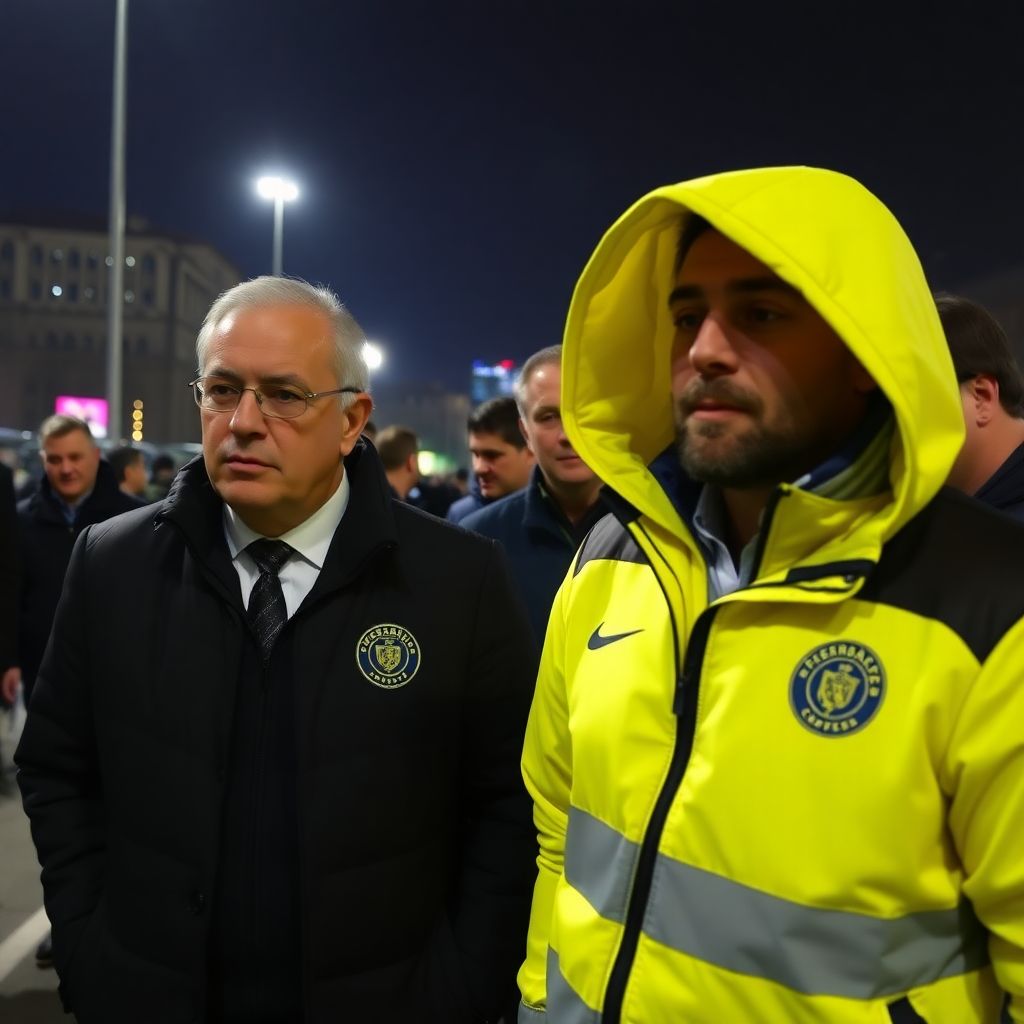
Midnight shock at Fenerbahçe: secret deal signed, Kocaman era ends before it starts
Fenerbahçe entered a new stormy chapter with a dramatic decision taken literally in the middle of the night. What looked almost certain to become the “Aykut Kocaman era – part two” collapsed within hours, and behind the scenes a classic midnight operation brought İsmail Kartal back to the club without even a courtesy call to the veteran coach.
How the Kocaman plan collapsed
For days, the expectation was clear: Aykut Kocaman was the frontrunner for the Fenerbahçe bench. Talks were held, scenarios were discussed and, on paper, everything seemed lined up. Yet, during negotiations, Kocaman’s attitude became the decisive element.
According to those involved, he never “jumped on” the job with the kind of hunger and insistence the management wanted to see. His reserved, almost distant stance created the impression that he was not fully convinced by the project. That cool approach was read at the club headquarters as a lack of desire and commitment.
In high-pressure clubs like Fenerbahçe, where the coach often has to fight for every detail, this sort of hesitation can be fatal. In the eyes of the board, particularly in a period of internal and external tensions, they needed someone who would almost throw himself on the job. Kocaman did the opposite: he kept his distance, questioned, waited. The rope slowly frayed.
Silence on the phone, decision at the table
The breaking point was as symbolic as it was brutal. Even Oğuz Çetin – a figure with strong ties both to the club and to Kocaman – reportedly could not reach him at a critical phase. Calls went unanswered, messages remained without a concrete response. At that exact moment, impatience at the club turned into a decision.
Without giving Kocaman any final, formal notification or last chance to respond, Fenerbahçe’s management convened late at night. While many assumed that talks were still ongoing, the club quietly pivoted.
The secret midnight signing with İsmail Kartal
In that late-hour meeting, the yellow-navy hierarchy made its call: İsmail Kartal would return. Before dawn, a full agreement was reached and the contract was signed. No press leaks, no prolonged drama – just a “silent” but decisive move.
Kartal’s appointment was wrapped in secrecy until the ink was dry. Only then did the story begin to surface: while the football world still debated whether Kocaman would finally accept the job, Fenerbahçe had already turned the page. By sunrise, the Kocaman option was not just on hold – it was dead.
This is why many insiders now say: “If he had thrown himself on the job, this would never have happened.” Kocaman’s unwillingness to grab the role with both hands opened the door for Kartal’s rapid and discreet arrival.
Why Aykut Kocaman “wasn’t the one” this time
There is a deeper background to why the club stepped away from Kocaman despite his history at Fenerbahçe:
1. Emotional weight of the past – Kocaman’s previous spells brought both success and conflict. The management reportedly feared that old tensions, unhealed wounds and strong opinions within the fanbase would resurface instantly.
2. Different vision for the squad – In preliminary talks, differences emerged regarding transfer priorities, squad structure and the role of certain stars. Club leaders wanted more flexibility; Kocaman was known for his firm, sometimes rigid football principles.
3. Risk of another internal clash – In the Aziz Yıldırım era, Kocaman had moments that “drove the president crazy,” from tactical stubbornness to emotional outbursts and public statements. Memories of those clashes still echo in the corridors of the club.
4. Urgency vs. hesitation – Fenerbahçe needed a coach ready to say “yes” instantly, step into chaos and own it. Management perceived Kocaman’s stance as “I’ll think about it,” which, in this environment, is almost the same as a no.
Aziz Yıldırım factor: how Kocaman once lit the fuse
To understand the current distrust, it’s important to recall the old dynamics between Kocaman and former president Aziz Yıldırım. At times, the relationship was explosive. Tactical decisions in big matches, player selections and transfer disagreements often ended with heated meetings.
There were periods when Yıldırım felt that Kocaman’s public comments or match strategies undermined the club’s image or his own authority. Even when the team was performing decently, these internal earthquakes repeatedly pushed patience to the limit. That legacy has never fully disappeared from the collective memory of the club.
So when the idea of bringing him back reappeared, some board members reportedly warned: “We might be buying the same old argument again.” In the end, once hesitation surfaced from Kocaman’s side, those doubts took over.
Transfer plans turned upside down
The coaching saga did not unfold in isolation. Fenerbahçe’s transfer roadmap was also thrown into disarray. Initial plans were drafted with one technical director profile in mind; when the decision shifted to Kartal, many of those strategies had to be reconsidered from scratch.
– Some high-profile targets such as Asensio and Talisca, once considered potential game-changers, were effectively ruled out.
– The club had to accept that certain European stars, unlike players like Skriniar in the past, would not force their way out or make major financial sacrifices to join.
– A chain reaction was triggered on the market: Pavlidis was heavily linked with Beşiktaş, Icardi with a move to Benfica – each move affecting how Fenerbahçe could position itself in negotiations.
The conclusion at the club was clear: the initial plan was obsolete. With a new coach and a new reading of financial realities, transfer strategy had to be rewritten.
Galatasaray pressure and the Ali Koç effect
Across the city, Galatasaray’s motivation has been fueled heavily by the rivalry with Fenerbahçe and, in particular, by the presence of Ali Koç at the helm. Every misstep from Kadıköy is seen as an opportunity in Florya.
Okan Buruk has even admitted internally how much this rivalry shapes their drive: every trophy has a double value when it comes at Fenerbahçe’s expense. The narrative is simple – as long as Ali Koç remains in charge and Fenerbahçe fall short of the title, Galatasaray feel they are winning an off-the-pitch battle too.
Within that battle, there are also “perception wars.” Fenerbahçe’s bonus structures, performance incentives and internal rewards are scrutinized and sometimes weaponized as talking points. Galatasaray, in turn, faces its own dilemmas – most notably the tension between keeping Icardi or accepting offers around the 50 million euro mark. That debate has created visible fractures: choose the cult hero, or the transformative money?
National Team: eyes on the World Cup and Germany
In the wider Turkish football landscape, attention is also shifting to the national team’s next major steps. The upcoming fixtures, including a crucial meeting with Germany, are being treated as mini-finals in preparation for the World Cup stage.
Kaan Ayhan has been one of the voices drawing a line under internal doubts, insisting on unity and focus. Meanwhile, Vincenzo Montella, asked about critics and those who question his position, responded with a strong emotional message: he stressed how deeply he identifies with Turkey, going as far as to say he feels “more Turkish” than some of his detractors who claim to defend the country while constantly trying to damage its football.
Before the Paraguay match, this passionate stance resonated widely and added an extra layer of fire to the dressing room.
International notes: crises, disappointments and surprises
Beyond Turkey, the football world continues to deliver stories:
– In Paraguay, a “fraud” scandal erupted around figures connected to the game, as bold words made before the Turkey clash backfired spectacularly.
– Mexico made it two wins from two, getting the job done on paper, yet their football was widely criticized. Their own fans, unimpressed by the style, even resorted to booing.
– Canada produced a statement 6-goal performance, but the joy was overshadowed by the serious injury to Kone – a bone-breaking challenge from a Qatar opponent turned celebration into shock.
These episodes feed into a global narrative: results matter, but how you achieve them, the injuries, the controversies, all shape public perception.
Individual stories: confessions and ambitions
On the player front, several Turkish names have stepped into the spotlight:
– Ersin Destanoğlu made headlines with a double signing scenario, underlining both his personal ambition and the trust invested in him for the future.
– Yunus Akgün openly admitted that he and his teammates had “disappointed” at key moments, a rare and honest self-criticism that fans often demand but rarely hear.
This new generation of players is being watched not only for their technical development but also for their capacity to handle pressure, speak honestly and bounce back from failure.
The Acun Ilıcalı angle: another twist in the rivalry
Media figure and club owner Acun Ilıcalı once again found himself at the center of football debates with a sharp rhetorical shot connected to Aziz Yıldırım. His message was simple and provocative: if someone “loves him that much,” then they should “go ahead and take him.”
This kind of bold talk feeds the already intense fault lines in Turkish football, where personalities, friendships and old alliances often matter as much as tactical boards. Every sentence becomes material for new debates, memes and interpretations.
What the midnight operation means for Fenerbahçe’s future
The way the club handled the Kocaman-Kartal transition says a lot about Fenerbahçe’s current psychology:
– Impatience is at a peak – The board has no tolerance left for long negotiations or hesitation.
– Communication lines can be ruthless – Even a coach with Kocaman’s history can be bypassed overnight if the club senses indecision.
– Short-term stability beats long-term gamble – With Kartal, management believes they are choosing familiarity, calmness and immediate clarity over a potentially more explosive, emotionally charged alternative.
For Kocaman, this episode is another complex chapter in his long relationship with Fenerbahçe – a story that now includes a “non-era” that ended before it began. For Kartal, it is a fresh chance to reshape his legacy at a club that turns from dream to nightmare in a matter of weeks.
One thing is undeniable: if Aykut Kocaman had thrown himself onto the opportunity, owned it from the first conversation and erased all doubts with a clear “yes,” the night might have ended very differently. Instead, Fenerbahçe wrote another late-night story, underlining once more that in this club, hesitation has a cost, and decisions, when they come, can be as quick and sharp as a signature in the dark.