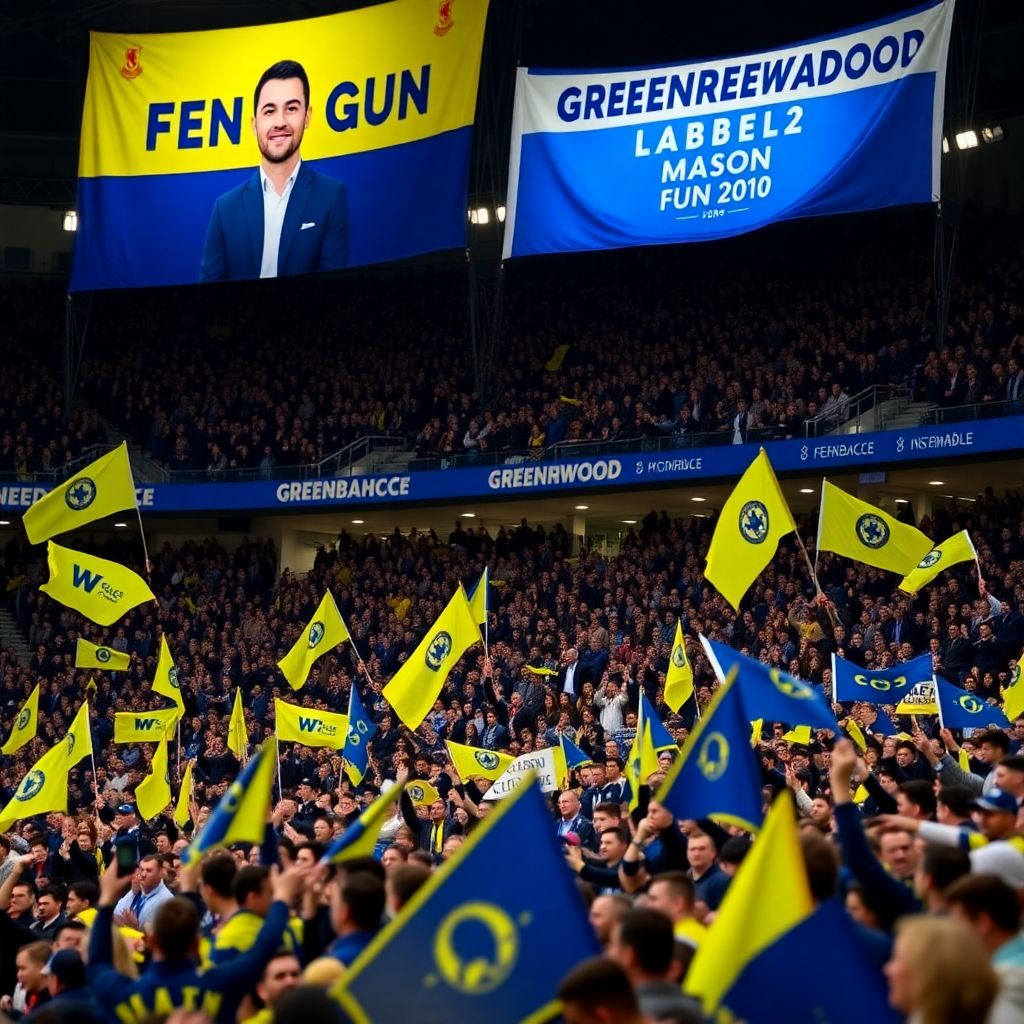
BBC reports: Mason Greenwood becomes joint priority target for Fenerbahçe presidency race
According to BBC coverage, a remarkable consensus has emerged in the heated Fenerbahçe presidential elections: both prominent candidates, Aziz Yıldırım and Hakan Safi, have set their sights on the same marquee signing. Their shared objective is reportedly Mason Greenwood, the left‑footed English attacker currently at Marseille and regarded as one of the most technically gifted wide forwards of his generation.
For a club that has grown accustomed to high‑profile transfer sagas, Greenwood represents more than just a potential addition to the squad. His name has quickly turned into a symbol of sporting ambition in a season where Fenerbahçe aims to rebuild its European reputation and reclaim domestic dominance. The fact that two rival candidates are allegedly prepared to structure their campaign promises around his signing underlines just how big a statement this transfer would be.
Why Greenwood is such a big deal for Fenerbahçe
Greenwood’s profile fits perfectly into the type of player Turkish giants have been chasing in recent years: young, technically refined, decisive in the final third and with significant resale value. A natural left‑footer who can operate on the right flank, centrally or in a supporting striker role, he offers tactical versatility that appeals to modern coaches.
In a league where many clubs still rely on older, established stars, bringing in a player who is both high‑quality and yet to hit his peak would instantly signal a shift in Fenerbahçe’s recruitment strategy. Greenwood’s ability to cut inside, finish from distance, and create chances between the lines could transform the attacking structure of whichever coach takes charge in Kadıköy next season.
The political dimension: Aziz Yıldırım vs Hakan Safi
The Greenwood pursuit is not only a football story but also a political one. Aziz Yıldırım, the former long‑serving Fenerbahçe president, has returned to the stage with bold promises, aiming to restore what he describes as the club’s “lost authority” in both Turkey and Europe. On the other side, Hakan Safi represents a more modern and business‑minded vision, emphasizing sustainability, digital growth and a more data‑driven sporting model.
That these two sharply contrasting projects have converged on the same transfer target shows Greenwood’s perceived value as a campaign weapon. In Turkish football, candidates often attempt to win votes by attaching their name to major signings. This time, however, the race has escalated further: whoever can convincingly demonstrate they are closer to Greenwood’s signature may gain a decisive psychological edge among supporters.
Agents, warnings and financial risks
Behind the scenes, though, the transfer is far from straightforward. Both Yıldırım and Safi have reportedly been warned by agents about the risks surrounding the deal. The sums involved – between transfer fee, potential bonuses and a hefty salary package – would place serious pressure on Fenerbahçe’s already stretched budget.
Recent club history offers a cautionary backdrop. Fenerbahçe has been described as a “victim of its own madness,” with losses estimated at no less than 25 million euros from previous transfer gambles and short‑term decisions. A marquee signing like Greenwood could trigger a new wave of financial exposure if not carefully structured under UEFA’s financial regulations.
It is also said that one particular agent has already managed to sour Aziz Yıldırım’s mood, complicating key negotiations and raising concerns that long‑term club servants such as Aykut Kocaman might be pushed to the margins in the new power structure. The struggle for influence between coaches, presidents and agents is once again shaping the direction of Fenerbahçe’s future.
Conte, Mourinho and the coaching domino effect
The coaching situation adds more intrigue. Reports suggest that Antonio Conte has turned down the idea of taking over at Fenerbahçe, partly because of José Mourinho’s presence in the same league and the broader European market. Conte, known for demanding full control over sporting projects and large transfer budgets, is said to be unconvinced by the medium‑term prospects in Istanbul.
This is another reminder that signing someone like Greenwood cannot be viewed in isolation. Top‑level coaches look at the entire project: squad balance, finances, training facilities, youth development and the board’s patience. Without a clear tactical plan and a coach willing to build around him, even a transfer of this magnitude could become an expensive misstep.
Parallel rumors elsewhere in Turkish football also shape the environment: Montella has been linked with a possible move to AS Roma, while Okan Buruk is being talked about as a potential long‑term option for the Turkish national team. Every such move affects the hierarchy and competitiveness of the domestic league in which Greenwood might soon be playing.
Montella, stability and the national team picture
Amid this swirl of speculation, Vincenzo Montella has publicly shut down talk of an imminent departure from his current role, drawing a firm line under the rumors of an early breakup. His insistence on continuity is significant for Turkish football: a stable national team setup helps domestic clubs plan their seasons, manage player workloads and evaluate the development of talents moving abroad.
Stability at the national level also influences the mindset of star names considering a move to Turkey. Knowing that the league receives consistent tactical and scouting attention increases its appeal to players like Greenwood who are still building their international profile and hoping to return to the top of European football’s conversation.
Voices from the dressing room: Bayındır, Müldür and Kökçü
While the transfer market dominates the headlines, several key Turkish players have offered a glimpse into their own ambitions. Goalkeeper Altay Bayındır has reiterated a clear objective: lifting the cup remains the primary target, symbolizing the hunger for tangible silverware after seasons of near‑misses and frustration.
Defender Mert Müldür, on the other hand, is already looking further ahead, stating that he is “eagerly waiting for the World Cup.” For many Turkish internationals, the next global tournament is a once‑in‑a‑generation opportunity to leave a lasting mark on the world stage and leverage that exposure for better club careers.
Midfielder Orkun Kökçü has provided his own analysis following recent victories, highlighting the importance of controlled aggression, pressing and composure in big games. His comments underline a shift in Turkish footballers’ discourse: less about individual heroism, more about collective structure and tactical nuance. Any club signing a talent like Greenwood will have to plug him into that collective mentality.
Basketball, injuries and emotional farewells
On the multi‑sport front, Fenerbahçe Beko edged Anadolu Efes 60-59 in a tense basketball clash that showcased the club’s broader competitive culture. Such narrow victories strengthen the club’s identity as a fighting institution that can grind out results even when the offense misfires.
In the meantime, Trabzonspor has officially said goodbye to Viktor Zubkov, sending the Ukrainian winger off with a message that blended gratitude and realism. These types of controlled exits and emotional farewells are becoming more common in Turkish clubs that are trying to behave in a more European, structured manner both on and off the pitch.
Elsewhere, there has been an update on the condition of Eren Elmalı. The club has moved quickly to clarify his health status, trying to avoid speculation and anxiety among fans. Transparent communication about injuries has become a key expectation from modern supporters, and Turkish teams are slowly adapting to that standard.
Galatasaray, Napoli and the Osimhen puzzle
Across Istanbul, Galatasaray remains deeply engaged in its own transfer chess. After a season in which a Champions League trophy once again travelled far from Turkish soil, the club has turned its attention to players who can potentially push it closer to that coveted level. Having seen another captain lift the famous trophy, Galatasaray is determined to refine its squad and has “set off on the road” once more, targeting profiles that can make an immediate impact in Europe.
Napoli has reportedly presented an intriguing proposal to Galatasaray involving a swap centered on Singo. The Italian side is said to be open to sending the dynamic full‑back in exchange for a package of players rather than a straight cash deal. This type of complex operation reflects how transfer markets are evolving, with clubs seeking creative ways to balance their books without relinquishing competitiveness.
However, there is tension around Victor Osimhen. The Nigerian striker, already at the heart of one of the most complicated transfer sagas in Europe, has been linked with a so‑called “transfer crisis,” summed up in the phrase: “If he is there, I am not.” It encapsulates the sense that some dressing rooms or tactical systems might not be big enough for multiple strong personalities or overlapping roles. Such issues echo the concerns around how a star like Greenwood would integrate into any new environment.
Beşiktaş, Italiano and the ‘El Turco’ surprise
Beşiktaş is moving in a different direction, focusing primarily on the technical area. The name of Vincenzo Italiano has risen to prominence as the club’s leading managerial candidate. Known for high pressing, vertical passing and an attacking 4‑3‑3 structure, Italiano is viewed as a coach who could modernize Beşiktaş’s playing style and catalyze a new cycle.
Transfer expert Di Marzio has reported this interest as “official,” indicating that negotiations are more than just speculative. Parallel to that, club figure Serdal Adalı has orchestrated a surprising twist by reviving the idea of a “cup monster” – the enigmatic “El Turco” – as part of the broader sporting project. The details remain under wraps, but the concept suggests a focus on proven winners who thrive in knockout formats.
The dynamic in Istanbul is therefore multi‑layered: while Fenerbahçe chases a flagship signing in Greenwood, Beşiktaş is betting on a modern coach, and Galatasaray is exploring complex swap deals and European‑level reinforcements.
Icardi denials and the limits of star power
In the middle of this turbulent market, official voices have tried to inject some realism. One club president has categorically stated that Mauro Icardi is “not on our agenda at all,” distancing his institution from the blur of rumors. The message is clear: even in a league that loves star names, not every high‑profile player is a genuine priority.
This declaration also indirectly affects negotiations around Greenwood. When numerous big names are simultaneously linked with Turkish clubs, agents tend to push demands higher, leveraging public hype. Clubs that publicly draw a line in the sand over certain stars are signaling to the market that they are unwilling to be held hostage by unrealistic economic expectations.
Ali Koç, Sevilla and Turkish clubs thinking abroad
Another topic stirring debate is whether Ali Koç should go as far as acquiring a stake in a European club such as Sevilla. Opinions from Spain suggest both opportunities and serious risks: access to a stronger scouting network and a direct development channel for young players, but also the danger of overextending financially and diluting focus.
For Fenerbahçe, whose name keeps appearing in ambitious scenarios – from Greenwood to potential multi‑club models – the core question is the same: will the next board prioritize financial prudence or chase short‑term glory through costly gambles? The answer to that question will shape the feasibility of any mega‑transfer.
What a Greenwood move would really mean
If the reports prove accurate and Mason Greenwood does choose Fenerbahçe, it would instantly become one of the most significant arrivals in the recent history of the Turkish league. It would:
– Signal that Süper Lig can still attract elite‑level talent in their early or mid‑20s, not just aging stars.
– Force rivals like Galatasaray and Beşiktaş to respond with their own ambitious moves.
– Increase global media attention on both the club and the league, enhancing commercial value and visibility.
– Place heavy tactical responsibility on the coaching staff to build a functional system around his strengths.
– Test whether Fenerbahçe has truly learned from past financial mistakes or is ready to accept calculated risk for potential sporting breakthrough.
But beyond the headlines, such a transfer would require alignment between president, coach, sporting director and medical team. Without coherent planning, Greenwood could become the next chapter in a long list of unfulfilled promises. With the right framework, he could turn into the face of a new Fenerbahçe era.
The bigger picture: a league at a crossroads
Taken together, these stories – Greenwood’s potential arrival, Montella’s denial of an exit, Bayındır’s trophy focus, Müldür’s World Cup dreams, Kökçü’s tactical reflections, Zubkov’s farewell, the Singo swap, Osimhen tensions, Italiano to Beşiktaş, the “El Turco” surprise and the debate over buying into Sevilla – all point to the same conclusion: Turkish football is at a crossroads.
The coming seasons will show whether clubs can move beyond emotional decision‑making and transfer “madness” towards sustainable, strategically coherent projects. In that context, the saga around Mason Greenwood and Fenerbahçe is more than just another rumor. It is a test case for how the country’s biggest clubs intend to operate in a rapidly changing European football landscape.