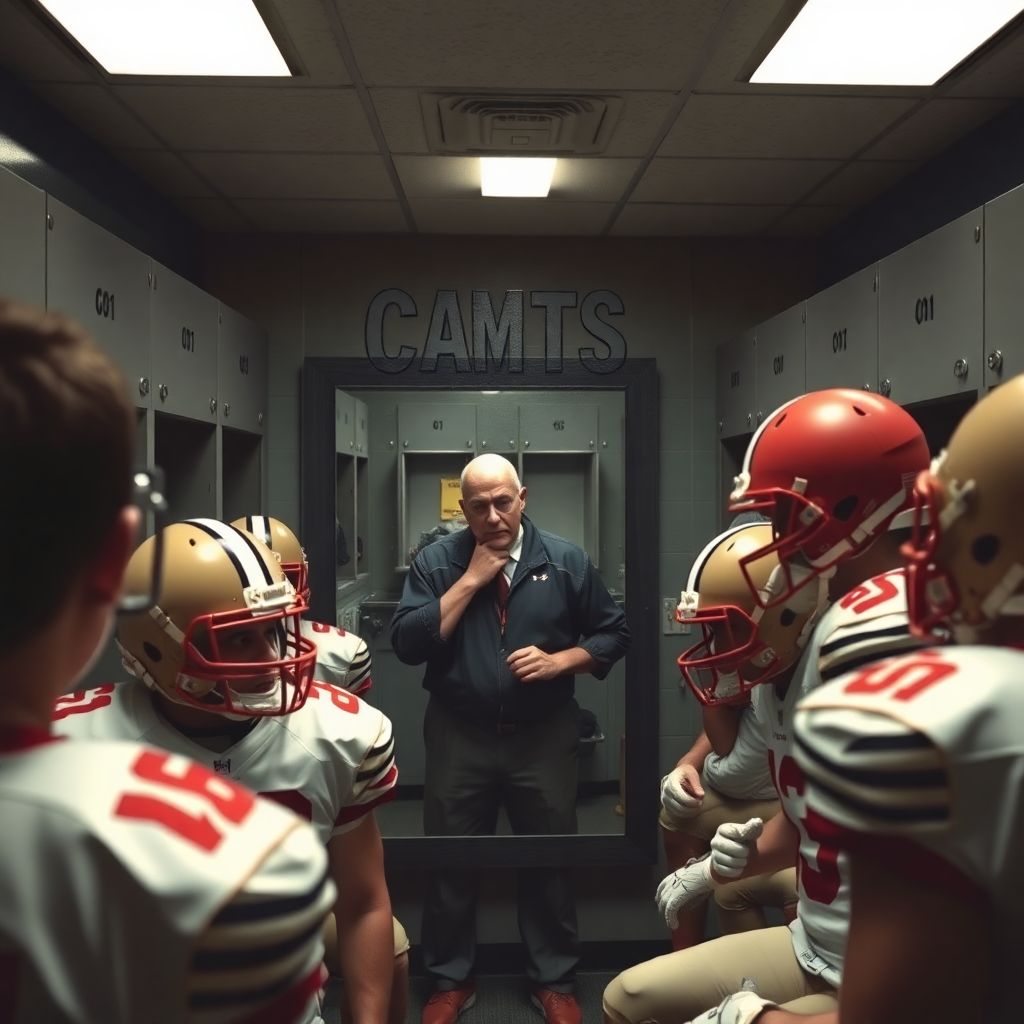
Look in the Mirror, Not at the Sideline
From the very top to the very bottom – that is how far we have fallen. We flew to the United States with dreams of playing in the final, convinced that this time would be different. Now that those dreams have collapsed, we are desperately looking for someone to blame so we can feel a little better about ourselves. And, as always, the easiest target is the coach.
“Montella couldn’t make the team play,” “You can’t succeed without a striker,” and countless similar phrases are thrown around as if they explained everything. As long as we keep clinging to these surface-level excuses, we are only opening doors to the next wave of disappointments without even realizing it.
The problem doesn’t start on the touchline; it starts at the very core. We are dealing with consequences and pretending they are causes. The real issue lies in how football is managed in this country. We have conditioned ourselves to chase quick, effortless success. But in a world where competition in every field has become fierce and relentless, easy success simply does not exist. You might achieve something domestically by cutting corners, but you will never build a footballing identity like that.
At best, you can patch things up with temporary solutions – bringing in players trained abroad, hoping that a few “ready-made” stars will cover for decades of mismanagement. That is exactly what happens when you lean so heavily on players raised in foreign systems instead of building your own.
Look at the teams competing at the World Cup. Whether they represent your own country or someone else’s, it is always the same pattern: the decisive players come from strong, well-structured academies. The foundation is solid, so the house stands.
In our case, academies mostly exist on paper. They are treated as a burden, not an investment. The prevailing mentality is, “Let others train the players, we’ll buy them when they’re ready.” As a result, we do not have a deep, rooted football tradition that continually produces talent. Training young players is seen as a cost, not a culture. Coaches and kids walk onto those dusty pitches already convinced that “nothing has come out of here for a hundred years, nothing will now either.”
Contrast this with countries that emerged from the wreckage of Yugoslavia. Croatia, Bosnia and Herzegovina, and others still play an important role in world football because they have preserved and modernized their player development culture. They kept the footballing heritage alive, adapted it to the new era, and never abandoned the idea that the game starts with the child, not the star.
Meanwhile, in our uprooted football landscape, the culprit after every failure is always obvious: the coach. The name changes, the accusations remain the same. It is almost a ritual. But barely anyone dares to ask how independent the coach actually is, even when it comes to player selection.
No one seriously talks about the pressure exerted by those trying to gain political or institutional power through the national team. These are the realities we live with regardless of who sits on the bench. We experience it over and over, yet we have never found the courage or the will to put a stop to it.
Why is it that some players never get the recognition they deserve with the national team while others walk straight into the starting eleven even when they can’t secure a place at their clubs? Why are some consistently rewarded for reputation and connections instead of current form and merit?
Even good intentions are no longer enough. Statements like “We came this far with these players, we will keep playing with them” sound loyal, but loyalty without logic turns into stubbornness. If you know you have better and fitter options available, why insist on out-of-form, recently injured, exhausted players?
We all know one answer, even if we don’t like to admit it. Imagine Montella taking off an ineffective Arda and putting in Orkun. Can you picture the uproar? The headlines, the noise, the accusations? That is precisely why he didn’t show that courage. The fear of the storm became stronger than the desire to do the right thing.
Yet the outcome tells its own story: if Montella had been braver and played the form players rather than the names, he might still have failed on the scoreboard, but at least he would have shown he could stand firm and independent. Instead, we saw a coach trapped in a web of expectations and possible backlash, and a football public more interested in scapegoats than solutions.
In truth, what we are facing is the expected fiasco of a football system that has been poorly managed from start to finish. The crash was not an accident; it was a scheduled arrival. You cannot neglect structure, planning, development, and then act surprised when the bill arrives.
Can we wake up, even a little, and finally look reality in the eye? That is the real question. Because without that first honest glance in the mirror, nothing will change – no matter how many coaches we fire or how many squads we reshuffle.
The obsession with shortcuts is our deepest wound. We search for miracle coaches, instant saviors, magical tactical tweaks that will erase decades of negligence. But football doesn’t work that way anymore. The game now belongs to countries that think ten, fifteen years ahead, that invest consistently in youth, data, infrastructure, and education.
We, on the other hand, change coaches like we change headlines. We treat every tournament as if it exists in isolation, disconnected from what came before. When we win, we glorify individuals. When we lose, we crucify them. The system – or lack of it – walks away untouched every time.
If we are serious about change, the conversation must shift from “Who is to blame this time?” to “Why do we always end up here?” That means asking hard questions about:
– How youth academies are funded and supervised
– Who sets long-term strategy for the national team
– Which criteria truly determine squad selection
– How much influence agents, club politics, and power brokers have behind the scenes
– What kind of coaches we educate and how we support them over time
We also need to abandon the illusion that importing readymade solutions will save us. Foreign-born players and foreign coaches can be valuable, but they cannot substitute for a missing football culture. They are supplements, not foundations. Without a solid base, you are simply building castles in the air.
A real footballing tradition is not just about producing talents; it is about how those talents are treated. Do we trust young players in big matches? Do we give them space to make mistakes without burying them under headlines? Do we build a playing philosophy that runs from under-15 to the senior national team? Or do we reinvent ourselves every two years based on the mood of the moment?
Courage is not only demanded from the coach, but also from the institutions. It takes courage to tell powerful figures, “No, this player will not be called up,” or, “No, this coach will not be replaced because of a single bad tournament.” It also takes courage from fans and media to accept that real progress might not bring immediate glory.
The mirror we avoid looking into reflects more than tactical errors. It shows an entire ecosystem where short-term interests dominate long-term thinking; where appearances matter more than substance; where football is often used as a stage for personal gain rather than a field for collective development.
So when the next failure comes – and it will, unless something fundamental changes – we should resist the urge to sprint toward the easiest target. Instead of asking, “Which coach should we get rid of now?” we should ask, “What have we done, structurally, to deserve anything different?”
Because the truth is clear and uncomfortable: until we accept that the problem is not just on the bench but in the mirror, we will keep reliving the same story under different names and different stadium lights.