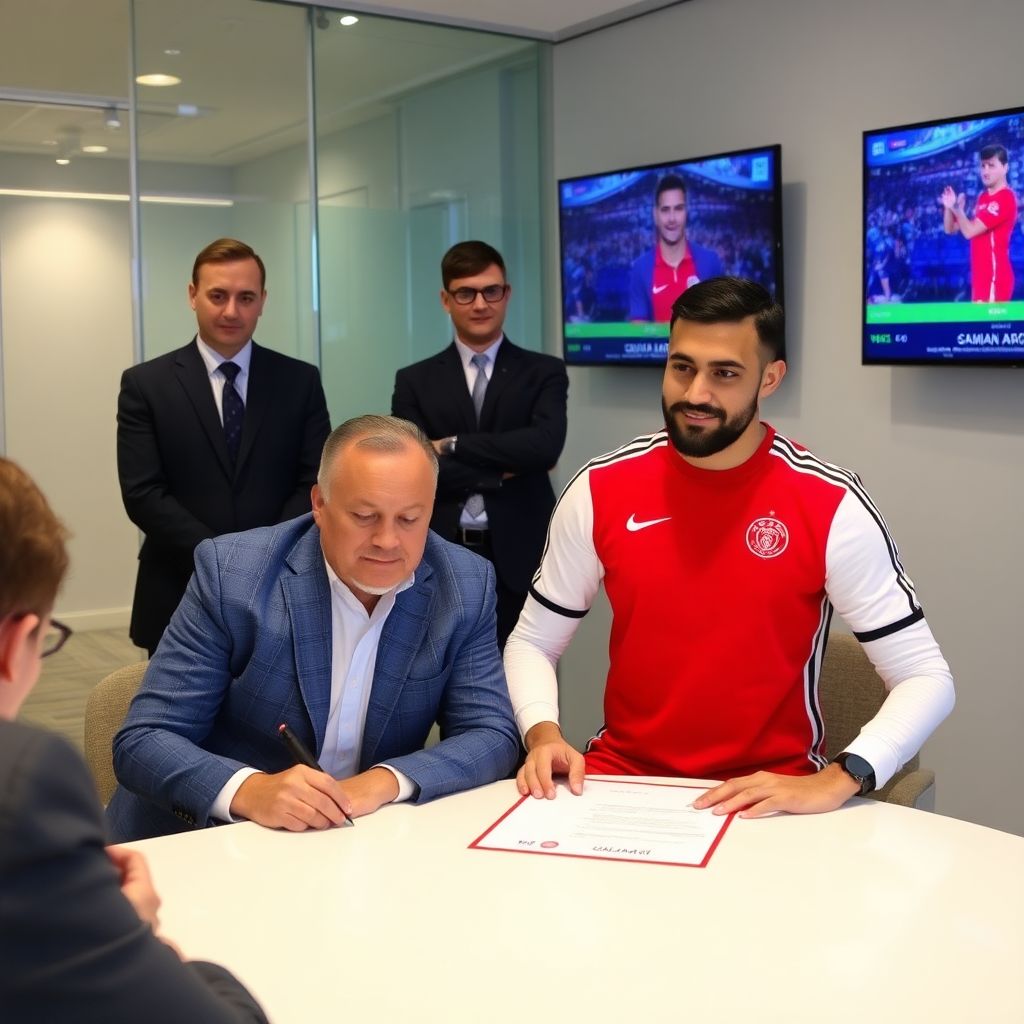
Transfer completed for Ismael Saibari. The PSV and Morocco star, long tracked by Galatasaray, has chosen a new destination: the midfielder has reached a full agreement with a German giant, and the deal is considered sealed. Transfer specialist Fabrizio Romano has confirmed that the parties have finalized terms, signalling the end of one of the most closely monitored sagas of this window for Turkish clubs.
Galatasaray had placed Saibari high on their shortlist as they look to refresh their midfield with a dynamic, box‑to‑box profile. The Istanbul side followed the 23‑year‑old for months, counting on his versatility, physical strength and ability to operate between the lines. However, the lure of the Bundesliga project – with a clear sporting plan and strong financial package – ultimately proved decisive, leaving Galatasaray to re‑evaluate their options in the middle of the park.
For Saibari, the move represents a significant step. After developing into a crucial piece of PSV’s structure and establishing himself as an important member of the Moroccan national team, he now heads to a league known for its intensity and tactical sophistication. The German club is betting on his ball‑carrying, press resistance and capacity to contribute both defensively and offensively, expecting him to adapt quickly to a faster, more physically demanding environment.
This outcome also has wider implications for Turkish football. Saibari’s decision underlines how clubs from the Süper Lig, despite their prestige and passionate fanbases, still struggle at times to compete financially and structurally with Europe’s top five leagues. Galatasaray put forward a serious project, but the combination of Bundesliga exposure, guaranteed playing time at a high level and wages pegged to Western European standards tipped the balance away from Istanbul.
In Turkey, the failed Saibari move is being read alongside a series of other spectacular transfer headlines that have dominated the summer. Sports executive Hakan Safi has been at the centre of many of them, drawing attention with aggressive and ambitious moves in the market. His name has been associated with eye‑catching pursuits – from big‑ticket European stars to strategic investments in domestic talent – shaping the narrative of an increasingly bold Turkish transfer landscape.
One of the most striking stories linked to these ambitions was the claim that a deal for Robert Lewandowski had been pushed to completion. The idea of the Polish goal machine arriving in Turkey set social media and sports programs ablaze, symbolizing the level of aspiration some Turkish figures now have when approaching the international market. Even if such signings remain complicated, the fact that these talks can take place at all shows how much the perception of the league has evolved.
Basketball has not been left out of this wave of headlines either. In another dramatic chapter of Turkish sport, Beşiktaş GAİN‑Bahçeşehir Koleji edged out a tight contest 82-79, delivering a thrilling finale for fans. Results like this emphasize how broad and multi‑layered the country’s sporting scene has become, with basketball increasingly sharing the spotlight traditionally occupied by football.
Hakan Safi’s name has also surfaced around national team star Hakan Çalhanoğlu. The midfielder’s presence in Istanbul sparked immediate speculation about high‑level negotiations. Every appearance, every airport sighting, is treated as a potential clue that a blockbuster move could be in the making. Çalhanoğlu’s profile – a leader in Serie A and the Turkish national team – makes him a dream target for Süper Lig supporters longing to see their best exports return home in their prime.
At Galatasaray, the disappointment over Saibari has not diluted their hunger for elite talent. The club continues to insist on Bernardo Silva, an almost unimaginable name for many just a few years ago. Yet this persistence illustrates the scale at which Galatasaray now think: playmakers capable of dictating games at Champions League level, ready to step in as instant leaders. Insiders stress that Galatasaray are not prepared to give up easily, even in the face of intense competition and the enormous financial demands such a move would entail.
International outlets have also picked up on these ambitions. Reports abroad have highlighted Galatasaray’s pursuit of Bernardo Silva as an emblem of the club’s intention to operate in the same conversation as Europe’s biggest teams. The Portuguese star’s future remains open, and while any transfer to Turkey is complicated, the mere fact that Galatasaray are considered a plausible bidder shows how far the club’s reputation has grown in recent years.
Amid the turbulence, personal voices have tried to add calm. Robert Lewandowski’s wife, a powerful presence in her own right, has publicly urged everyone to relax and not jump to conclusions about the striker’s next step. Her message of “stay calm” has been interpreted as a way of cooling down the feverish speculation and reminding fans that many of these mega‑deals are processes that can shift direction overnight.
Meanwhile, Turkish supporters continue to leave their mark far beyond national borders. The phrase “crazy Turks in Miami” has come to symbolize the diaspora of fans who follow pre‑season tours, friendly matches and major finals around the world. Wherever European giants travel, Turkish flags, songs and chants tend to appear, reinforcing the global presence and enthusiasm of this fanbase.
On the domestic political front of football, former Fenerbahçe president Aziz Yıldırım has not stayed silent. He has suggested that if he had been in charge, the story with José Mourinho would have unfolded very differently. According to Yıldırım, the negotiations, timing and structure of the offer could have produced another outcome, hinting at missed opportunities and strategic disagreements within the club’s leadership.
This leads naturally to another sensitive question: did Hakan Safi hold talks with high‑profile figures despite the stance of Fenerbahçe president Ali Koç? Rumours swirl about meetings, phone calls and private discussions, feeding narratives of internal tension. Whether all of these claims are accurate is secondary; what matters is that they reveal how contested and political major transfer moves have become inside Turkish giants.
Elsewhere, young talent is commanding enormous valuations. For forward Can Uzun, a fee of 45 million euros is reportedly on the table, underscoring the inflation in the market for promising attackers. The decision now rests with his club, Eintracht Frankfurt, whose stance will influence not only the player’s future but also the benchmark for subsequent deals involving Turkish‑origin prospects across Europe.
Inter have also stepped into the picture with a double transfer proposal to Beşiktaş. The Italian side see Turkey as a viable destination for players seeking more minutes, while Beşiktaş view Serie A as a valuable source of experienced reinforcements. Offers that include two players at once suggest complex packages, possibly involving loan deals, buy options and salary‑sharing mechanisms designed to satisfy both financial and sporting needs.
Trabzonspor, never shy in the market, are reportedly chasing a winger described as someone who will “run like a dog” up and down the flank – a colourful expression pointing to relentless work‑rate, stamina and aggression. The club want a wide player who will not stop pressing, tracking back and driving forward, perfectly suited to the intense, physical style that the Black Sea side traditionally embrace.
There are even lighter, humorous notes in this wild transfer season. Jokes surface about making sure that new signings do not pick up speeding tickets on the motorway on their way from the airport, a playful nod to how fan excitement can follow every move of a newly arrived player, from first photo to first training session.
At the top end of coaching, all eyes remain on Antonio Conte. Observers are asking what exactly is happening with the Italian tactician and why Fenerbahçe’s offer was considered too small – “a drop in the ocean” compared to proposals from elsewhere. Conte’s insistence on strong sporting control, clear squad investment and high wages means that only a handful of clubs can genuinely compete for his signature, and for now, that appears to exclude Turkish sides.
In Beşiktaş, another Italian, Vincenzo Italiano, is being widely discussed as a coach who could radically reshape the team. His philosophy – aggressive pressing, vertical passing and constant movement off the ball – is seen as a way to modernize Beşiktaş’s playing style. Should he arrive, supporters expect changes in training intensity, positional play and squad planning, with an emphasis on younger, technically versatile footballers who can sustain high tempo over 90 minutes.
At Galatasaray, long‑term planning is gaining prominence. Beyond the current president Dursun Özbek, there is already talk about the next leader and the club’s roadmap for the coming years. Strategic projects include stadium modernization, youth academy upgrades and a more analytical approach to recruitment that blends traditional scouting with data‑driven insights. The goal is clear: maintain domestic dominance while regularly reaching the latter stages of European competitions.
Financial governance is also in the spotlight. Hakan Safi has reportedly paid 1 million euros directly into the accounts of the Turkish Football Federation, a move interpreted as both a show of goodwill and a statement about transparency and responsibility. In a climate where financial fair play and debt management are pressing issues, such gestures become almost as symbolic as headline transfers.
Beşiktaş, for their part, are on the verge of a new era under coach Domenico Tedesco. The so‑called “Tedesco revolution” is expected to be triggered by a crucial 72‑hour period in which key decisions on arrivals, departures and tactical principles will be finalized. Tedesco’s reputation as a meticulous planner and tactician has raised hopes that Beşiktaş will adopt a more structured, modern approach, especially in defence and transitional play.
At Fenerbahçe, contradictions abound. Not long ago, certain players were adored to the point where fans figuratively “slept at their door”, begging them to sign. Today, some of those same figures are dismissed as “old men” and pushed towards the exit. This dramatic shift in perception reflects not only the emotional nature of fandom but also the ruthless pace at which expectations evolve in big clubs constantly chasing trophies.
All of these intertwined stories – from Saibari’s completed move to Germany and Galatasaray’s pursuit of Bernardo Silva to Beşiktaş’s coaching revolutions and Fenerbahçe’s internal debates – show a Turkish football scene in flux. Ambition is higher than ever, transfer rumours are bigger than ever, and the gap between dream and reality is constantly being negotiated.
For Turkish clubs, the next challenge is to convert this ambition into sustainable success. That means clearer sporting projects, smarter recruitment rather than just famous names, and a focus on developing and retaining talent rather than merely reacting to the global market. Only then will the stories of “almost” signings and missed opportunities turn into a steady stream of confirmed deals and long‑term progress.
In that context, the Saibari case becomes more than just a lost transfer. It is a reminder that to compete with Bundesliga and other elite leagues, Turkish giants must offer not only passion and atmosphere, but also structures, strategies and financial conditions that convince the game’s rising stars to choose Istanbul over the rest of Europe.