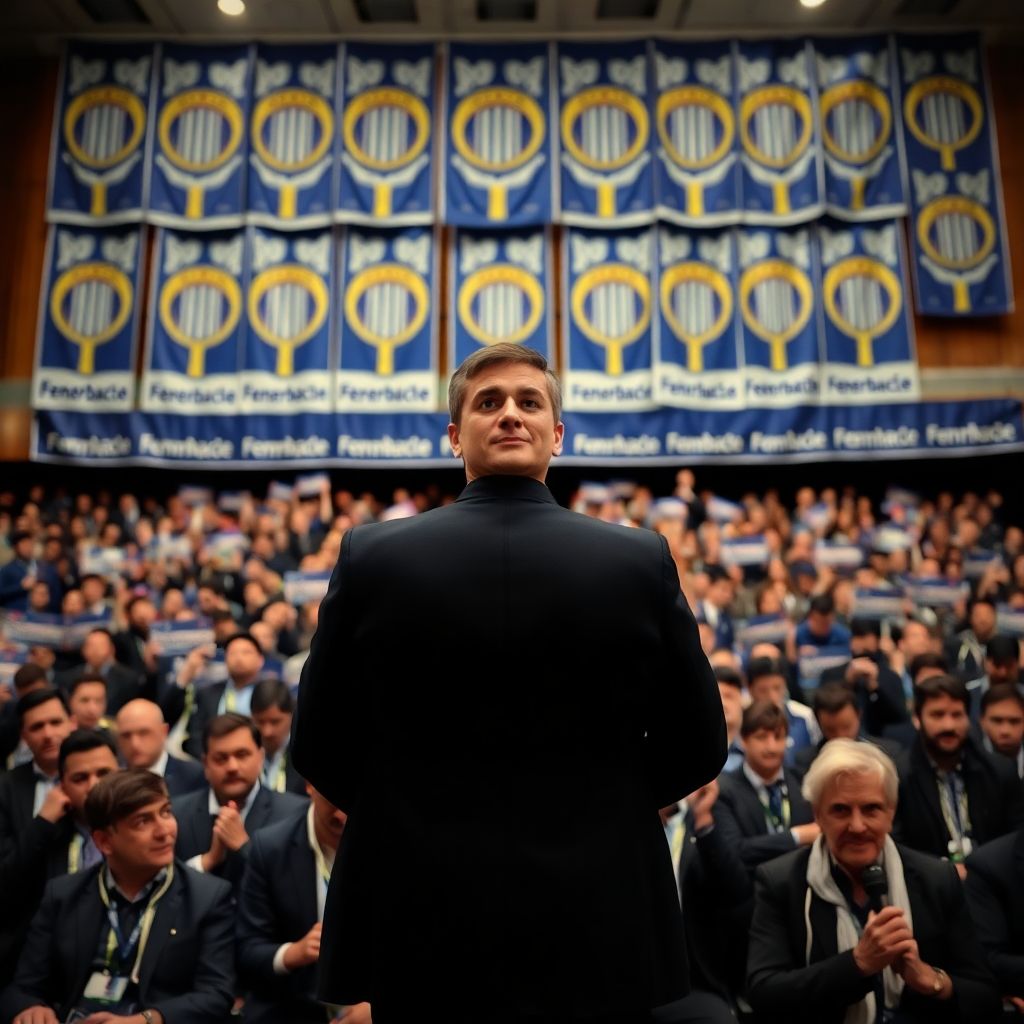
Hakan Safi moves early: preparations for the 2027 Fenerbahçe elections have already begun.
Contrary to claims that he would withdraw from the spotlight after losing the last club election, Safi has chosen a completely different path and is positioning himself as one of the central figures for the next congress.
After the defeat, many insiders suggested that Safi would step back from Fenerbahçe politics and limit himself to a more background role. Instead, he has launched an intensive preparation process for the 2027 elections, activating a large-scale campaign structure far earlier than expected. This early move signals that he not only intends to run again, but also aims to shape the agenda long before the official race begins.
According to those following his activities, Safi has formed a sizeable propaganda and communication team, built around a highly aggressive and proactive strategy. The group is reported to include social media specialists, PR consultants, former club officials and figures with strong ties to the fan base. From the first day this new structure became visible, coordinated broadcasts, interviews and commentary pieces about Safi started to flood digital platforms.
The messaging emerging from these broadcasts suggests that the new campaign will be built on two pillars: harsh criticism of the current management where necessary, and a promise of a more ambitious, internationally competitive Fenerbahçe. Safi’s team appears determined not to wait for the official election calendar; they are already testing slogans, narratives and potential pledges in front of the fans.
One of the main goals of this early start is to reshape Safi’s public image after the last election loss. Instead of a defeated candidate fading into the background, he wants to be seen as a persistent, determined figure who refuses to abandon his project for the club. By entering the scene this soon, he is trying to turn the “he will disappear” narrative into a “he is coming back stronger” storyline.
Another reason for the early mobilisation is the changing dynamics of Fenerbahçe’s internal politics. In recent years, club elections have turned into long campaigns rather than short pre-congress races. Social media, fan organisations and television debates keep the election atmosphere alive for months, sometimes years. Safi’s camp seems to have accepted this reality and decided that starting in 2027 only in the election year would be too late.
It is also clear that the competition for influence within Fenerbahçe is no longer limited to football matters alone. While the sporting front is dominated by debates about strikers that Fenerbahçe cannot sign, official offers from rivals like Trabzonspor, high-profile transfer sagas, legal disputes involving star names and shocking departures and arrivals, the boardroom battle runs in parallel. Safi appears determined to use every headline about the club – whether it is a missed transfer, a managerial decision or a financial issue – as a reference point in his criticism of the current administration and as justification for his own roadmap.
The aggressive tone of his strategy does not only mean harsh rhetoric. It also implies a willingness to challenge the current hierarchy in every field: marketing, sponsorship deals, youth development, basketball operations and women’s sports. In internal meetings, his circle is said to be working on detailed plans to bring in bigger sponsorships, strengthen scouting networks, and increase the club’s global visibility. The ultimate aim is to show that there is a complete alternative project ready to replace the current model the moment the ballot boxes are opened.
Central to this effort is the concept of “continuous campaign”. Safi’s media appearances, interviews and carefully framed messages are designed to keep his name constantly in front of the fans. Each new development at the club – be it a shock departure from the basketball team, a stalled transfer negotiation or a controversial managerial decision – becomes material for his narrative that “Fenerbahçe must be run more boldly and more professionally.”
At the same time, his team is focusing heavily on digital communication. They are experimenting with different formats: live broadcasts, analytical programmes, behind-the-scenes content and direct Q&A-style appearances with supporters. The intention is to create a perception that Safi is closer to the fans, listens more, and is ready to explain his every move in detail, in contrast with what his advisors describe as a more closed and defensive style of the current administration.
However, starting this early also carries risks. A long campaign means a longer period under scrutiny. Any misstep, contradictory statement or weak proposal can be amplified and used against him in the future. Opponents within the club may argue that an endless election climate harms team focus and increases pressure on players and technical staff. Safi’s camp will therefore need to strike a careful balance between firm opposition and not being seen as undermining Fenerbahçe’s on-field targets.
Another critical question is whether this assertive early positioning will discourage or attract other potential candidates. On one hand, an organised, well-funded structure working from now until 2027 can scare off weaker contenders. On the other, if the club’s performance and environment radically change for better or worse, new names might still emerge, forcing Safi into a more crowded and unpredictable race than he hopes for.
Financial transparency and governance are expected to be among the main themes of his platform. The club’s big transfer ambitions, negotiations for high-profile players and possible major sponsorship agreements will be closely monitored by his circle. Every large payment, every controversial contract and every unexplained decision may become ammunition in the pre-election debate. Safi’s advisors are already preparing detailed dossiers and comparative analyses to argue that Fenerbahçe’s resources could be used more effectively.
The sporting side will also play a decisive role in how his campaign narrative is received. If the team fails to achieve its targets in league and European competitions, the opposition will find a more receptive audience among disappointed fans. Under such conditions, Safi’s early initiative might be interpreted as foresight. Conversely, if Fenerbahçe wins major trophies and successfully completes key transfers, the current management will be able to claim that their project is working, and they may portray Safi’s permanent campaign as unnecessary noise.
In this context, 2027 is much more than a distant date on the club’s calendar. It has already begun to shape strategies, alliances and communication styles within Fenerbahçe. Hakan Safi’s decision to roll up his sleeves so early is both a declaration of intent and a challenge to the existing balance of power. From now on, every step taken by the current administration, every success and failure on and off the pitch and every major transfer story will inevitably be read through the lens of the upcoming congress.
One thing is certain: Safi has made it clear that he will not disappear quietly after a single defeat. By gathering a large propaganda team, embracing an aggressive, high-intensity strategy and occupying the digital stage long before his rivals, he has officially entered the race for 2027. The question now is not whether he will be a candidate, but whether this early start will be enough to transform him from a defeated challenger into the next president of Fenerbahçe.