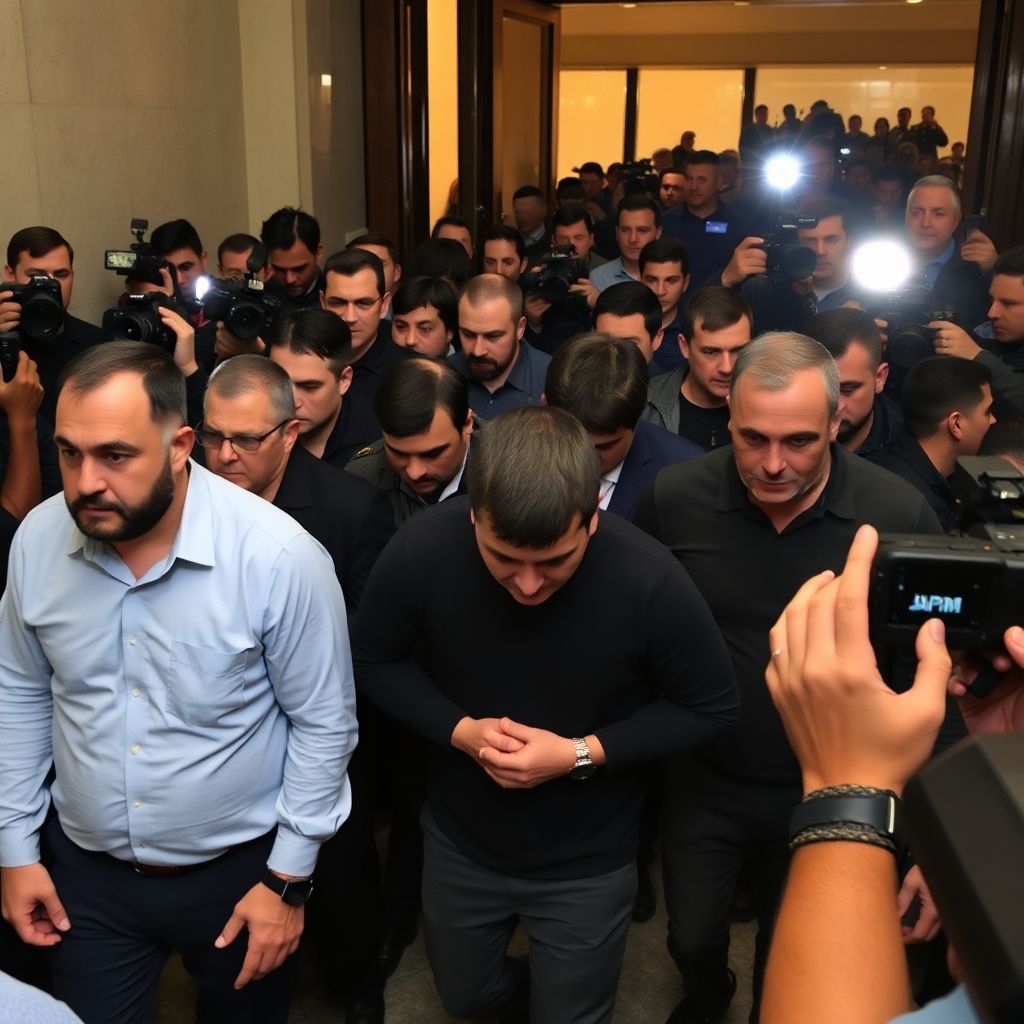
41 suspects from Ege University tender probe brought before court in İzmir
A major corruption investigation into public tenders at Ege University has reached a critical stage, with 41 of 47 detained suspects transferred to the İzmir Courthouse after the completion of police procedures. The probe focuses on alleged irregularities in public procurement and direct purchasing processes carried out by the university’s Revolving Fund Management and purchasing units.
Among those taken to court are high-profile figures: the Dean of Ege University Faculty of Medicine, identified as D.B., the former chief administrative director of Ege University Hospital, named as Ö.Ö., and the person described by investigators as the alleged leader of the network, referred to as Ş.Ç.
According to information from the investigation, the suspects are accused of manipulating public tenders and direct procurement methods to benefit certain companies, thereby causing substantial financial loss to the state. The inquiry is being conducted by the İzmir Chief Public Prosecutor’s Office, with operations on the ground led by the Financial Crimes Division of the İzmir Provincial Police Department.
Police operations against the network were carried out on 9 June in an operation centered in İzmir but spanning six provinces in total. In coordinated raids, security units detained 47 people, including the alleged ringleader Ş.Ç, the dean D.B. and the former hospital chief administrator Ö.Ö. All suspects were brought to the police headquarters for questioning and processing.
Following their statements at the police station, six of the 47 initially detained individuals were released without being sent to court. The remaining 41, including the three prominent names, were transferred from the Yeşilyurt Service Building of the Provincial Security Directorate to the İzmir Courthouse to appear before prosecutors and, if requested, judges for possible arrest or judicial control decisions.
The investigation focuses particularly on activities within Ege University’s Revolving Fund Management Directorate and purchasing departments. These structures manage significant financial resources, especially in large-scale institutions like university hospitals, where procurement of medical supplies, devices, services and various materials is carried out through public tenders or direct procurement methods allowed in specific cases.
Within this framework, investigators allege that a group inside the university facilitated procurement decisions in favor of selected companies, bypassing competitive conditions and public interest. It is claimed that, through artificially inflated prices, tailored tender specifications or irregular direct purchases, certain firms were granted unlawful advantages, resulting in serious financial damage to the public budget.
Authorities report that audits and assessments carried out in parallel with Court of Accounts (Sayıştay) findings point to an approximate public loss of 3.1 billion Turkish lira arising from the procurement transactions in question. This figure, although subject to judicial review and expert examinations, underscores the potentially vast economic scale of the alleged scheme.
One of the most striking aspects of the investigation is the position attributed to the alleged organization leader, Ş.Ç. According to claims in the case file, although he held no official post at Ege University, he is said to have acted de facto as a senior manager. It is further alleged that he was given an office on campus, used institutional facilities, and informally exerted influence over procurement and administrative decisions.
Such an arrangement, if proven, would raise fundamental questions about internal controls, governance and oversight mechanisms at the university. Allowing a person with no formal title or appointment to operate as a decision-maker within a public institution could indicate deep structural weaknesses and a lack of effective checks and balances.
The role of the dean of the Faculty of Medicine, D.B., and former hospital chief administrator, Ö.Ö., is another key focus of the investigation. As top-level officials, they were responsible for overseeing both medical and administrative operations, including procurement processes that are vital for the functioning of the hospital. Prosecutors are expected to examine whether these individuals actively directed the alleged irregularities, tolerated them, or failed to prevent them despite having the authority and duty to do so.
In corruption and tender-manipulation cases of this scale, judicial authorities typically investigate a wide range of possible crimes, including forming or leading a criminal organization, misconduct in public office, bid-rigging, fraud against public institutions and causing public loss. At this stage, however, formal charges, indictments and final legal classifications will only become clear after the prosecutor’s evaluation and, if drafted, the filing of an indictment to the competent court.
The process that has now brought the 41 suspects to the courthouse marks the transition from police investigation to the judicial phase. At the courthouse, suspects are usually re-questioned by prosecutors, who then decide whether to request their arrest, impose travel bans, apply judicial control measures such as regular reporting, or release them pending further investigation. Judges on duty review these requests and issue binding decisions.
The Ege University case also highlights how vulnerable public procurement processes can be in large institutions with extensive budgets. University hospitals, in particular, conduct frequent and high-volume purchases of pharmaceuticals, medical equipment, laboratory materials, maintenance services and various consumables. When oversight is weak or internal monitoring is ineffective, opportunities arise for networks that seek to steer these contracts toward specific suppliers.
Experts often stress that transparent tender announcements, clear technical specifications, competitive bidding, independent auditing and robust internal control systems are essential to reducing corruption risk. Additionally, rotation of staff in critical tender committees, regular external audits and strict enforcement of conflict-of-interest rules are seen as key measures to prevent similar schemes.
The mention of Court of Accounts reports in this investigation is significant. These reports typically review whether public resources are used in line with law, efficiency, economy and effectiveness. When auditors identify patterns such as repeated tenders going to the same companies, price levels consistently above market averages, or unjustified resort to direct procurement instead of open tender, they may flag them as findings for prosecutors to examine.
Another dimension of such cases is their impact on public trust. Universities are expected to be not only centers of education and research, but also examples of ethical conduct and accountable management. Allegations that a university’s financial resources have been systematically exploited for private gain can undermine confidence among students, staff and the broader public, and may fuel demands for managerial and structural reforms.
Within the university community, investigations of this magnitude often trigger internal reviews and disciplinary processes, independent of the criminal case. Administrative inquiries may be opened regarding staff suspected of involvement, and new rules or tightened procedures may be introduced for purchases, documentation and approvals. Even if some individuals are ultimately cleared in court, institutions frequently adjust their internal regulations to minimize future risks.
While the judicial process unfolds, attention is also focused on how services, especially in the university hospital, will continue without disruption. In similar cases, authorities generally aim to ensure that essential medical services, patient care and academic activities are not adversely affected by the investigations. Interim appointments to key administrative posts, strengthened oversight and temporary procurement arrangements may be used to guarantee continuity.
The alleged existence of an informal power center within the university, represented by a person with no official status, also raises broader concerns about patronage networks and non-transparent influence in public institutions. If the court confirms these claims, it could fuel debates about how external actors, business groups or individuals with political or financial clout can penetrate institutional decision-making mechanisms.
Alongside the corruption probe, the political arena is experiencing its own turbulence. CHP Group Chairman Özgür Özel and 28 members of the party’s Party Assembly close to him have decided to resign from the body with the stated aim of pushing the party toward an extraordinary congress. Under the party’s internal rules, if more than half plus one of the 57 Party Assembly members resign, the party is obliged to move to an extraordinary election congress.
This political move indicates potential internal realignments and leadership debates within the main opposition party. Although it is separate from the Ege University investigation, the timing means it unfolds in a climate where questions of accountability, management and transparency are prominent in public discussion. Both developments, in different spheres, reflect the sensitivity of society to how power is exercised and supervised.
For now, the focus in İzmir remains on what decisions the prosecutor and the court will take regarding the 41 suspects brought to the courthouse. Depending on the evidence in the file, expert reports and statements of the accused and witnesses, the court may order arrests, impose judicial control measures, or allow releases pending trial. The outcomes of these decisions will shape the next phase of one of the most high-profile public tender investigations involving a major university in recent years.