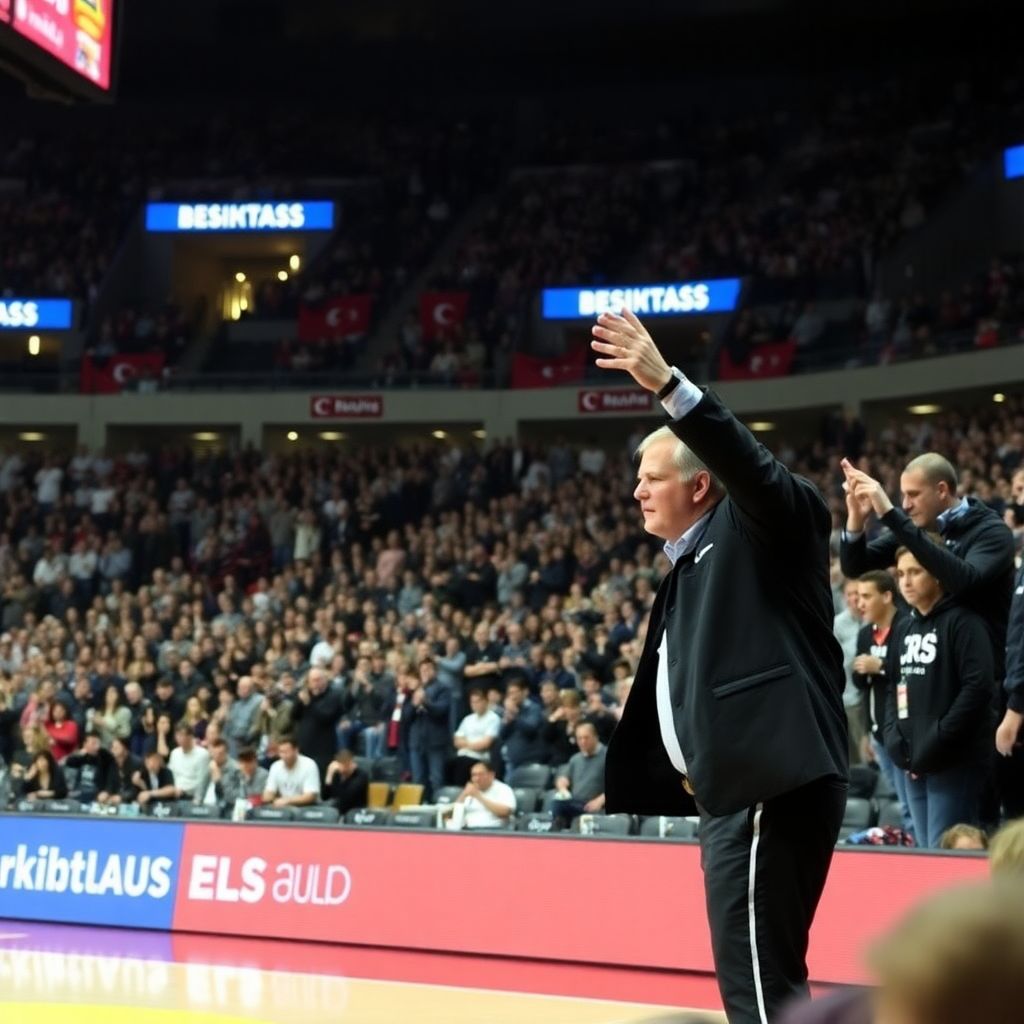
Bad news for Beşiktaş after the play-offs: heavy fine from the TBF Disciplinary Board
The Turkish Basketball Federation’s Disciplinary Board has announced its latest decisions, and Beşiktaş has emerged as one of the main clubs hit with sanctions following events in the play-off semi-finals. The black-and-white club was punished for incidents that occurred during the play-off semi-final matchup against Bahçeşehir Koleji.
The game in question was played on 10 June as part of the Turkey Basketball Super League play-off semi-finals. According to the federation’s statement, various irregularities related to the arena environment and fan behaviour led to a significant financial penalty being imposed on Beşiktaş.
The Disciplinary Board cited several violations in its ruling. Among the main reasons for the sanction were crowd disturbances in the stands, what was classified as “ugly and offensive” chants from the home supporters, and the failure to keep stairways inside the arena clear as required by safety regulations.
As a result of these combined offences, Beşiktaş were hit with a total fine of 815,000 Turkish lira. This figure reflects the aggregation of multiple infractions recorded during the semi-final game against Bahçeşehir Koleji. For a club already dealing with the financial and sporting pressures of a long season, such a penalty is far from trivial.
The federation stressed in its announcement that crowd control and safety rules are non-negotiable, particularly in high-stakes fixtures such as play-off encounters. Authorities highlighted that the obligation to keep stairs and passageways empty is not merely a formality, but a critical component of spectator safety and emergency planning.
The issue of “ugly and offensive” chanting has also become a focal point of disciplinary action in recent seasons. Federation regulations clearly state that insulting, provocative or discriminatory chants can trigger fines, partial stadium closures or, in repeated cases, even more severe sanctions. In this instance, the fine alone underlines how seriously the board evaluated the behaviour of the crowd.
From Beşiktaş’s perspective, the timing and size of the fine are particularly frustrating. Coming immediately after a high-profile semi-final series, the club is now forced to cope not only with the sporting outcome on the court, but also with a major financial setback off it. Such penalties can influence budget planning, future investments in the squad, and even youth development programmes if not absorbed carefully.
Reactions among supporters have been emotionally charged. Some fans argue that the federation’s decisions tend to come at critical junctures, often just before major matches or finals. In their view, this pattern raises questions about neutrality and consistency in the way rules are enforced. One widely shared sentiment is that the presence of a clearly partisan leadership at the helm of a sports governing body undermines the credibility of domestic basketball.
Criticism has also focused on the broader impact such controversies have on the image of the sport. When federation leadership is perceived as taking sides, even if regulations are technically being applied, trust in the fairness of competition erodes. This, in turn, can affect attendance figures, commercial interest and the willingness of new fans to engage with the league.
However, from a regulatory standpoint, the federation maintains that it is applying existing rules designed to protect both participants and spectators. Every club, regardless of its status or fanbase size, is bound by the same code: responsibility for the behaviour of fans, compliance with safety protocols inside the arena and adherence to ethical standards in chants and displays.
For Beşiktaş, this episode serves as a harsh reminder of how fragile the balance is between passionate support and rule-breaking. Play-off games are naturally charged with emotion, yet clubs are expected to anticipate such intensity and take preventive measures: clear announcements over the public address system, visible steward presence in stairwells, and pre-game communication with supporter groups about the consequences of misconduct.
Looking ahead, the club’s management will likely be forced to revise its internal procedures for high-risk fixtures. Enhanced steward training, stricter entrance controls, monitoring of supporter sections and closer collaboration with security officials are among the steps often taken by clubs to mitigate the risk of future sanctions. Such measures can reduce the likelihood of further fines that can accumulate over time and become a serious burden.
It is also possible that Beşiktaş will seek clarification or provide a formal response to the decision, even if overturning such rulings is rare. What clubs can usually do, though, is work on documenting their own preventative efforts more thoroughly so that, in case of future incidents, they can demonstrate that they have fulfilled their obligations as organisers to the fullest possible extent.
Beyond this specific case, the incident once again shines a spotlight on the broader disciplinary climate in Turkish basketball. Over the past seasons, fan behaviour, pyrotechnics, verbal abuse and non-compliance with seating and safety rules have resulted in a series of fines across several clubs. The trend suggests that stricter enforcement is becoming the norm rather than the exception.
For supporters, this reality means that the line between creating a fiery home atmosphere and triggering a heavy penalty is becoming ever thinner. Clubs increasingly call on their fans to channel their passion into positive, creative support-banners, choreographies, coordinated cheering-while avoiding chants and actions that can be interpreted as insulting, threatening or dangerous.
On the sporting front, such off-court developments can even have indirect consequences in future seasons. Repeated breaches can lead to harsher sanctions, including stand closures or games played without spectators. For a team like Beşiktaş, which relies heavily on the energy of its supporters, the prospect of playing crucial fixtures in a muted or empty arena would be a serious competitive disadvantage.
In parallel, debates around fairness in officiating and disciplinary rulings are unlikely to subside. Intense rivalries, especially with clubs like Fenerbahçe and Galatasaray, add another emotional layer to every federation decision. When penalties coincide with key fixtures or finals, narratives about bias and double standards quickly gain traction among fans.
Still, the underlying reality is that clubs, federations and supporters share a common responsibility for the health of the sport. Transparent rule enforcement, consistent disciplinary practices and genuine efforts by clubs to guide fan culture in a constructive direction are all necessary if basketball is to grow domestically and attract a broader audience.
For now, Beşiktaş must come to terms with an 815,000 lira fine at the end of a demanding play-off campaign. The immediate task will be to absorb this financial hit while learning the necessary lessons: sharpen organisational discipline, engage with fans more proactively and ensure that future play-off nights are remembered for on-court performance rather than disciplinary fallout.