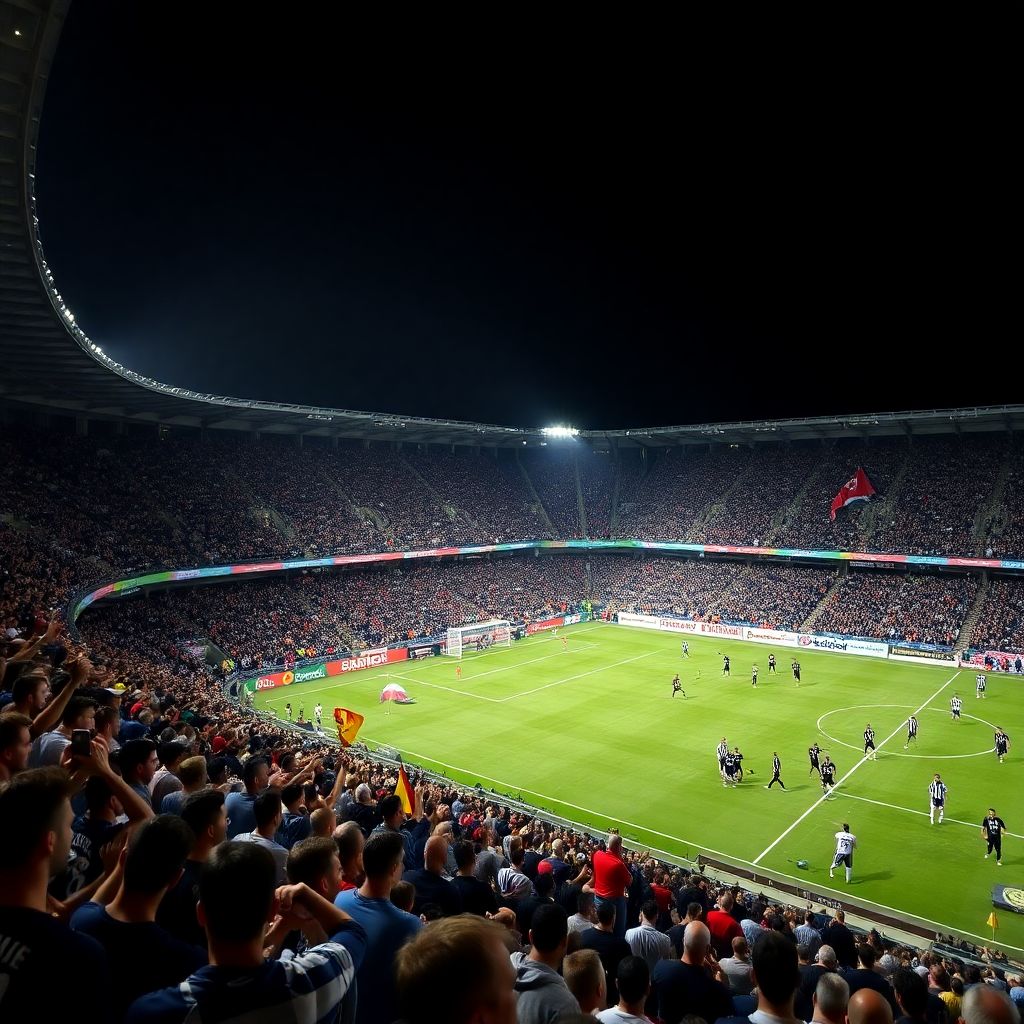
Only one step remains between Beşiktaş and the Europa League. The Black-and-Whites secured their place in the Play-Off round with a controlled, confident 1-0 home victory over Czech side Hradec Kralove in the second leg of the third qualifying round, repeating the scoreline from the first match and confirming their superiority over two legs.
In a pleasantly cool Istanbul evening, the atmosphere around the stadium was ideal for football. The stands were packed, the noise was constant, and the team stepped onto the pitch surrounded by a wall of support. From the first whistle, it was clear that Beşiktaş were determined not just to protect their advantage, but to impose their game and finish the tie on their own terms.
Compared with last season, coach Vincenzo Italiano has already stamped a distinctly different footballing identity on the team. Beşiktaş no longer struggle to reach the final third; they progress the ball with more ease, structure, and clarity. Yes, Hradec Kralove did not pose a major physical or technical threat, but the home side’s desire, pressing intensity, and mutual support were all at a notably high level throughout most of the game.
The midfield was the engine of this performance. Captain Orkun once again carried the team, dictating tempo and providing vertical passes that constantly unsettled the Czech defence. In the first half he came inches away from scoring, his powerful effort crashing against the crossbar. His leadership was not just technical but also emotional: he was the one organizing pressing triggers, urging his teammates forward, and calming them down when necessary.
Hradec Kralove, apart from a brief spell in the closing minutes, struggled badly to keep possession or construct meaningful attacks. They rarely managed to settle in Beşiktaş’s half, let alone create serious chances. That was partly down to the discipline and concentration of the Turkish side’s back line, which read the game well and cut out danger before it developed. However, even amid this solid display, one issue remains evident: Beşiktaş still need a new, dynamic centre-back who can both defend aggressively and help circulate the ball from the back under pressure.
One of the most anticipated storylines of the night was the first meeting between the fans and new signing Trossard. Coming on in the 67th minute for Cerny, the Belgian immediately showed why he had been brought in. Whenever he received the ball, there was a ripple of anticipation in the stands. He moved intelligently between the lines, carried the ball with confidence, and produced a stinging shot that the goalkeeper could only parry. Even in limited minutes, he looked like a player capable of adding creativity, directness, and unpredictability to the attacking unit.
The match-winner, however, was again Cerny. His goal in the second half sealed the tie and once more underlined his efficiency in decisive moments. Without needing to dominate the ball for long stretches, he found the crucial space, timed his run, and finished the move that put Beşiktaş firmly in control of their European destiny. The team did not have to stretch themselves to the limit to see off their opponents, and that was perhaps the clearest indication of the difference in quality between the sides.
Another source of excitement for Beşiktaş supporters was the presence of newly signed striker Vlahovic, watching the game from the stands after completing his move. Even without kicking a ball, his arrival has lifted the mood around the club. A proven goal scorer joining a side already on an upward tactical and mental trajectory suggests that the offensive line could soon become one of the most feared in the competition. His style – aggressive, physical, but also technically adept – fits the fast, vertical football that Italiano is trying to instill.
The overall pattern of the match was straightforward: Beşiktaş dominated possession, controlled territory, and dictated the tempo. There were moments when they deliberately raised the pace, pinning Hradec Kralove deep inside their own box. They frequently entered the penalty area through quick combinations and third-man runs, rather than relying solely on crosses or long-range efforts. In these phases, the game looked like an attack-versus-defence exercise, with the visitors simply trying to survive.
In the final 15 minutes, fatigue became visible. The intensity dropped, some passes grew sloppy, and Beşiktaş’s pressing lines loosened. This physical dip allowed Hradec Kralove to see more of the ball than at any other stage of the match and led to a few nervous moments. Yet when the team needed calm and authority most, goalkeeper Nübel stepped up. His interventions, both in the air and with his feet, reassured the back line and prevented the match from becoming unnecessarily complicated.
Collectively, Beşiktaş looked like a side committed to modern, proactive football: they tried to press high, to move as a compact unit, and to keep offering passing options to the ball carrier. They didn’t abandon duels or second balls; instead, they chased, tackled, and recovered possession with persistence. This attitude, more than any single tactical wrinkle, was the foundation of their dominance. When the remaining deficiencies in the squad are addressed and new signings fully integrated, a significantly stronger and more complete team is likely to emerge.
From a broader perspective, this tie served as a real-time test of Italiano’s project. The passing patterns out of defence, the rotation in midfield, the constant search for width and depth – all of it pointed to a coach who wants his side to control games with the ball rather than by simply sitting back. What Beşiktaş displayed was not a one-off cup performance, but the outline of a clear game model that, if maintained, can be scaled up against tougher European opponents.
The path to the Europa League now looks wide open. With the team already in the Play-Off round and further reinforcements on the way, the likelihood of reaching the group stage is very high. The club’s management seems determined to complete one or two more targeted transfers, particularly at centre-back and perhaps in midfield, to increase depth and reduce the risk of the team losing intensity due to injuries, suspensions, or fixture congestion later in the season.
One key question is how the squad will cope with the physical demands of playing both domestically and in Europe. The final quarter of this match, when tired legs started to show, served as a reminder that the starting eleven alone will not be enough over a long campaign. High-intensity pressing and constant off-the-ball movement require a deep rotation. Players like Trossard – and others who can come from the bench and instantly raise the level – will be essential if Beşiktaş are to maintain their current style from August to May.
Another factor that should not be overlooked is the psychological dimension. Progressing steadily in Europe, winning qualifiers without drama, and feeling the unconditional support of a packed stadium all build confidence. This emotional momentum often translates directly onto the pitch: players dare more on the ball, take responsibility in decisive moments, and trust the collective structure around them. For a club hungry to return to the continental stage as a serious competitor, these early qualifying rounds are not just about results but also about rebuilding a winning mentality.
From an attacking perspective, the potential partnership between Vlahovic and creative profiles like Orkun, Trossard, and Cerny could redefine Beşiktaş’s offensive identity. A physically dominant centre-forward who can hold up the ball, attack crosses, and finish in the box will free others to operate between the lines and in half-spaces. This could produce a more varied attack: not just quick transitions, but also patient positional play capable of breaking down compact defences, something that often decides tight European fixtures.
Defensively, the match confirmed both strengths and weaknesses. The current back line managed the threat in front of them with concentration and discipline. Positioning was generally good, and there were few moments of panic. Yet the absence of a truly explosive, modern central defender – someone comfortable defending large spaces and initiating attacks with line-breaking passes – remains a ceiling on how far the team can progress. Addressing this gap would not only secure the back but also further sharpen the build-up play that Italiano demands.
For the supporters, this season promises a very different experience from the previous one. The football on display already suggests a team that wants to entertain as much as it wants to win. Short, sharp combinations, quick transitions, and an obvious desire to keep the ball moving fast ensure that every match feels alive. If the current trend continues, Beşiktaş fans will not just be celebrating results, but also enjoying a style of play they can identify with.
In the end, the 1-0 scoreline doesn’t fully capture the extent of Beşiktaş’s control. It was more than a narrow win; it was a statement that the team is evolving, that the coach’s ideas are taking root, and that the squad, once fully completed, can aim higher than simply qualifying. With only one hurdle left before the Europa League proper and key reinforcements arriving, Beşiktaş look ready not just to step onto the European stage, but to make their presence felt.