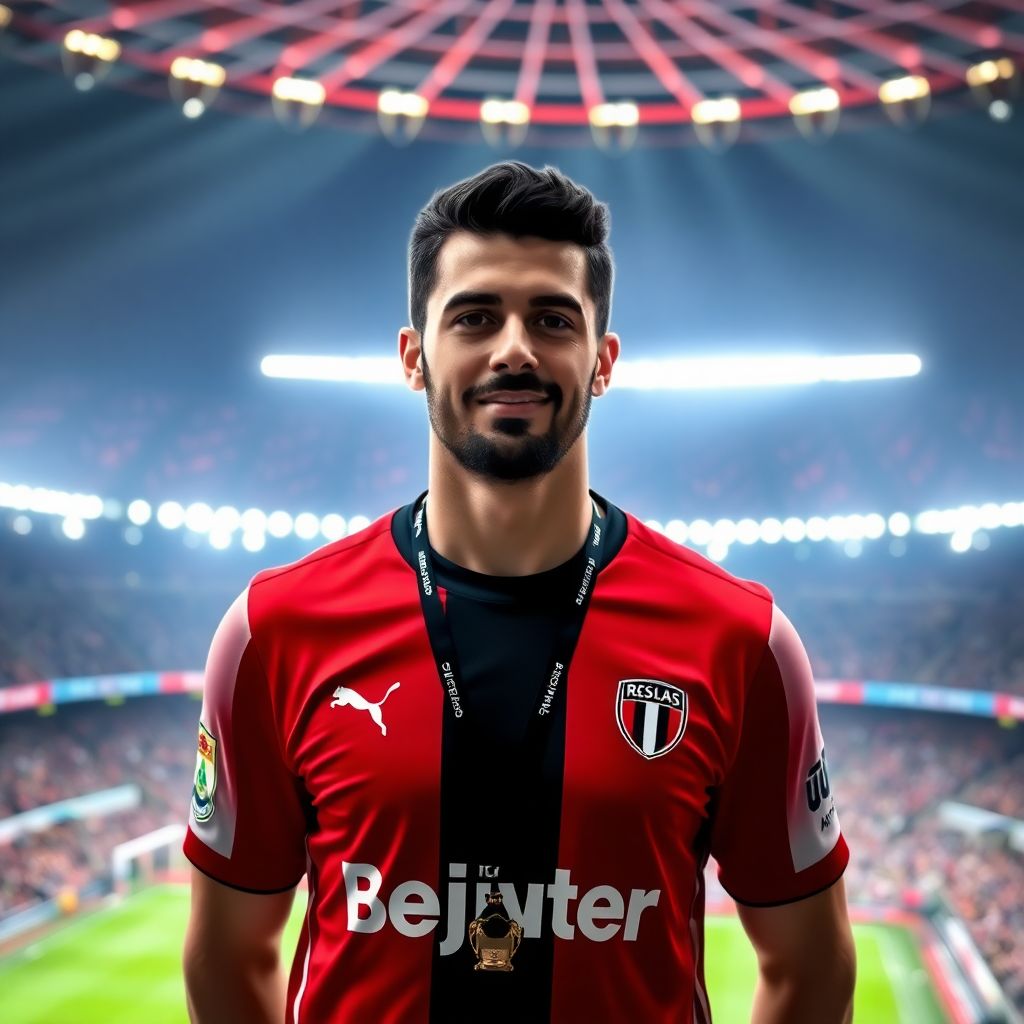
Beşiktaş should set its sights on European trophies under Vincenzo Italiano. This is the core idea emphasized by football analyst Ali Ece, who believes the Italian coach’s track record in continental competitions makes him much more than just a “good option” for the club – he is a specialist precisely in the kind of tournaments Beşiktaş dreams of shining in.
According to Ali Ece, appointing Vincenzo Italiano should automatically raise the bar for Beşiktaş’s ambitions. This is not a coach who is satisfied with merely stabilizing a team or finishing within the top four domestically. Under his management, clubs have consistently punched above their weight in Europe. Ece underlines: with a manager who has already reached two European finals, Beşiktaş cannot limit itself to local targets; it must aim for deep runs in European competitions.
Italiano’s European résumé fully supports this view. With Fiorentina, he reached the UEFA Europa Conference League final in back‑to‑back seasons, 2022-2023 and 2023-2024. Guiding the same club to consecutive finals in a demanding, knockout‑based competition is not a coincidence; it shows a clear understanding of two‑legged ties, squad rotation, and game management under pressure.
After Fiorentina, Italiano continued to prove himself on an even bigger platform with Bologna. In the 2024-2025 season, he led Bologna into the UEFA Champions League, a major milestone for a club not traditionally considered one of Italy’s giants. The following season, 2025-2026, he took Bologna to the quarter‑finals of the UEFA Europa League, confirming that his European success with Fiorentina wasn’t a one‑off.
On top of his continental credentials, Italiano tasted domestic glory in Italy as well, lifting the Coppa Italia with Bologna. Winning a national cup in a league as tactically demanding as Serie A speaks to his ability to navigate different types of tournaments: long‑term league races, high‑stakes knockout matches, and dense fixture calendars where every rotation decision matters.
For Beşiktaş, this profile is particularly valuable. The club has always seen itself as a brand that belongs on the European stage, not just in the domestic race. Bringing in a coach like Italiano should not be viewed as a move simply to “fix” the league form; it should be interpreted as a strategic step toward rebuilding a team that can regularly compete, and succeed, outside Turkey’s borders.
Ali Ece stresses exactly this point: if you hire a coach with a proven record of reaching European finals and advancing to the later stages of UEFA tournaments, your goals must reflect that level. For Beşiktaş, that means more than just qualifying for Europe; it means planning for quarter‑finals, semi‑finals, and even finals as realistic mid‑term objectives, not distant dreams.
Under Italiano, Beşiktaş can be expected to develop a clearer tactical identity. His teams are known for structured build‑up, coordinated pressing, and a balance between attacking initiative and defensive organization. In European competition, where small details decide ties, such a clear model of play often makes the difference between a respectable exit and a historic run.
However, targeting European trophies is not only about tactics; it is also about squad construction. Beşiktaş will need to build a roster capable of handling the intensity of a long domestic season plus European fixtures. This means strengthening depth, especially in central midfield, full‑back positions, and in the attacking rotation, so that the team remains fresh and competitive in both league and Europe.
Italiano’s experience with Fiorentina and Bologna can help here. He has already managed squads that weren’t packed with superstars but still managed to compete against richer opponents. He knows how to integrate young players, how to optimize versatile squad members, and how to use rotations without completely disrupting the team’s chemistry.
From the club’s perspective, setting European cups as a clear target has strategic benefits beyond sport. Deep runs in UEFA competitions improve the club’s coefficient, increase revenue from prize money and broadcasting, and raise the visibility of Beşiktaş across the continent. That, in turn, makes it easier to attract better players and secure more lucrative sponsorship deals.
At the same time, expectations must be ambitious but realistic. No coach, however successful, can guarantee trophies in Europe, where competition is fierce. The key is to build a structure around Italiano that allows him to apply his methods fully: a supportive board, a smart transfer policy, and patience to let his tactical project mature over several seasons.
In the short term, a rational objective would be to secure regular European qualification and, once there, to reach at least the knockout stages consistently. In the medium term, with the right recruitment and continuity, quarter‑finals and semi‑finals in European competitions become achievable, especially in tournaments like the Europa League and Conference League, where Italiano has already demonstrated his ability to go far.
Ali Ece’s message is therefore clear: with Vincenzo Italiano, Beşiktaş has chosen a coach whose career is defined by European nights. Limiting the project to domestic recovery would mean not fully using what he does best. If the club dares to align its ambitions with his experience, the black‑and‑white side of Istanbul can once again become a serious presence in European football, not just a participant but a genuine contender for silverware.