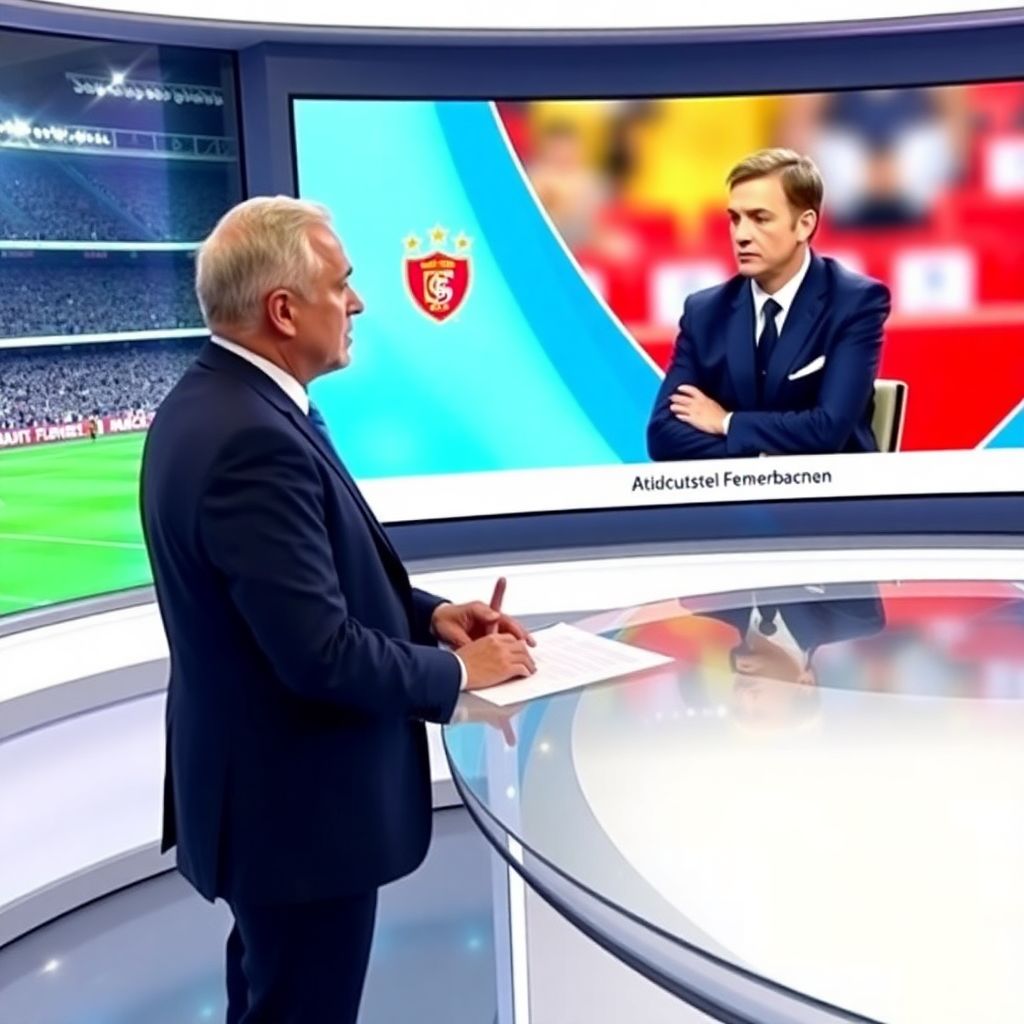
Here is Aykut Kocaman’s new technical staff: a name to take seriously has been revealed – and it is set to shake Fenerbahçe to the core.
For years, during the Aziz Yıldırım era, Fatih Demirkol was the face of FBTV, the club’s official channel. His words still carry significant weight among Fenerbahçe supporters. Now Demirkol has dropped a major hint that could define the club’s near future: he has outlined the structure of Aykut Kocaman’s potential technical staff and underlined that there is one key figure “who must be taken seriously”.
Demirkol did not speak lightly. Drawing on his long experience around the club and his access to decision‑makers, he stressed that this staff planning is not a simple rumour or a throwaway idea. According to him, Kocaman is not thinking in terms of a one‑man show. Instead, he is shaping a broad, specialised team with clearly divided responsibilities – from tactical preparation and data analysis to player development and mental conditioning.
The most striking part of Demirkol’s statements is the emphasis on that “serious” name in the backroom team. While he stopped short of making a full public announcement, the message was clear: Kocaman is prepared to work with a figure whose experience, authority and modern football understanding can significantly influence both the dressing room and the boardroom. This is not about a symbolic assistant, but about someone expected to have a real say in training methodology, match preparation and transfer planning.
Within Fenerbahçe’s fanbase, this has triggered intense speculation. Is this person a former club legend, a respected foreign tactician, or a domestic coach known for tactical innovation? Demirkol’s choice of words suggests a profile that commands respect both inside Turkey and abroad, someone who can help bridge the gap between traditional Turkish coaching methods and the increasingly data‑driven, high‑intensity demands of modern European football.
Aykut Kocaman is widely associated with discipline, defensive organisation and a clear tactical framework. However, criticism in the past has often focused on his teams’ perceived lack of attacking variety and spontaneity. For that reason, the composition of his staff becomes crucial. A balanced team around him – with coaches specialising in offensive patterns, set‑piece creativity and youth integration – could help answer long‑standing doubts about whether his football can thrive at the very top in today’s game.
In this sense, the new technical staff is not just a list of assistants, but the blueprint for “a brand‑new Fenerbahçe” envisaged for the 2026-27 season. The club wants to build a long‑term project, not a short‑lived shock effect. That means aligning scouting, academy work, sports science and first‑team coaching under a single footballing vision. Kocaman’s staff, as described by Demirkol, is expected to be the engine of this transformation.
Context matters. Turkish football is entering a phase in which almost every major club is forced to think more strategically. The 100‑million‑euro barrier has been broken in Europe’s top transfer markets, and names like Victor Osimhen are already associated with enormous deals and superstar coaches like José Mourinho. In such an environment, simply relying on individual talent is no longer enough. Clubs must have strong, well‑structured technical brains behind the scenes – exactly what Fenerbahçe is trying to build around Kocaman.
While Fenerbahçe reorganises, arch‑rivals are also on the move. Beşiktaş, for instance, has recently been in the spotlight not just for football but also for basketball. In one key game, the sentiment around the club was that “it was hard for Beşiktaş to lose” – underlining how high expectations had become. Yet the competitive landscape is unforgiving: Beşiktaş GAİN managed to grab a ticket to the final, where they will face Fenerbahçe Beko, setting up another classic showdown between the two Istanbul giants on the hardwood.
In that basketball context, Ergin Ataman has already been mentioned as having seized an advantage. A coach known for his strong personality and winning mentality, his success underscores the increasingly tight margins between victory and defeat in Turkish sport. When a coach like Ataman gets even a slight edge – whether tactically, psychologically or through roster management – it can become decisive across a long series.
Transfers are another front where rivalries intensify. Young talent Can Uzun has already given his answer on transfer rumours surrounding him, underlining the reality that promising players are constantly under pressure from offers and speculation. Clubs are not just competing on the pitch, but in negotiations, contract planning and long‑term career projects for players barely out of their teenage years.
Galatasaray, meanwhile, is juggling its own tensions. Is it the club that refuses to give up on certain targets, or is it the insistent coverage from prestigious outlets like La Gazzetta dello Sport that keeps the rumours alive? The line between strategic persistence and media‑fuelled obsession can blur quickly, especially when big‑money signings and high‑profile names are involved.
There are transfer sagas with a more concrete edge too. The price tag for Eduardo Camavinga has reportedly become clear, and observers now insist that “the ball is in Galatasaray’s court”. This phrase captures the new reality for Turkish clubs: European elites are willing to negotiate, but only at figures that would once have been unimaginable. To compete, local giants must either stretch their budgets to unprecedented levels or become far more selective and clever in how they spend.
Galatasaray appears determined on several fronts. For Jhon Durán, the first official contact has taken place, as revealed by Italian transfer specialist Alfredo Pedullà. At the same time, for a player like Khephren – a profile associated with physical power and dynamism in midfield – the club is said to be “stepping on the gas” and ready to take bold risks. Such moves indicate a belief that breaking through in Europe requires more than domestic stars; it requires players who can match the tempo and physicality of top‑five leagues.
Defensive stability is also being reconsidered. Beşiktaş has reportedly moved for a left‑sided centre‑back who previously played under coach Italiano, signalling a desire to import not just a player, but a defender already familiar with a specific tactical philosophy. This is the same logic behind many of the staff choices being made at Fenerbahçe: football ideas matter at least as much as individual quality.
On the offensive side, tensions sometimes flare around star forwards. The agent of Mauro Icardi has publicly complained, insisting “we have not spoken to anyone”, in response to constant speculation linking his client to various moves. This kind of statement shows how quickly rumours can spiral, affecting dressing‑room peace, negotiations and fans’ expectations.
National team football mirrors these dynamics in a different way. When Orkun described his team as “Black Horse”, he was expressing a belief that they can surprise Europe from the shadows, embodying the classic dark‑horse narrative. The question “Is there any other from Turkey?” highlights both national pride and the reality that Turkey often enters tournaments underestimated, only to shock bigger names when organisation and momentum align.
Kerem has contributed a more sociological angle from the national team camp. His observations about the atmosphere and interactions there – and his admitted “astonishment” – point to a changing generation. Younger players who grew up in globalised football cultures bring different habits, communication styles and expectations. For clubs and national teams alike, technical staffs must now understand not only tactics and fitness, but also group psychology and social dynamics inside the squad.
Off the pitch, club politics remains crucial. Galatasaray president Dursun Özbek is believed to have an “Ali Dürüst card” on the table – a potential move that could reshape the internal balance of power and decision‑making. Bringing influential figures back into the fold or assigning them new roles often has a direct impact on transfer strategy, coach selection and the overall sporting direction of the club.
Beşiktaş, too, is quietly working on structural changes. A “goalkeeper revolution” is said to be under way: coach Italiano requested specific profiles, and sporting director Özen has reportedly approved the plan. This suggests a shift towards keepers who are not only shot‑stoppers, but also active in build‑up play, comfortable with the ball at their feet and aligned with modern tactical trends.
All of these storylines circle back to a single core question: how are Turkish giants adapting to the new era of football? In that context, Aykut Kocaman’s new‑look Fenerbahçe project stands out as an attempt to merge tradition with innovation. Kocaman symbolises continuity and familiarity; his potential staff, especially the “name to be taken seriously” highlighted by Fatih Demirkol, represents a leap towards a more modern, collective coaching model.
For Fenerbahçe supporters, the coming seasons – including the crucial 2026-27 campaign – will be a test of patience and belief. Building a powerful technical team takes time, just as integrating new transfers and promoting academy talents does. Success will not depend solely on one coach or one star signing, but on whether the club can finally align board decisions, technical expertise and dressing‑room unity under a single sporting vision.
If Kocaman and his carefully chosen staff manage to do that, Fenerbahçe will not just look “new”; it will be structurally stronger, more adaptable and better prepared to fight on every front – domestically against Beşiktaş and Galatasaray, and internationally against clubs operating with budgets well beyond the hundred‑million‑euro line. In an era defined by details, the composition of a technical staff might prove to be the most decisive transfer of all.