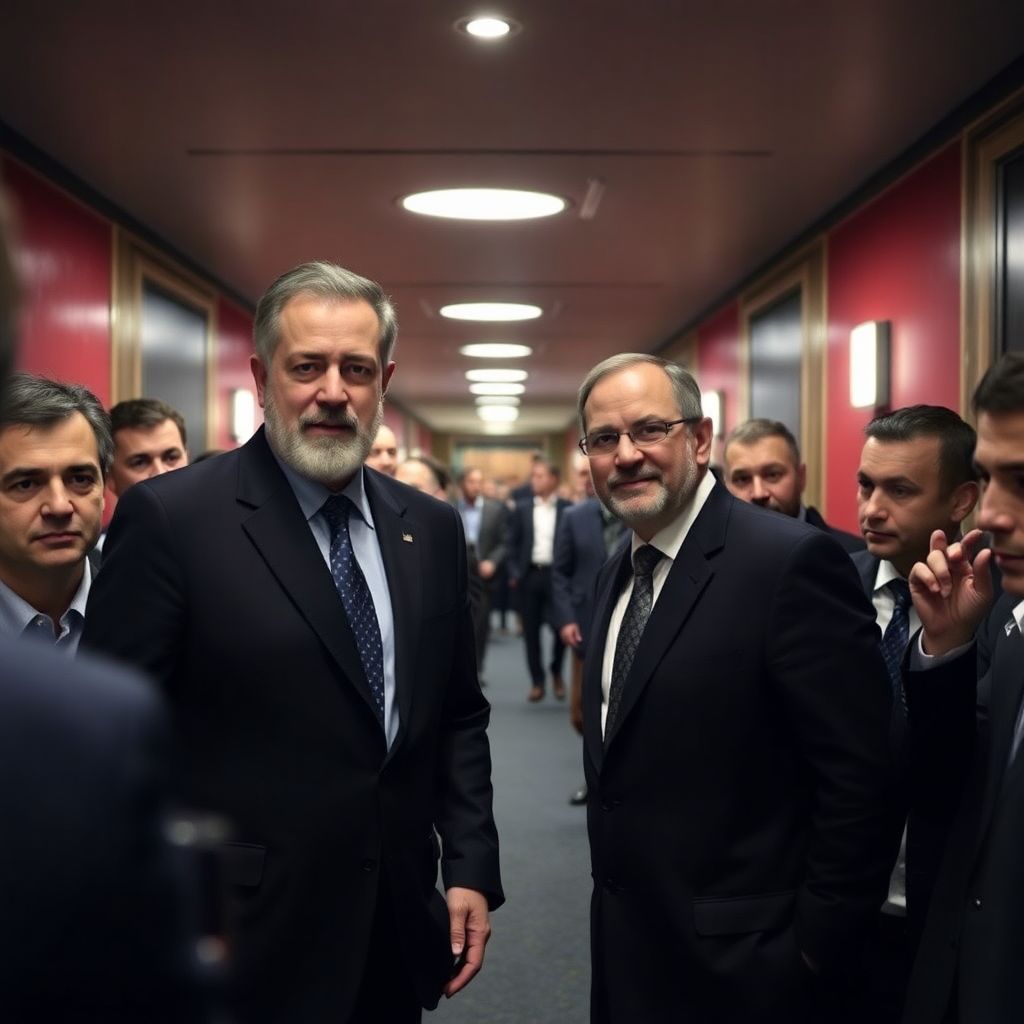
Ali Koç makes his choice clear: balance shifts in Fenerbahçe election
The question that had been on the minds of Fenerbahçe supporters for days has effectively been answered. Former club president Ali Koç, who had maintained strict silence throughout the campaign and was widely described as “neutral,” finally broke cover on the eve of the historic election – and did so in a way that shook the corridors of the club.
Just hours before the ballot, Koç appeared publicly at the side of presidential candidate Hakan Safi. This move was immediately interpreted within the club as an unambiguous show of support. In a race framed as “Aziz Yıldırım vs. Hakan Safi,” Ali Koç’s step was seen as the first major twist capable of swinging undecided members.
Until that moment, many believed Koç would deliberately stay above the race, neither aligning with Safi nor reuniting with long-time rival Aziz Yıldırım. His continued silence had been read as an attempt to preserve institutional stability and avoid polarizing the membership further. Instead, his sudden appearance beside Safi signalled a clear break from that perception and practically redrew the dynamics of the election.
Behind the scenes, club insiders quickly reached a consensus: Koç had thrown his weight behind Hakan Safi. The key question instantly became how this endorsement would affect the large bloc of undecided congress members, who often wait until the final hours to make up their minds. For many, Koç still represents a modern, internationally-oriented vision of Fenerbahçe, and his stance can act as a guide in a tightly contested race.
The meeting at Divan Kalamış: a symbolic handshake
The turning point came when Hakan Safi and Ali Koç met at Divan Kalamış. The location itself carries strong symbolism within the Fenerbahçe community – a place where many of the club’s critical decisions and negotiations have historically taken place. Visuals and accounts from that meeting quickly circulated, showing the pair side by side, engaged in intense discussion and appearing fully aligned.
For supporters and members, this was more than a courtesy visit. It was read as a political declaration. Koç, who had carried the presidential mantle through a turbulent era of sporting frustrations and financial constraints, now seemed to be passing his vision to a new candidate, one who promises both continuity in ambition and a tougher, more aggressive style in execution.
Hakan Safi ramps up rhetoric on the final night
Buoyed by Koç’s presence and apparent backing, Hakan Safi dramatically escalated his tone in the final hours before the vote. Shelving cautious language, he delivered bold statements that resonated with a fan base hungry for trophies and strong leadership.
Safi declared that he would “bring two more stars” to join the “world-class names” the club has been associated with, underlining that agreements exist but stressing that, for him, principles and keeping his word are more important than money. His repeated emphasis on not wanting to disappoint Fenerbahçe supporters was part of a carefully constructed narrative: a leader who will spend big if necessary, but who will do so responsibly and with a clear plan.
In his own words, the “hourglass” has already been turned over. Time, he suggested, is running out not just for negotiations, but for Fenerbahçe to reclaim its natural place at the top. He promised that the details of new signings and structural changes would be revealed “live and in person,” feeding expectation and energizing the base just before the polls open.
“Table or structure, I’ll break it if I have to”
One of Safi’s most talked-about remarks encapsulated his uncompromising approach: “If it’s about the table, I’ll break the table; if it’s about the structure, I’ll tear down the structure.” This line quickly became the catchphrase of his campaign, evoking an image of a president unafraid to confront entrenched interests, football politics, or even internal resistance within the club.
Behind this rhetoric lies a fundamental promise: to challenge any system, power balance, or unwritten rule that keeps Fenerbahçe from success on the pitch and stability off it. For a fan base long frustrated by near-misses in the league and controversies in domestic administration, the idea of a president who will “break the game” rather than simply play it holds strong emotional appeal.
Maritime diplomacy: Safi’s boat visit to congress members
In a striking piece of election theatre, Safi took his campaign out onto the water. While Fenerbahçe congress members were on a boat tour, he arrived at their location with his own vessel, preparing to board and speak to them directly. This unusual move underscored his intention to meet delegates wherever they are, literally and figuratively.
The boat visit wasn’t just a visual spectacle; it was a message about accessibility and presence. Safi aimed to demonstrate that the next president must not be distant or ceremonial, but actively among the members, listening to concerns and persuading them face to face. Within an already heated campaign, this bold, almost cinematic gesture became another talking point that kept his name in the spotlight.
What Ali Koç’s endorsement really means
Ali Koç’s decision to stand alongside Safi is more than a personal preference; it functions as a strategic signal to several key groups within the club. First, it offers reassurance to those who supported Koç’s modernization efforts in infrastructure, sponsorship, and institutional transparency, but were undecided about the next step. By effectively telling them, “This is the candidate I trust,” Koç helps consolidate that segment behind Safi.
Second, his stance may also impact the perception of high-profile transfer targets. Names like Luis Suárez, Mason Greenwood and Merih Demiral have been heavily linked with different election scenarios. A clear, stable leadership line supported by Koç may make negotiations smoother, as agents and players tend to favour clubs with visible direction and reduced internal conflict.
Third, Koç’s move indirectly raises the stakes for Aziz Yıldırım. The former long-time president has built his campaign around nostalgia, determination, and the promise of a powerful comeback. Now, however, he faces a rival who is not only energetic and ambitious, but also openly backed by the man who last led the institution. This transforms the bloc of “pro-change” members into a more unified front rather than a fragmented field.
If Hakan Safi loses: the fate of transfers and projects
Despite the late surge in momentum, no election is decided until the final vote is counted. A key debate among supporters revolves around what happens if Safi fails to win. In that scenario, questions arise about the future of the ambitious transfer plans associated with his camp, including potential deals for Suárez, Greenwood and Demiral.
Without Safi in the president’s chair, it is likely that many of the agreements and preliminary talks tied personally to his network would be revisited or even collapse. A different president might have a separate sporting project, distinct transfer priorities and alternative financial strategies. For the players themselves, a change in leadership could mean new negotiations, new conditions or, in some cases, the end of discussions altogether.
Still, the visibility of these names has already raised expectations. Whoever becomes president will face pressure to deliver a squad that matches the level of stars publicly associated with Fenerbahçe during the campaign. A failure to at least approach that standard could quickly turn enthusiasm into criticism.
If Aziz Yıldırım loses: end of an era or new starting point?
On the flip side, if Aziz Yıldırım is defeated, it would represent a symbolic closing of one of the most influential chapters in Fenerbahçe’s modern history. Yıldırım, who built his reputation on unwavering resilience and combative leadership, has centred his campaign on the longing for titles and the emotional weight of the stadium roaring again with championship songs.
A loss would not erase his legacy, but it would signal that the membership has decisively chosen to move forward under a new generation of leadership. It could also shift the internal balance of power permanently, reducing the likelihood of Yıldırım-style strongman comebacks in the near future. For many who have grown up with his figure dominating the club’s political landscape, this would be both an emotional and psychological turning point.
Election context: a historic crossroads for Fenerbahçe
This election comes at a time when Turkish football is undergoing intense scrutiny, with financial fair play constraints, escalating transfer fees and rising expectations from supporters. For Fenerbahçe, which has gone too long without a league title relative to its stature, the presidency is no longer just an administrative role – it is seen as the single most important factor in determining whether the club reclaims its place at the top.
The debate between continuity and rupture, caution and aggression, nostalgia and innovation is being personified through the Safi-Yıldırım showdown. Ali Koç’s late but decisive entrance into this duel tilts the narrative towards a vision that combines his own modern approach with Safi’s harder edge and uncompromising style.
Impact on rivals and the wider football landscape
The outcome will not only shape Fenerbahçe’s future but also influence the balance of power in Turkish football. Rivals closely monitor developments around potential big-name transfers and financial commitments. A Fenerbahçe led by a president able to complete marquee signings and stabilize the club’s economic structure would intensify competition for domestic trophies and European qualification.
At the same time, Galatasaray, Beşiktaş and Trabzonspor are dealing with their own issues: squad overhauls, managerial changes and looming financial deadlines. A strong, unified Fenerbahçe emerging from this election could push them to accelerate their own reforms, altering the dynamics of the league as a whole.
What supporters should expect after the vote
Regardless of who wins, the next president will inherit a heavy agenda: resolving transfer sagas, finalizing coaching decisions, restructuring debts, and restoring belief on the terraces. The campaign’s high-volume promises – from star signings to institutional reforms – have set the bar exceptionally high.
Ali Koç’s endorsement of Hakan Safi has already changed the tone of the race and may well change its outcome. But for Fenerbahçe supporters, the true measure of success will not be who stands on the podium after the ballots are counted; it will be whether, in the coming seasons, they once again sing championship songs in their stadium, not as a memory, but as a living, weekly reality.