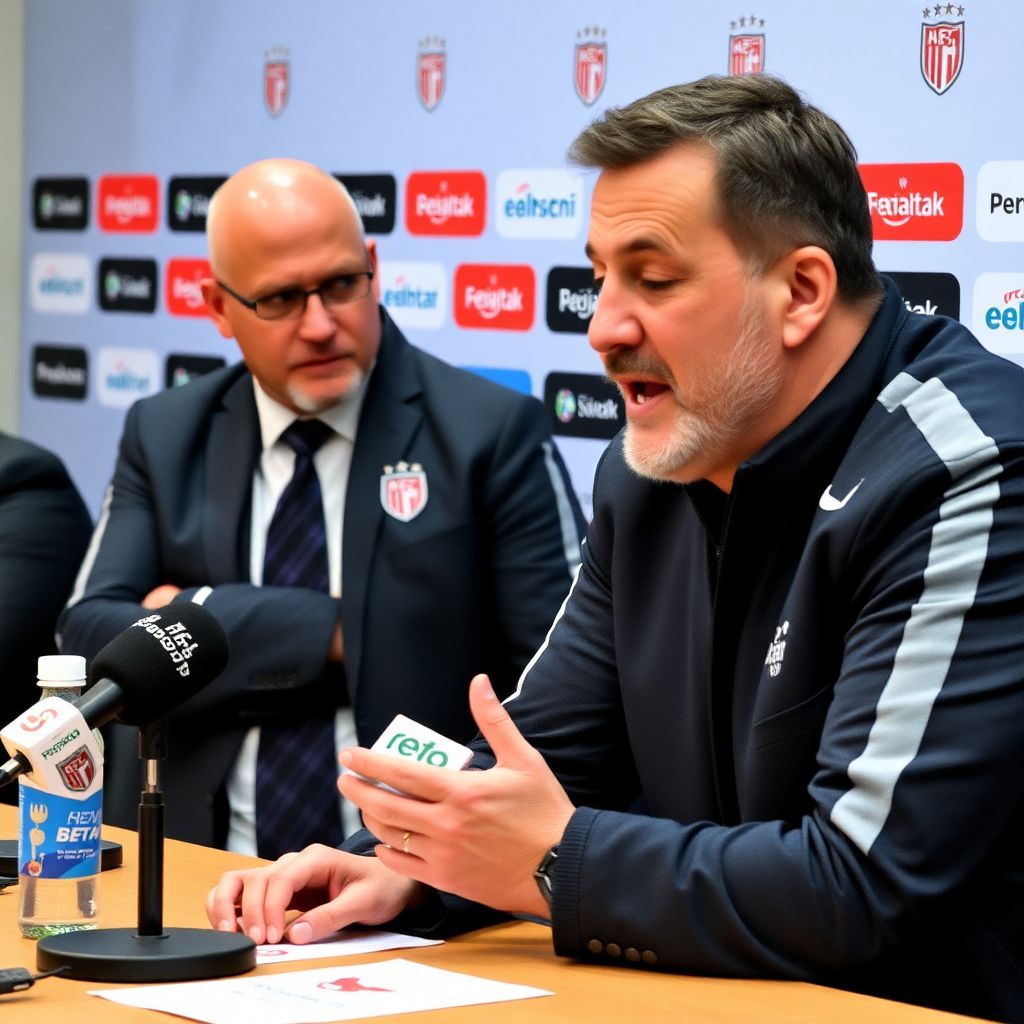
“Rafa Silva should never have been allowed to leave Beşiktaş”
Former Beşiktaş head coach Rıza Çalımbay has delivered a strong critique of the club’s recent transfer decisions and underlined that the departure of Rafa Silva was, in his view, a serious mistake. Speaking about the black-and-whites’ squad planning and future, the experienced coach drew attention to the need for a smarter, more ambitious transfer strategy that matches the expectations of the supporters.
Çalımbay was clear that the current management must place the fans at the center of every major decision. According to him, the bond between the stands and the team has been damaged, and the only way to repair it is by bringing in players who can immediately lift the level of the squad. He reminded everyone of the days when Beşiktaş attracted star names who excited the terraces and set high standards on the pitch.
“The board has to think about the supporters,” he stressed, adding that Beşiktaş needs to sign players of the calibre the club once had. Referring to that era, he pointed out that footballers like Amokachi became symbols of ambition and quality, and that the current squad must once again include such impactful figures. For Çalımbay, winning back the fans is not a side issue but an urgent priority.
The veteran coach also underlined the importance of how Beşiktaş will start the upcoming season. In his opinion, any team that enters the league campaign with confusion in the squad or with poorly chosen reinforcements risks facing the same crises over and over again. A bad start, he warned, can drag a big club into a spiral of pressure, frustration and constant change.
If Beşiktaş begin the league with defeats or unconvincing performances, Çalımbay believes the atmosphere will quickly turn heavy. Under such circumstances, even strong squads can feel vulnerable. That is why, he argued, the club cannot afford another transfer period filled with short-term fixes and random signings. Instead, the scouting department must work meticulously, identify the right profiles and bring in players who fit both the tactical plan and the identity of Beşiktaş.
“Players must be thoroughly scouted and chosen carefully,” he noted, emphasizing that transfer mistakes often cost a club not only money, but also time and stability. According to him, Beşiktaş have already wasted enough seasons trying to rebuild after poorly planned windows, and repeating the same errors would only deepen the problems.
One of the most striking parts of Çalımbay’s assessment concerned Rafa Silva. The Portuguese midfielder’s exit, in his eyes, was not just another departure, but a loss that could significantly affect the team’s structure. He described Silva as a rare profile in the current squad: a footballer who could link play, think one step ahead, and shape attacks with intelligence rather than pure physicality.
“Rafa Silva shouldn’t have left,” Çalımbay insisted. He explained that Silva was vital in both constructing moves and preparing goal-scoring opportunities. The Portuguese player, he said, was among those who made his teammates better by organizing the game between the lines. Losing such a player without properly replacing him leaves a gap that is not easy to fill.
From a tactical perspective, Rafa Silva’s departure removes an important creative outlet in the final third. In matches where Beşiktaş struggled to break down compact defenses, his ability to find pockets of space, play quick combinations and deliver the final pass often made the difference. Without that kind of brain in midfield or behind the striker, the team risks becoming more predictable and easier to defend against.
Çalımbay’s criticism is also a reminder that top clubs cannot look at transfers only through a financial lens. Sometimes a player’s value lies in the balance he brings to the team, his understanding of the game, and the chemistry he builds with others on the pitch. By letting Rafa Silva go, Beşiktaş did not just lose an individual talent; they may have disrupted the creative structure that the team was slowly developing.
He pointed out that replacing a player like Silva is more complex than simply signing another attacking midfielder. The new arrival has to understand the rhythm of the team, cope with the pressure of playing for a big club and quickly build partnerships with the forwards and central midfielders. If this process fails, the team can spend half a season just trying to adapt, which is costly in a league where every point counts.
Beyond individual names, Çalımbay’s comments highlight a broader issue: identity. Beşiktaş, historically, have been associated with technical, attack-minded football and players who can entertain while delivering results. Losing someone in the mold of Rafa Silva without a plan to preserve that style risks pushing the club toward a more fragmented, inconsistent brand of play.
For the fans, the situation is equally sensitive. Supporters are more likely to forgive occasional defeats if they see a clear project, a recognizable game plan and a group of players who reflect the club’s character. When a creative leader leaves and is not replaced by someone of at least similar influence, it becomes harder to convince the stands that there is a coherent vision behind the scenes.
Looking ahead, Çalımbay believes that the club still has time to correct course before the new season fully settles. He suggests that the management should focus on three main pillars: recruiting quality rather than quantity, building a balanced squad rather than a collection of names, and reconnecting with the fan base through transparency and ambition. In his eyes, these steps are essential if Beşiktaş want to avoid another year of frustration.
He also drew attention to the psychological aspect of the first weeks of the campaign. A strong start, backed by convincing performances and perhaps one or two statement signings, can change the entire mood around the club. New players who immediately contribute can help erase the memory of key departures and give the supporters something new to believe in.
At the same time, Çalımbay cautioned against panic. Desperately signing players late in the window just to calm criticism often leads to more problems later. Instead, he advocates a targeted approach: identify clear needs on the pitch, sign players that fit those needs, and trust a consistent footballing plan rather than chasing short-term applause.
Ultimately, his main message is that Beşiktaş must learn from recent mistakes. The letting go of Rafa Silva, in his opinion, is a symbol of a wider miscalculation in valuing certain types of players. Unless the club recognizes how important such creative figures are and builds a squad around them, the cycle of rebuilding and disappointment may continue.
For now, the question hanging over Beşiktaş is whether they can find a new leader in the middle of the pitch, someone capable of taking on the role that Rafa Silva once played. If they fail to do so, Çalımbay’s warnings about another troubled season risk becoming reality. If they succeed, however, his criticism could mark the turning point that forced the club to rethink its path and aim higher again.