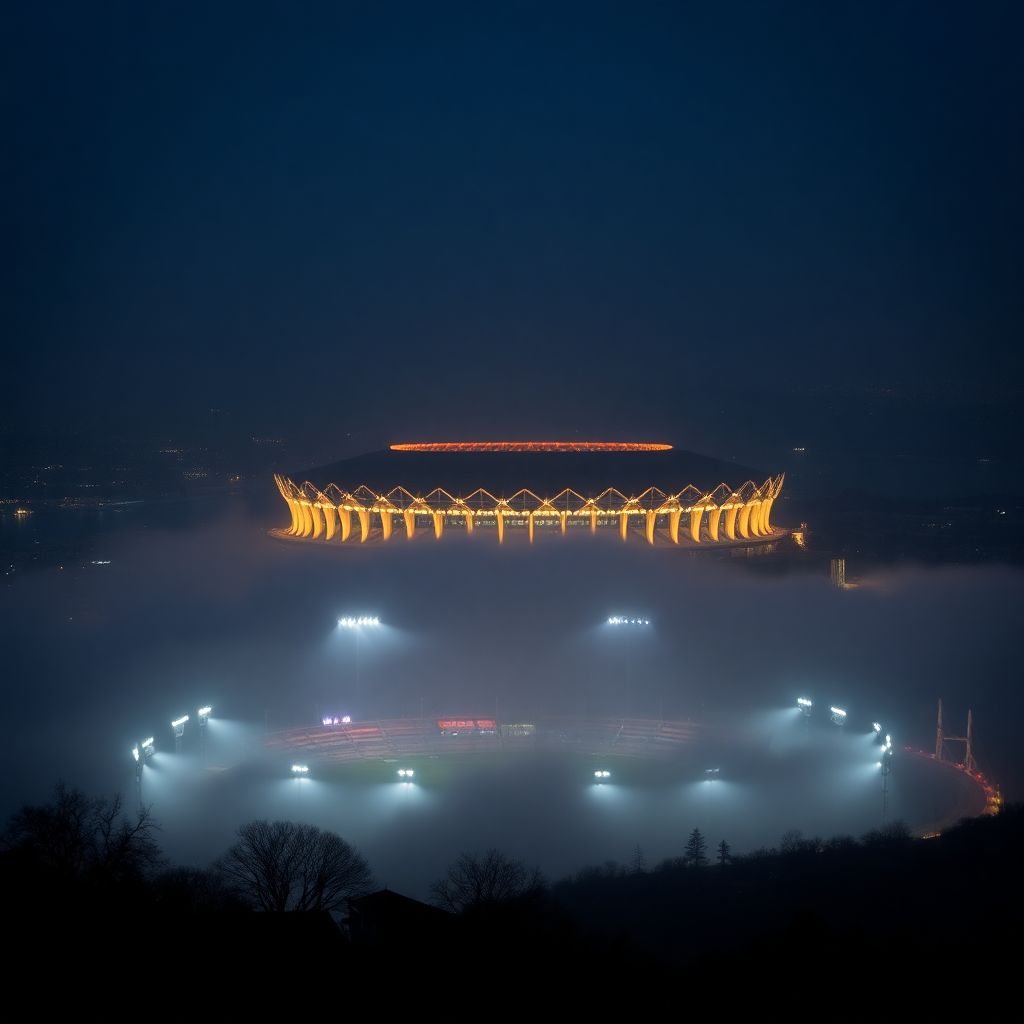
Some evenings in Istanbul feel different, as if the city itself lowers its voice. On nights like that, even the seagulls glide closer to the water. The Bosphorus brushes softly against the stones of Dolmabahçe and, for those willing to listen, the echoes sound suspiciously like studs scraping old concrete, the stomp of long-retired boots. You can almost glimpse Baba Hakkı’s unyielding stare, catch the shy smile of Süleyman Seba, sense the understated elegance of Vedat Okyar.
For years, that stadium has felt like a hushed temple, its rituals performed but its spirit strangely dormant. Against FC Midtjylland, on a European night that began under a calm sky, something in that silence shifted. The scoreboard did what it always does: list the cold facts. Yet the essence of what unfolded refused to fit into numbers. Football, at its most honest, starts not in statistics, but in the reflection of players’ eyes, in the way a team carries itself when no one can help them but each other.
Beşiktaş stepped onto the pitch looking like a man who has been lost for a long time, yet still remembers the road home. The destination was never the problem; the courage to walk there again was. On the touchline, Vincenzo Italiano’s project is still in pencil – delicate outlines, missing colours, shadows not yet fully drawn. Some lines are tentative, some ideas half-finished. But for the first time in a while, the sketch resembles something recognizable. The contours of an identity are starting to appear.
Opposite them stood Midtjylland, one of modern Europe’s quiet parables. Not a glamorous superclub, not a circus of egos. Calm like a harbour town, organized like a production plant. They don’t build brands; they build systems. Their stars are not names on posters, but the patterns and principles that outlive any individual player. Names change, coaches leave, yet the game remains stubbornly similar. In their world, wealth comes not from money alone, but from consistency, planning and patience. Throughout the night, they made that philosophy visible.
When they lost the ball, they did not flinch. Under pressure, they kept their structure instead of their breath quickening. Where many teams would rush or improvise, they trusted rehearsed solutions. Some clubs merely play football; a few actually think football. Midtjylland belongs to the second category. And on this particular evening, Beşiktaş – after a long exile in its own history – seemed to be reapplying for membership in that group.
On television, the familiar chorus of pundits filled the air: different words, same harbour. Some praised the aggressive press high up the pitch. Others underlined the energy in midfield, the desire to win second balls. A few reminded everyone that these players have barely learned each other’s gestures and timing. Yet almost all of them concluded with the same sentence, worn out from overuse and yet oddly alive again:
“This team needs time.”
Normally, that phrase is a shield, a soft pillow for harsh realities, a ready-made excuse. But this time it carried a different tone. Less resignation, more anticipation. The problem at Beşiktaş in recent years was never just the level of football; it was the erosion of something deeper. The club had not only lost matches – it had lost its own reflection.
A team can have bad nights. A team can endure defeat. But the heaviest loss is when a club no longer resembles what it says it stands for. Against Midtjylland, the black-and-white shirt did not suddenly become flawless or unbeatable. Yet it began, quietly, to look like itself again.
Feet sprinting with anger and purpose when the ball was lost. Bodies turning back instinctively to chase instead of sulking. Players reaching out to cover for one another, filling gaps not because a system demanded it, but because responsibility did. The most expensive signing in football has never been a transfer paid in millions; it is belief – a currency invisible on balance sheets but obvious in duels and sprints.
Eduardo Galeano once wrote of football as the game of those who manage to keep their childhood alive. For years, the inner child of the Dolmabahçe stands – that reckless, hopeful, loud-mouthed believer – has been sullen and quiet, watching with folded arms, no longer trusting what he sees. On this night, he did not fully forgive, but he did stand up. He looked down to the pitch with cautious curiosity and tried, maybe for the first time in a while, to believe again.
Of course, the performance had cracks. The final pass too often came in a rush instead of at the right heartbeat. The penalty area sometimes turned into a zone of hesitation, as if players were afraid of being the one to fail. When the tempo dropped, so did concentration, and small fractures appeared in the structure. Europe is a merciless teacher; a single second of inattention becomes a lesson that stays with you for years. Yet sometimes the harshness of that teacher is proof that you have enrolled in the right school.
What Beşiktaş needs now is not another constellation of individual stars, but habits that outlast lineups. Running not as an exception, but as a reflex. Pressing not only when the crowd screams, but in the 82nd minute on a tired European away pitch. Playing the same fundamental game whether leading or trailing, home or away, domestic or continental. The badge must stop bending to the scoreboard; the scoreboard must learn to respond to the badge. Great clubs do not survive through trophies alone. They persist because their character outlives generations.
Now the stage shifts to the north, to cooler winds and a foreign stadium. The return leg will not simply be a rematch; it will be a test of a concept. It will ask a simple but brutal question: Is this new Beşiktaş just a momentary emotion in Dolmabahçe, or the beginning of a repeatable pattern? The aggregate score will choose who advances, but another, quieter verdict will be written about how this team handles adversity when the noise comes from rival stands and not from its own.
Perhaps the tie will be won. Perhaps it will be lost. Some nights, however, are judged by a different tribunal. Not the referee’s notebook, but the slow memory of history. The old stones of Dolmabahçe, bathed again in European floodlights, seemed to whisper a single sentence as the players walked off the pitch:
“Sometimes, to be reborn, you first have to remember who you are.”
For the first time in a long while, Beşiktaş may have looked into the mirror and not seen a stranger.
—
Yet identity in football is not a poem; it is a series of choices repeated until they become instinct. For Beşiktaş, the real question after this match is not whether the performance pleased supporters, but whether it can be sustained and refined. Italiano’s pencilled sketch must slowly turn into ink. Passing patterns need to become automatic. Defensive reactions have to appear a fraction earlier. The energy shown in flashes must be distributed across ninety minutes and across a whole season, not just a special night.
Midtjylland, in that sense, offer a useful contrast. Their journey from provincial club to consistent European participant was not built on a single magical season. It grew from thousands of training sessions where principles mattered more than reputations, from decisions where long-term structure outweighed short-term applause. They scout for profiles, not headlines. Their identity dictates their signings, not the other way around. If Beşiktaş truly wants to “think football” again, it must embrace that same stubbornness – though on its own cultural terms, not as an imitation.
For Beşiktaş, this means making peace with patience. A coach like Italiano brings clear ideas: proactive pressing, compact distances between lines, an insistence on building from the back with courage instead of fear. Such football exposes a team when misunderstood or half-executed. Mistakes will look bigger, goals conceded more painful. But the reward, if the club resists the urge to abandon the plan at the first storm, is a style that feels recognizably “Beşiktaş” – determined, aggressive, unwilling to retreat into passivity.
The supporters’ role in this reconstruction is not minor. Dolmabahçe has one of the most intimidating atmospheres in Europe when it believes in what it sees. Yet that same energy can turn corrosive if every misplaced pass is met with impatience. In a rebuilding process, the crowd becomes either a weight or a wind. If the stands decide to support the idea, not just the result, players will run further, risk more, and dare the extra creative attempt in the final third instead of taking the safest option.
There is also a psychological dimension in reclaiming identity. Recent years have left scars: chaotic seasons, short-lived projects, squads assembled more like sticker collections than coherent teams. Players arrived with impressive CVs but without a clear sense of how they fit into a collective story. Now, between young prospects and experienced figures, a new hierarchy must emerge – not just in terms of names, but of behaviours. Who sets the pressing trigger? Who calms the game with the ball? Who demands more when fatigue tempts everyone to settle?
European nights like the one against Midtjylland are ideal laboratories for these questions. The rhythm is different from the domestic league; the punishment for errors is sharper, the pace of transitions higher. If Beşiktaş can impose its own energy against such opponents, then carrying that standard back home becomes easier. Conversely, if the team shrinks under continental scrutiny, any sense of rediscovered self will feel fragile. That is why the second leg will be so revealing: not only because of who advances, but because of how Beşiktaş reacts to setbacks within the ninety minutes.
Another layer to this rebirth lies in player development. Midtjylland’s model shows that clubs can punch above their financial weight by evolving talent inside a strong framework. Beşiktaş has historically been a place where rough diamonds could shine under the lights of Dolmabahçe, but that tradition was interrupted. Rebuilding identity must also mean becoming again a club where a young player learns what it means to wear the shirt – to press with conviction, to play with courage, to accept the pressure as privilege rather than burden.
Ultimately, the breeze that changed direction over Dolmabahçe is not yet a storm; it is a hint, a suggestion of what might come if the club resists old habits of impatience and nostalgia. Memory is important – the names of legends, the images of trophies lifted under black-and-white confetti – but memory alone does not press, does not score, does not defend transitions. What matters now is transforming this first fragile sign of self-recognition into a lasting standard.
When the team walks out into the northern night for the return match, they will carry more than a result with them. They will carry a question: can they play the same game, with the same bravery and work-rate, far from the comfort of their own stands? If the answer is yes – regardless of the final score – then the wind that turned direction in Dolmabahçe will not have been a coincidence. It will have been the first breath of a new era.