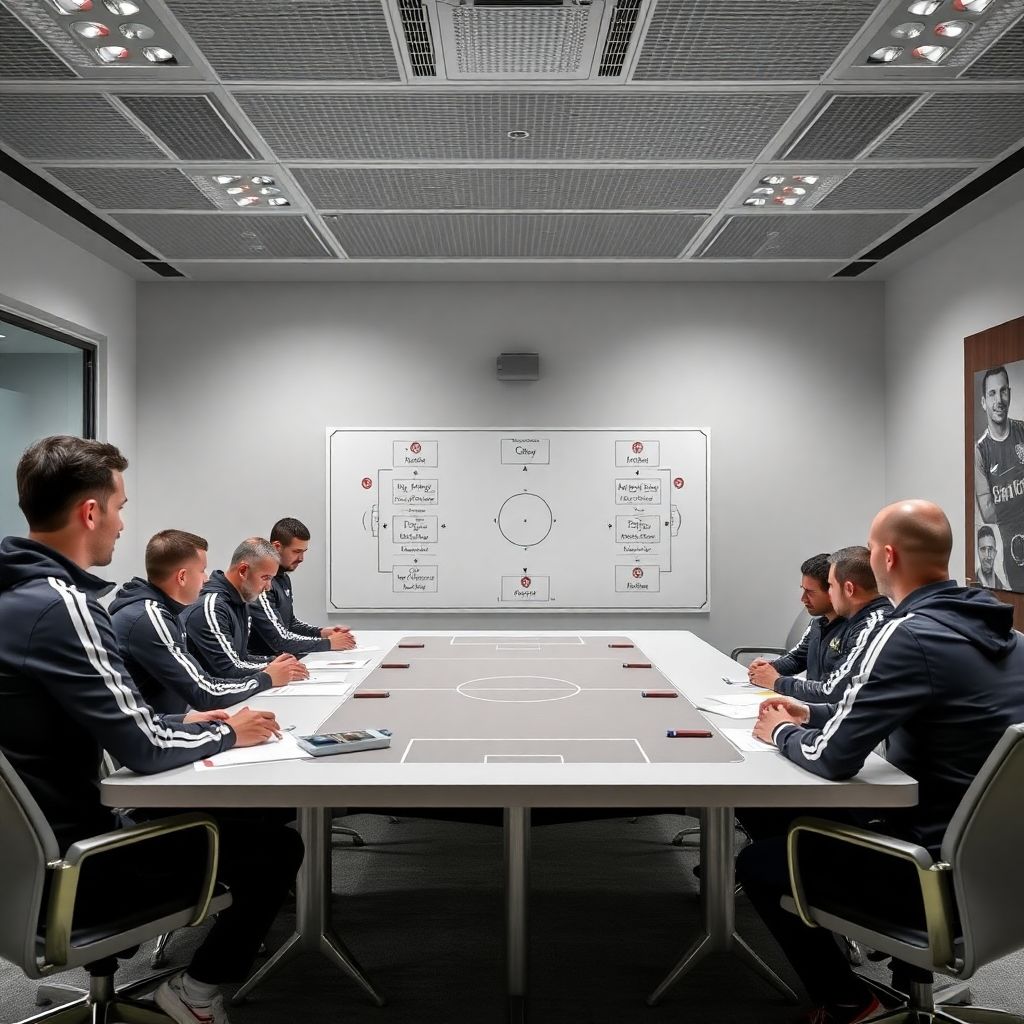
New transfer push from Beşiktaş: five positions targeted in second wave
Beşiktaş have launched the summer window with a strong and aggressive strategy and are now preparing for a second major transfer offensive. After wrapping up the deal for Leandro Trossard, the club has essentially completed its first planned phase of reinforcements and turned its focus to the next stage of squad building.
Following the departure of Sergen Yalçın, Beşiktaş restructured their football operations by appointing Önder Özen as head of football and handing the head coach role to Vincenzo Italiano. With this new technical leadership, the board drew up a clear roadmap: first cover urgent needs, then add quality and depth in targeted zones to build a team capable of competing both domestically and in Europe.
At the start of the window, three positions were marked as absolute priorities: goalkeeper, left-back and left wing. The first step on this list was taken in defence, with Kassoum Ouattara brought in to strengthen the left side of the backline. Seen as a modern full-back with energy and attacking contribution, Ouattara is expected to give Italiano more flexibility in both a back four and systems that use wing-backs.
The wing rotation was then bolstered with the arrival of İlhan Fakılı from Clermont. The 22-year-old offers pace, dribbling and directness, qualities Beşiktaş had been missing in wide areas. The club view him as a player who can grow under Italiano’s possession-focused and pressing-oriented game model, while at the same time providing immediate competition for starting spots.
In goal, the departure of Ersin Destanoğlu forced Beşiktaş to move quickly. The black-and-whites responded with a double move between the posts, adding Alexander Nübel from Bayern Munich and Doğan Alemdar from Başakşehir. With this duo, the club aims to combine top-level experience with domestic league familiarity. Nübel is regarded as a potential first-choice keeper with elite shot-stopping ability, while Alemdar brings promise and depth, capable of growing into a long-term solution.
In midfield, Beşiktaş managed to complete a deal that had already been on the agenda during the previous winter: the signing of free agent Salih Özcan. The versatile midfielder, known for his work rate, pressing intensity and tactical discipline, fits neatly into Italiano’s preferred style. Özcan can operate as a holding midfielder or a box-to-box presence, allowing the coach to vary his midfield structures without losing balance.
The headline move of the first phase, however, is undoubtedly Leandro Trossard. Long pursued by Beşiktaş, the Belgian attacker has finally reached a full agreement with the club and his parent side Arsenal. Trossard, who can feature on the left wing, as an attacking midfielder or even as a false nine, is expected to significantly raise the team’s creative output and goal threat. His arrival positions Beşiktaş to be much more unpredictable in the final third.
Beşiktaş have managed to complete this initial transfer package in time for the Europa League second qualifying round clash against Midtjylland. The aim was to have the main reinforcements ready for European competition, and that objective has been largely met. While the new signings are being registered, it is expected that Trossard will be part of the squad at least for the second leg of the tie, adding a new dimension to the attack.
The club must submit their Europa League list by 18 July at 01:00 local time. Once the Midtjylland challenge is behind them, a new chapter in the transfer window will begin. The second phase is planned to be more targeted and strategic, focusing on adding final touches to the squad rather than wholesale changes.
In this upcoming stage, Beşiktaş have identified five main areas for reinforcement. First on the list is an attack-minded midfielder who can operate between the lines, link play and contribute with goals and assists. Italiano wants a player capable of breaking compact defensive blocks and dictating the tempo in the final third, someone who can complement Trossard and ease the creative burden.
Secondly, the club are looking for a left-sided centre-back. With the modern game increasingly demanding ball-playing defenders, Beşiktaş aim to bring in a left-footed central defender who can initiate attacks from the back, resist high pressing and provide aerial dominance. Such a profile would allow Italiano to build from deep more comfortably and shift between different defensive structures.
The third target area is the right wing. While the left side is being reshaped with the arrivals of Fakılı and Trossard, the technical staff believe the right flank still lacks the desired combination of speed, pressing intensity and end product. A right-sided winger who can both track back diligently and consistently threaten goal is high on the agenda to ensure the team is not overly dependent on one side in attack.
Fourth, Beşiktaş are planning moves for young players with dual nationality or those raised abroad, particularly with an eye on the future. The club’s strategy includes signing promising talents from the diaspora who can adapt quickly, understand both Turkish football culture and European standards, and potentially become key assets in the medium term. These transfers are seen not just as squad depth, but as investments that could generate significant resale value.
Finally, attention will turn to the centre-forward position. Although goal contributions are expected from wide players and attacking midfielders, the technical staff believe that a top-level striker is essential to turn the team into genuine title and European contenders. The desired profile is a forward capable of pressing from the front, linking play with his back to goal and finishing clinically inside the box. The right signing here could become the focal point of the entire attacking structure.
Beyond these clearly defined needs, Beşiktaş’s transfer strategy is also shaped by tactical and financial considerations. With Italiano favouring high pressing and quick transitions after ball recovery, all new arrivals are evaluated not only on technical ability but also on their physical capacity and intensity without the ball. The board is also trying to maintain a balanced wage structure, avoiding the financial mistakes of previous eras while still attracting players with proven quality.
Another important aspect is squad harmony. The rapid influx of signings can sometimes disrupt existing hierarchies in the dressing room. Beşiktaş are therefore paying special attention to character and professionalism as they build the new core of the team. Players like Özcan, Trossard and Nübel are not only being brought in for their on-field impact, but also because they are considered capable of adapting quickly and assuming responsibility in a big-club environment.
The success of this project will be measured in stages. First, qualifying for the Europa League group phase is seen as a key short-term target, both in sporting and financial terms. Progress in Europe would help the team gain confidence, increase the club’s coefficient and make Beşiktaş a more attractive destination for future signings. At the same time, the domestic league campaign will test how quickly the new pieces can be integrated into Italiano’s system.
From a long-term perspective, the aim is to create a squad with a clear identity: aggressive without the ball, fluid in possession and capable of developing young talents alongside established names. If the second-wave transfers in midfield, defence, attack and among young prospects are executed as planned, Beşiktaş could not only close the gap to their main rivals but also lay the foundations for sustained success over several seasons.
In summary, the first part of the summer window has brought the urgent reinforcements Beşiktaş badly needed, topped off by the high-profile capture of Leandro Trossard. Now, with the European deadline approaching and the Midtjylland test on the horizon, attention shifts to the second phase. Five areas have been clearly identified, and how effectively the club can address them will largely determine whether this ambitious rebuild turns into a genuine revival on the pitch.