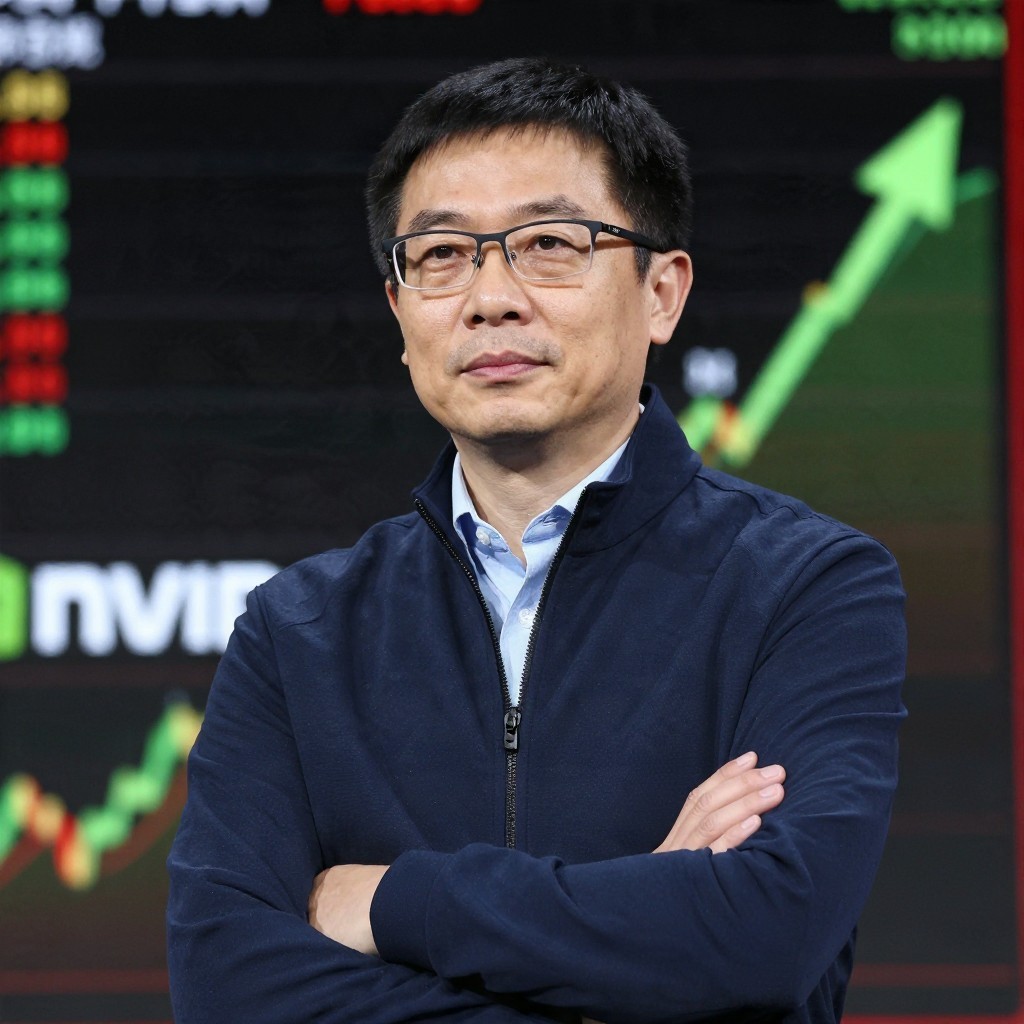
Nvidia’s $952 Billion Comeback
Nvidia shares surged after Jensen Huang returned to the company’s top job, delivering the strongest one-day gain in the chipmaker’s history and the biggest single-session increase in market value ever recorded by a U.S. company.
The stock climbed 31.48% on November 23, closing at $165.05. That was a rise of $39.52 per share and Nvidia’s largest percentage gain since May 2003. The rally added $952 billion to the company’s market capitalization, lifting it to $3.98 trillion.
The rebound followed a unanimous decision by Nvidia’s board to reinstate Huang as chief executive, chairman and a member of the board. His abrupt departure had unsettled investors and contributed to selling in the company’s shares. The return of the co-founder appeared to ease concerns about leadership at a time when expectations for artificial-intelligence investment and the outlook for technology stocks were already under debate.
Huang resigned as CEO and from his board seat on November 12, 2026. The reported reason was a series of allegations about extramarital relationships, including claims involving a Chinese businesswoman said to have links to Chinese intelligence and at least two Nvidia employees. Huang acknowledged having had an affair and apologized to his wife.
The allegations prompted questions about corporate ethics and oversight, as well as the company’s leadership. Nvidia’s chief financial officer, Colette Kress, took over as interim CEO after Huang stepped down.
Just 11 days later, on November 23, the board voted unanimously to bring Huang back. U.S. President Donald Trump was also reported to have pressed board members to support his return. After receiving assessments from the U.S. government, Nvidia’s board said it had concluded that Huang’s reinstatement did not pose a national-security risk. Internal investigations concerning Huang were still under way.
The speed of the reversal underscores how closely investors associate Nvidia’s strategy with Huang’s leadership. As a co-founder and long-standing public face of the company, he has played a central role in shaping its direction. His return offered investors a familiar point of reference after a period of uncertainty, although it did not resolve the questions raised by the allegations.
The market reaction should not be taken as proof that all risks have disappeared. A sharp rise in a single trading session reflects changing expectations and investor sentiment; it does not, by itself, settle concerns about corporate governance or guarantee future performance. The outcome of the ongoing internal inquiries may remain important to shareholders and employees.
Nvidia’s valuation also means that its share price can have an outsized effect on the wider technology market. When a company worth trillions of dollars moves dramatically, the change in its market capitalization can run into hundreds of billions of dollars-even within one day. The $952 billion gain therefore set a record not only for Nvidia but for any U.S. company in a single session.
For investors, the episode highlights the need to separate enthusiasm about a leader’s return from the company’s longer-term fundamentals. Nvidia’s prospects depend on factors such as demand for AI computing, competition, customer spending and the company’s ability to maintain its position in the chip industry. Leadership stability may influence confidence, but it is only one part of that picture.
The rally nevertheless showed how quickly sentiment can shift when a high-profile leadership dispute is resolved. Nvidia’s stock had been pressured by uncertainty following Huang’s departure; the board’s decision gave the market a clear announcement to respond to. Whether that confidence holds will depend on the company’s results and on how it addresses the governance issues still under review.