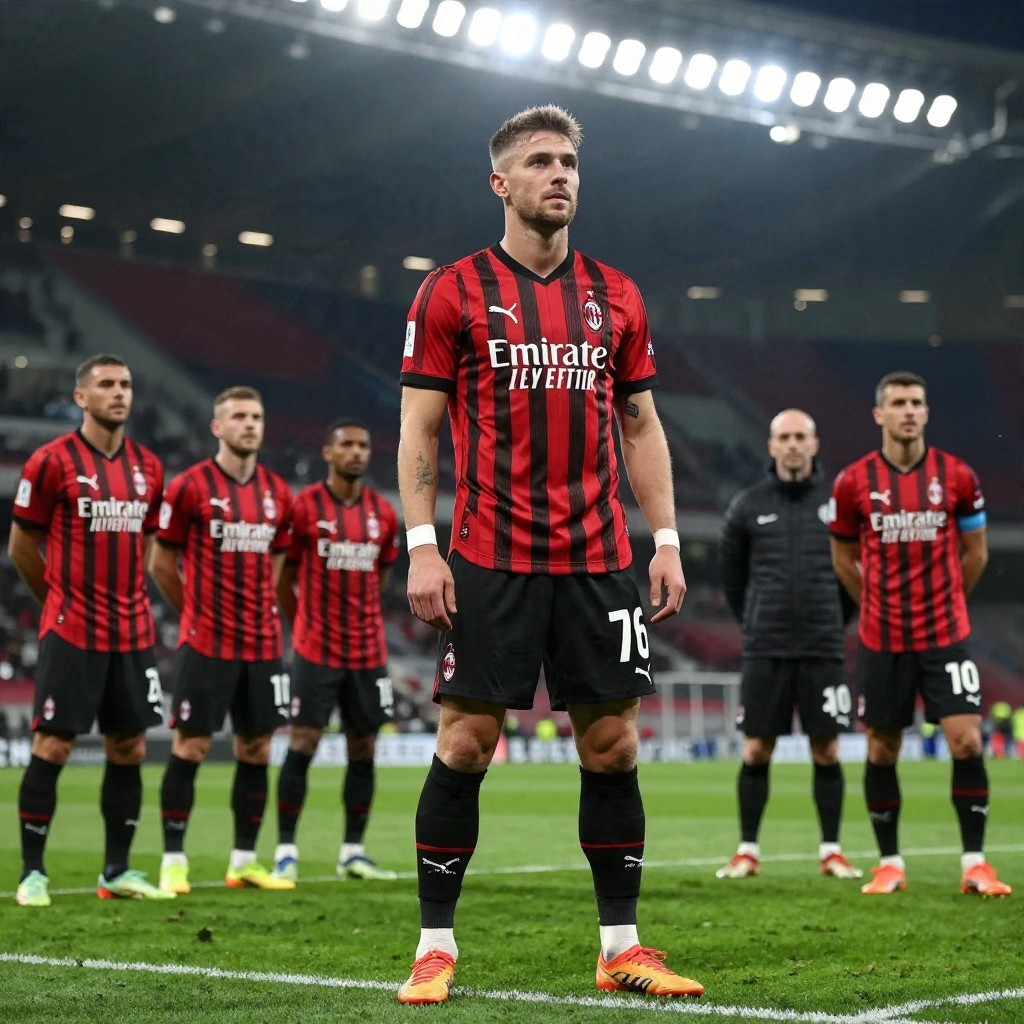
Milan Will Not Be the Same Without Leão: “It Was His Team”
Brazilian football legend Kaká believes AC Milan will need time to adjust after Rafael Leão’s departure for Galatasaray. The Portuguese forward had become one of the defining figures of the Rossoneri side, and his exit leaves the Italian club with more than a vacancy in the attacking lineup to fill.
Leão’s importance was not limited to goals or assists. His pace, ability to take on defenders and capacity to create danger in one-on-one situations gave Milan a distinctive attacking outlet. When the team needed to move the ball forward quickly or unsettle a compact defence, he could change the rhythm of a game.
That influence helps explain Kaká’s view that Milan cannot simply replace the player and expect everything to continue as before. A team’s habits are shaped by the strengths of its key performers. Without Leão, Milan may need to reconsider how it builds attacks, which players take responsibility in the final third and where its greatest threats come from.
The adjustment is likely to involve the whole squad, rather than just the forward selected to occupy Leão’s position. Teammates may have to make different runs, offer new passing options and share creative duties that were previously concentrated around the winger. Coaches, too, may need to adapt their tactics to suit the players available.
A direct replacement is not necessarily the only solution. Milan could distribute Leão’s responsibilities among several attacking players, creating a more varied threat instead of relying on one individual to produce decisive moments. That approach could take time to develop, as players learn to coordinate their movement and build understanding in a reconfigured attack.
There may also be an opportunity for other members of the squad to step forward. A major departure can open space for players who previously had fewer chances to influence matches. But increased responsibility brings pressure: those players will be judged not only on their individual performances, but also on whether Milan can maintain its effectiveness without one of its most recognisable attackers.
Kaká’s assessment points to the broader challenge facing Milan: preserving the team’s identity while changing its personnel. Leão’s presence had become closely associated with the way the side attacked, so his absence may affect the team’s confidence and approach as well as its tactics. The club will need to establish new patterns rather than assume that the old ones can be reproduced unchanged.
For supporters, the transition may be uneven. A new attacking setup can take time to settle, and early performances may not provide a reliable measure of how successful the change will be in the long run. Consistency will depend on how quickly the players adapt, how effectively the coaching staff adjusts the system and whether Milan can create dependable sources of creativity and goals.
Leão’s move to Galatasaray therefore marks a significant turning point for Milan. Kaká’s message is not simply that the club has lost a talented player, but that replacing his influence will require patience. Milan must find a new balance, give other players room to assume greater responsibility and allow time for a different version of the team to take shape.