Cerny is sounding the alarm for Beşiktaş
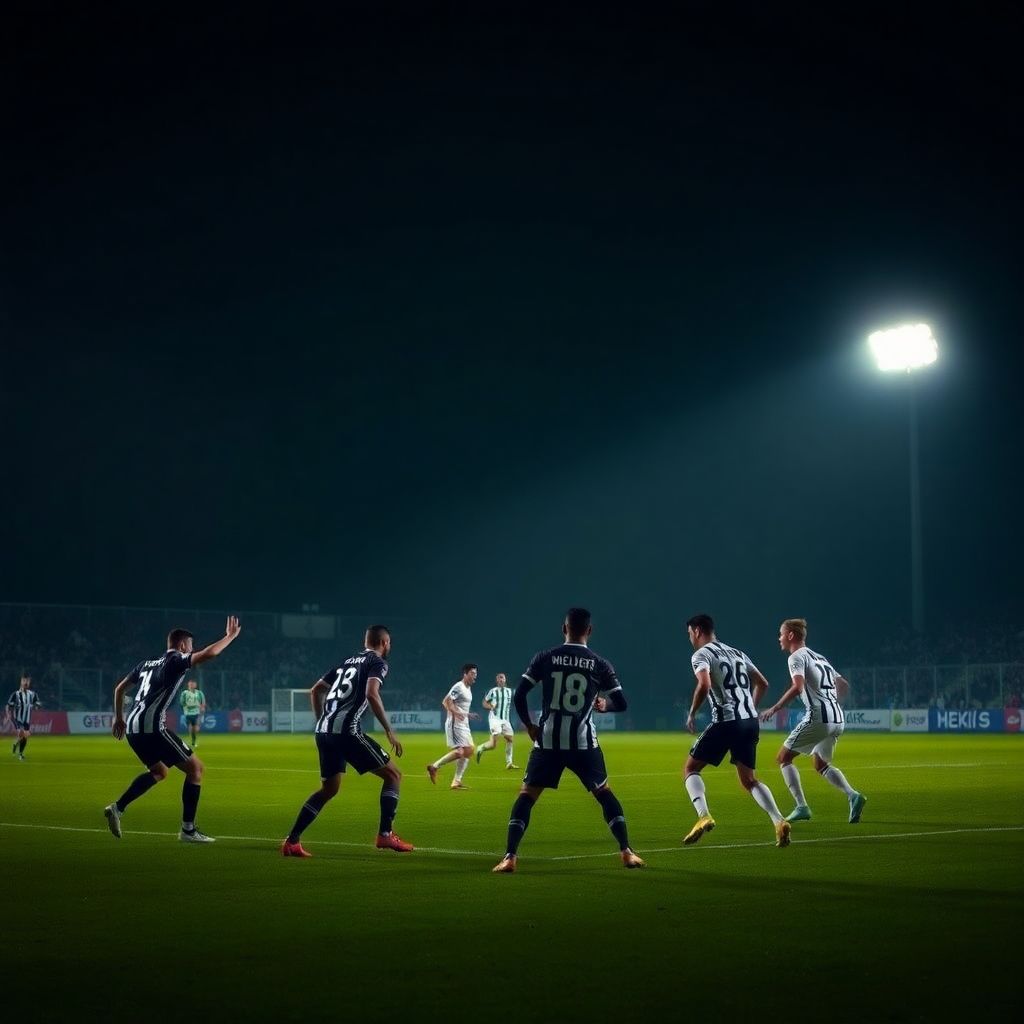
Beşiktaş have taken a crucial step in Europe, but the warning lights are blinking just as clearly as the scoreline. In the first leg of the UEFA Europa League third qualifying round, the black-and-whites left the Czech Republic with both a 1-0 win over Hradec Kralove and a tangible advantage for the return match. Even after going down to ten men, they managed to protect the lead given to them by Semih Kılıçsoy and came home with confidence.
On paper, Hradec Kralove were a mystery before kick-off for most followers of Turkish football. Once the game started, however, it quickly became apparent that they are a well-drilled, disciplined side: compact in defense, organized without the ball, and committed to their structure. Yet despite that, the gulf in individual quality was unmistakable. With all due respect, this is not a team on Beşiktaş’s level in terms of squad depth or talent.
Even after the red card, Beşiktaş largely dictated the flow of the game. They controlled possession, set the tempo, and frequently pinned Hradec Kralove back in their own half for extended periods. There were long stretches where the hosts struggled to exit their defensive third. This dominance should not be overlooked-controlling an away European tie with ten men is not trivial.
However, alongside the positives, some familiar, worrying patterns resurfaced. The same structural and individual issues that have dogged Beşiktaş in recent months again came to the surface. The most striking of these was Vaclav Cerny’s form.
Cerny’s form: from concern to full-blown alarm
Cerny, who had already come under heavy criticism in the previous European round, once again failed to deliver anything close to what is expected from a starting right winger at a club of Beşiktaş’s stature. His performance went beyond a bad day at the office; it raised fundamental questions about whether he can realistically be part of the solution on that flank.
He squandered clear scoring opportunities, repeatedly made the wrong choices in the final third, and slowed down promising transitions. These were not isolated moments-it was a pattern that stretched throughout the game. Given the context and the opponent, this was the kind of match where a wide attacker with quality should be making the difference. Instead, Cerny became a symbol of the team’s limitations on the right side.
With the way he is playing, it is hard to argue that he can be trusted as a first-choice solution on the wing. At best, his profile currently points toward being a rotational player or an impact substitute, not a mainstay. If Beşiktaş want to raise their ceiling both in Europe and domestically, they cannot afford such inconsistency in one of the most decisive areas of the pitch.
Right wing: the most urgent transfer zone
The conclusion writes itself: the club must act aggressively in the transfer market for the right flank. One addition is not enough. The current landscape suggests that Beşiktaş need at least two high-caliber, ready-made starting options who can come in and immediately compete for a spot in the first XI.
Modern football demands that wide players not only stretch defenses but also contribute heavily in terms of goals, assists, and counter-pressing. When the right wing breaks down, attacking moves become predictable and lopsided. Beşiktaş, even when on top of the opponent, often struggle to convert territorial dominance into a steady stream of clear chances. The ineffective use of the right side is a huge reason why.
Without reinforcements there, Italiano will either have to redesign the system to hide this weakness or take risks by continuing to field a player whose confidence and output are visibly declining. Neither option is ideal for a team aiming to re-establish itself as a serious contender in all competitions.
A brighter picture on the left: İlhan Fakılı and Trossard
While the right wing is a source of anxiety, the left offers far more optimism. İlhan Fakılı used the minutes he was given to send a strong message about his potential. His bravery on the ball, high energy, and natural self-confidence stood out. He did not hide, demanded the ball, and looked willing to take responsibility in advanced areas.
For a young player, this mental profile is just as valuable as technical ability. He gave the impression of someone who, with proper guidance and consistent game time, can become a reliable contributor and perhaps more. His timing in attacking spaces and willingness to take on defenders suggest that he could grow into a serious weapon in one-on-one situations.
With Trossard also set to join the squad, Beşiktaş appear much closer to building a strong, versatile left wing. A rotation featuring Trossard and İlhan Fakılı, with different strengths and complementary skill sets, can provide Italiano with tactical flexibility-switching between a more possession-oriented approach and a direct, transition-focused game, depending on the opponent.
This contrast-the promise on the left versus the insecurity on the right-highlights the imbalance within the team’s attacking structure. One flank looks nearly complete; the other resembles a construction site.
Ouattara’s debut raises questions
On the defensive side, left-back Ouattara’s performance was riddled with question marks. Beyond the obvious low point-his red card-there were deeper issues in his overall display. His positional awareness was shaky, he often misjudged distances, and his timing in defensive duels left much to be desired.
For a player whose transfer fee was in the region of eight million euros, the expectations are naturally high. Such an investment usually signifies someone brought in to be a long-term pillar of the back line, not a project who needs years to adjust. Of course, it is only fair to acknowledge that new signings can require time to adapt to a new country, league, and tactical demands.
Still, first impressions matter. And in Ouattara’s case, the initial image is not a reassuring one. The red card not only hurt Beşiktaş in this particular match but also means the team will have to cope without him in the return leg, disrupting continuity and forcing Italiano into early rotation.
To change the narrative, Ouattara must quickly show that he can learn from these mistakes, refine his defensive timing, and offer more composure under pressure. Otherwise, the combination of a high fee and shaky early performances will only increase the pressure on both the player and the club’s decision-makers.
Nübel: instant authority between the posts
If there is one area where Beşiktaş seem to have struck gold, it is in goal. Alexander Nübel has, from the moment he stepped onto the pitch, radiated a sense of calm and authority. Watching him, one gets the impression of a goalkeeper who is not easily beaten. His shot-stopping is impressive, but equally important is the way he organizes the defense and transmits confidence with his body language.
Every big team needs a keeper who can turn tight matches in their favor. In Europe especially, progression often comes down to one or two key saves in high-pressure moments. Nübel looks like exactly that kind of player-a last line of defense that gives the entire team the courage to play higher, to press more assertively, and to take calculated risks in possession.
His presence significantly lowers the margin of error for the defenders in front of him. When a backline knows that the man behind them is reliable, they are more willing to defend aggressively instead of retreating in fear of every long ball or counter. That shift in psychology can transform the way a team approaches big nights in Europe and tough away fixtures in the league.
Italiano: courage on the touchline
At least as important as any player signing is the arrival of coach Italiano. In this match, he once again displayed what separates ambitious, modern coaches from conservative ones. When Beşiktaş were reduced to ten men, the obvious and safe reaction would have been to drop deeper, pack the midfield, remove an attacker and simply protect the 1-0.
Instead, Italiano made a bolder choice: he introduced a second striker and continued to pursue the win rather than merely defending it. He accepted the risk of leaving spaces but decided that the most effective way to protect the lead was to keep the opponent under pressure rather than inviting them onto Beşiktaş’s half for the rest of the game.
This kind of proactive mentality is what distinguishes top-level managers. They play to win, not to survive. In this case, the risk was calculated and ultimately justified. Beşiktaş maintained a level of threat going forward, which in turn limited Hradec Kralove’s ability to throw everything forward.
For a club that has been searching for a clear identity on the pitch in recent years, Italiano’s approach offers a much-needed blueprint: intensity, bravery, and a refusal to collapse into passivity at the first sign of adversity.
A team still under construction
Despite the valuable victory, it would be deceptive to say that all is well. The structural gaps in the squad remain visible. The most pressing needs are clear: a right winger who can consistently influence big matches, a clinical center forward who converts the chances created, and possibly additional depth in the full-back positions.
Several of the problems highlighted by this match are not new; they have been lingering from previous seasons. Wastefulness in front of goal, difficulty in breaking down compact defenses, and an overreliance on individual moments instead of a fully synchronized attacking system-these themes keep reappearing.
The difference now is that the foundation appears stronger. With Nübel bringing stability in goal and Italiano providing a coherent game plan, Beşiktaş have a platform upon which serious reinforcements can actually make a transformative impact. The right signings in two or three key positions could rapidly elevate this team from “promising but flawed” to “genuinely formidable.”
What the Hradec Kralove match really tells us
This first leg in the Czech Republic should not be over-romanticized. The opponent, in terms of squad value and experience, is far below Beşiktaş. A narrow 1-0 win, even with ten men, is acceptable but not the sort of performance that will scare future European rivals. The expectation for a club like Beşiktaş is to be more dominant, more fluid in attack, and less generous in allowing chances at their own end.
At the same time, dismissing the win would also be unfair. European away fixtures are rarely straightforward, especially early in the season when teams are still building rhythm and physical condition. Securing a victory, maintaining a clean sheet, and returning home with both a lead and renewed belief is a meaningful achievement.
What this game offers, above all, is a clear diagnostic. It shows where Beşiktaş are strong-goalkeeper, left flank’s potential, coaching leadership-and where they are vulnerable, particularly on the right wing and in finishing efficiency. Those lessons, if taken seriously by the management, can guide the remainder of the transfer window.
The road ahead: from warning to opportunity
In summary, Beşiktaş leave the Czech Republic not only with a crucial 1-0 win but also with a sharper understanding of what needs to change. Cerny’s ongoing struggles have moved beyond a minor concern and become a genuine alarm bell. If the club ignores it, the price will almost certainly be paid in more demanding matches, where missed chances and poor decisions cannot be so easily forgiven.
On the positive side, there is plenty to build on: Nübel’s composure, Italiano’s courage, the promise of İlhan Fakılı, and the imminent boost from Trossard. If these strengths are complemented by smart, timely signings-especially on the right wing and at center forward-Beşiktaş can turn this phase of fragility into the starting point of a powerful resurgence.
The message is clear: the team is on the right track in terms of mentality and structure, but the squad is not complete. The alarms around Cerny and certain positions should not be ignored-they should be treated as an early warning system. How the club responds now will determine whether this European campaign becomes just a brief chapter or the beginning of a much longer, more ambitious story.