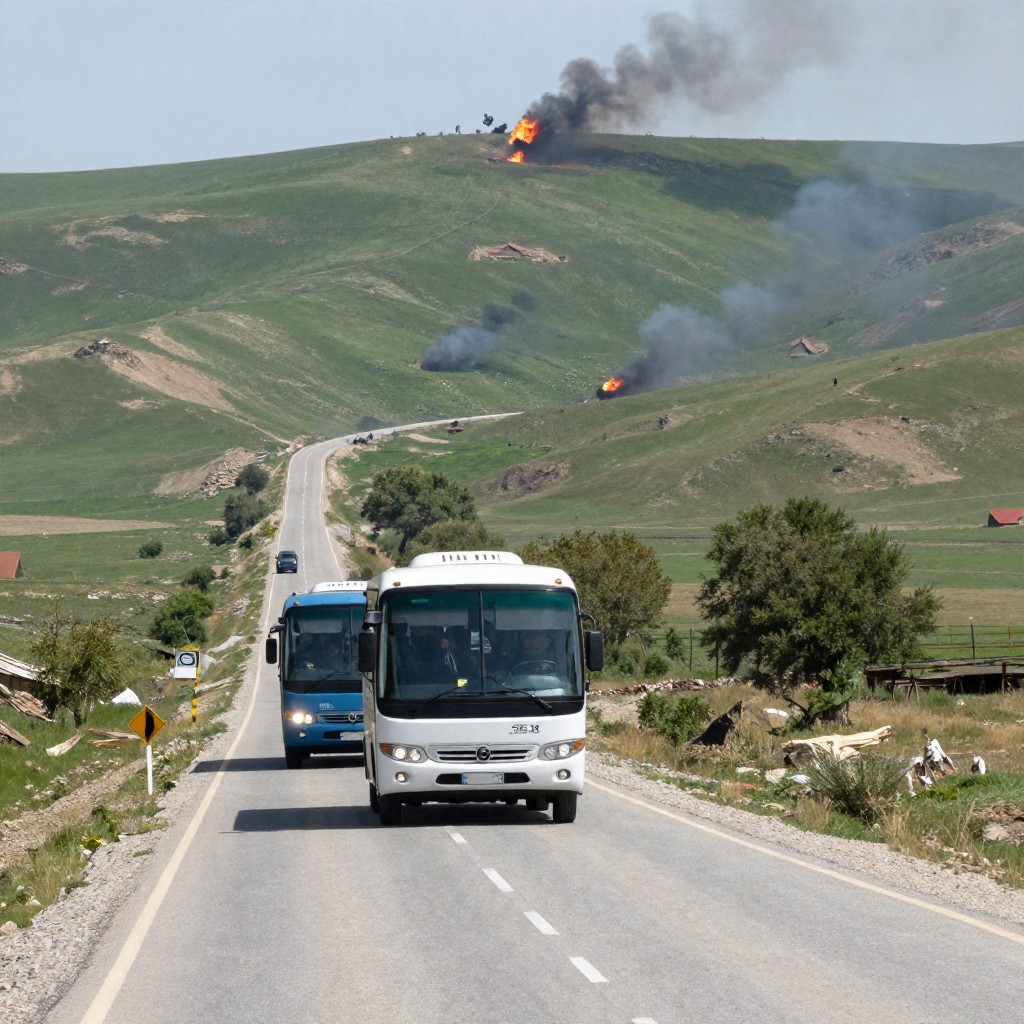
New details emerge in Fenerbahçe bus attack: gunfire came from 40 metres away
New findings have been set out in the indictment concerning the armed attack on the Fenerbahçe team bus in Sürmene, Trabzon, on 4 April 2015. Investigators say the shots were fired from about 40 metres away. The bus continued for another 239 metres before stopping, while a rifle later recovered by investigators was found roughly 120 metres from the reported attack site.
The indictment names five suspects, two of whom were in pre-trial detention, and 40 complainants. Trabzon’s 1st High Criminal Court accepted the 26-page indictment. The case was reopened for examination after the Ministry of Justice ordered a review and a decision was made to seek reversal of the earlier outcome in the interests of the law. A special team formed in Trabzon subsequently detained five people; two were remanded in custody after questioning.
Prosecutors accuse the five suspects of jointly and deliberately attempting to kill 39 people. For each suspect, the indictment seeks a prison term of 14 to 21 years under the relevant provisions of the Turkish Penal Code. The prosecution’s stated calculation amounts to a potential total of 549 to 819 years for each defendant. Prosecutors also requested that the suspects be deprived of certain electoral rights. In addition, they seek punishment over damage to the bus, naming its owner, İsmail Kopuz, as the complainant in that part of the case.
The indictment describes a frame-by-frame review of security-camera footage lasting 12 minutes and 29 seconds. At the 13-second mark, investigators identified two flashes from the hillside route, followed by two sounds resembling explosions. The bus stopped at the 28-second mark. Its injured driver was taken to hospital, and, after the passengers had left the vehicle, investigators found ten shotgun pellets in different parts of the bus.
Investigators also examined the route and surrounding terrain. The indictment includes mapping work and details of the path leading away from the area where a footprint was found. It states that one suspect, identified as Yusuf Ö., lived about 600 metres from the attack site, 450 metres from where the rifle was found and 300 metres from the footprint location.
According to the indictment, Yusuf Ö. had obtained hunting cartridges from a relative on the day of the attack. In a statement given on 5 June 2015, he said he had been at home at the time and had watched developments on television. Prosecutors say phone records and base-station data contradicted that account. The records cited in the indictment indicate that he left his residence at 22:01 on 4 April, reached Yemişli neighbourhood, where Fenerbahçe players were located, at 22:13, and continued to receive a signal from that area until 22:20. From 22:28 onward, his phone was recorded in the area around his home.
Phone and telecommunications data form a substantial part of the prosecution’s account. Investigators sought call records linked to 54 separate identification numbers and compared them with the location of the incident. The indictment says that five suspects’ phones were monitored under a court order, but that this monitoring did not produce evidence. It also records that the suspects made 72 phone calls on the day of the attack. Four other people gave statements as individuals with information about the case, while prosecutors highlighted inconsistencies in the suspects’ accounts.
The indictment’s measurements, footage analysis and telephone records are presented as parts of the prosecution’s case, not as a final judicial finding. The defendants’ guilt, and the weight to be given to each item of evidence, must be determined through the court proceedings. Acceptance of an indictment means that the case can proceed to trial; it does not amount to a conviction.
The investigation also involved searches for evidence on the suspects’ phones and an examination of the area around the bus route. Investigators used a reconstructed conversation at the scene to help establish coordinates, then compared those coordinates with mobile-network data. The aim was to assess whether the recorded movements and locations were consistent with the accounts given during questioning.
A central issue in the case is the relationship between the physical evidence and the suspects’ whereabouts. The reported distance between the firing point and the bus, the location where the rifle was recovered, and the route associated with the footprint are all included in the indictment. Such measurements may help investigators reconstruct events, but their significance depends on how they are evaluated alongside the remaining evidence at trial.
The prosecution also cited contradictory statements as a reason for further scrutiny. In criminal proceedings, discrepancies can prompt investigators to test a statement against independent records, including video footage and phone-location data. They do not, on their own, establish responsibility; the court must assess the complete record and hear the parties’ arguments.
Seven other suspects were reportedly cleared from prosecution, while five people were named in the indictment. The case therefore distinguishes between those whom prosecutors believe should face trial and people whose involvement was examined but did not lead to charges. The proceedings are expected to address the allegations against the five defendants and the evidence gathered during the renewed investigation.