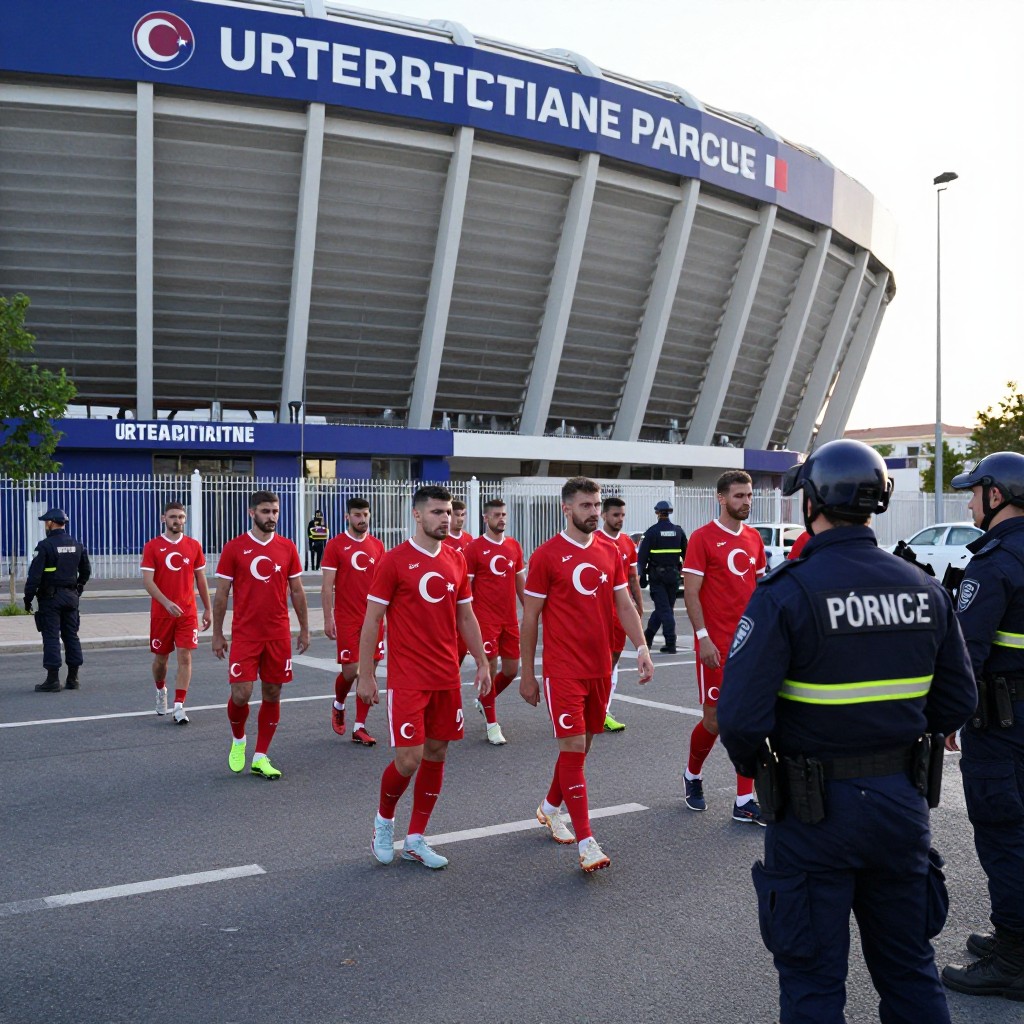
What If Türkiye Faced France’s Unrest? Galatasaray Had Played in Georgia
France is experiencing serious unrest, with curfews and strict security measures in force in affected areas. At the same time, Galatasaray are expected to travel to Lille for a crucial European fixture. UEFA’s position, as reported, is that the match should go ahead in France and the Turkish club must make the trip.
That raises an uncomfortable question: what would happen if a visiting team faced comparable conditions in Türkiye? The answer would depend on the specific location, the severity of the unrest and the decisions made by authorities and football officials. A curfew or emergency restriction could affect travel, public access and security arrangements, but it would not automatically mean that a match had to be cancelled or moved.
For Galatasaray, the immediate challenge is to prepare for Lille while taking account of the situation on the ground. The team and its staff need reliable information about transport, accommodation and the route to the stadium. Security planning also becomes especially important when restrictions are changing or large gatherings are discouraged.
The responsibility would not fall on the club alone. Local authorities would have to assess public safety, while the competition organiser would need to decide whether the match could be staged under acceptable conditions. If travel or access became impractical, organisers could consider alternatives such as a delayed kick-off, tighter entry controls, a postponement or a venue change. Each option would require coordination rather than a unilateral decision by either team.
The headline’s reference to Georgia recalls that Galatasaray have also travelled there for football. But the fact that a team has played in another country does not, by itself, provide a ready-made solution for a fixture affected by unrest. Moving a match abroad involves logistical, regulatory and sporting questions: the venue must be available, both teams must be able to travel, and the competition’s rules must be followed.
A hypothetical Turkish scenario would likewise be judged on its own facts. Authorities would need to determine whether the affected area was safe for players, staff, supporters and the wider public. Officials might restrict access to the stadium, increase security or advise people not to travel. If the risks could not be managed, postponement or relocation could become necessary. The key issue would be whether the event could take place safely-not whether the same measures had been used elsewhere.
For supporters, uncertainty can be as difficult as the restrictions themselves. Fans travelling to an away match need clear, timely instructions about tickets, transport and stadium entry. If conditions change, clubs and organisers should communicate practical guidance promptly and avoid leaving supporters to rely on rumours.
The fixture also carries a sporting dimension. Playing away in a tense atmosphere is demanding even under normal circumstances. Security concerns, travel disruption and limits on access can add pressure for players and coaching staff, making preparation and concentration more difficult. Galatasaray will therefore have to balance its football preparations with the need to follow official safety instructions.
Ultimately, the comparison between France and Türkiye is a hypothetical one, not proof that identical measures would be taken in either country. Decisions would depend on local conditions, the advice of security authorities and the rules governing the competition. For now, the central question is whether the Lille match can proceed safely and whether Galatasaray can complete its journey under the arrangements set by the relevant authorities.