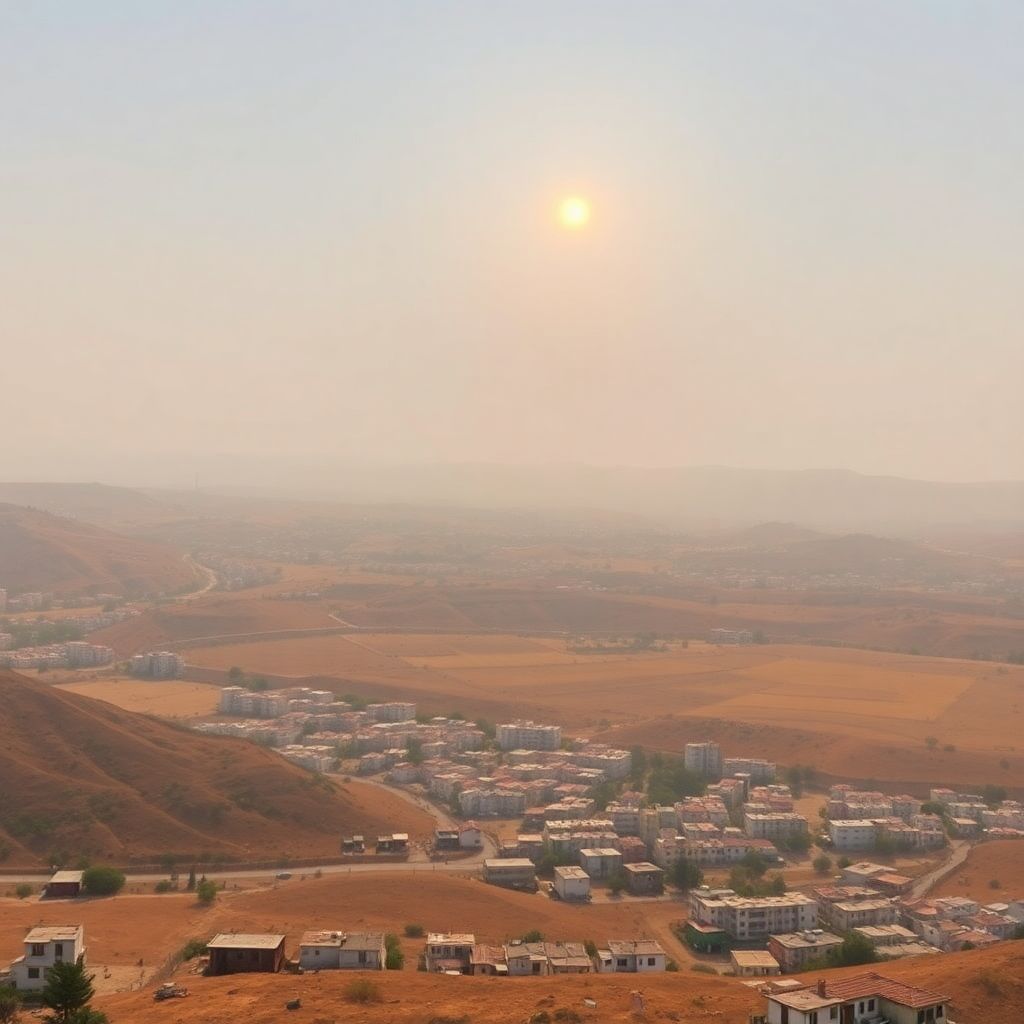
Four-Day Heat Alert: African-Origin Heatwave Continues Across Türkiye
An African-origin tropical air mass will continue to affect much of Türkiye for several more days, bringing temperatures well above seasonal averages. According to Prof. Dr. Murat Türkeş, a member of the Executive Board of Boğaziçi University’s Climate Change and Policy Research and Application Center, temperatures in large parts of the country may remain 3 to 6 degrees Celsius above normal until Thursday, August 27.
The hot air mass began influencing Türkiye from Friday after moving northward from Africa through the Central Mediterranean and the Balkans. It then spread toward the Black Sea basin and a wide area of the country. As a result, temperatures in numerous cities have been recorded above typical seasonal levels.
Heatwave expected to weaken after August 27
Prof. Dr. Türkeş stated that the heatwave is expected to lose strength on August 27. Temperatures should gradually return closer to seasonal averages, particularly in areas receiving rainfall. However, this change will not be felt equally everywhere.
The Mediterranean and Aegean coasts will continue to experience high humidity, while particularly humid conditions are expected in the Eastern Black Sea and eastern Mediterranean regions. High moisture levels will make the weather feel considerably hotter than the thermometer readings suggest. This combination of heat and humidity can create uncomfortable and potentially dangerous conditions, especially for older adults, children and people with chronic illnesses.
Even after the current heatwave weakens, temperatures may remain above normal during the first week of September. Therefore, the end of the immediate warning does not necessarily mean that summer heat will disappear completely.
Why the air feels hotter near the coast
Humidity plays a major role in how people experience temperature. When the air contains a large amount of moisture, sweat evaporates more slowly from the skin. Since evaporation is one of the body’s main cooling mechanisms, high humidity makes it harder to regulate body temperature.
For this reason, coastal areas may feel significantly hotter than inland locations with the same measured temperature. People spending time outdoors should consider both the official temperature and the perceived temperature, particularly during the afternoon when heat stress is generally strongest.
Türkiye has not broken widespread temperature records this year
Although the current weather is unusually hot in many areas, Prof. Dr. Türkeş noted that Türkiye has not experienced the succession of record-breaking heatwaves seen in Western Europe this year.
Western and Central Europe have faced exceptionally high temperatures and serious drought conditions. In contrast, weather systems affecting Eastern Europe, the Black Sea basin and Türkiye have been influenced by relatively cooler air, upper-atmospheric low-pressure centers and troughs capable of producing rainfall.
These conditions helped balance the strong high-pressure ridge and hot air mass over Western Europe. As a result, Türkiye did not experience the same continuous sequence of extreme heat events observed in some European countries.
The country has also avoided, at least so far, the prolonged and exceptionally hot conditions seen during several previous years. Atmospheric patterns were not as favorable for repeated temperature records far above seasonal norms.
Fire danger remains elevated
The absence of national temperature records does not eliminate the risk of wildfires. Hot, dry and windy conditions can rapidly increase the danger, especially in vegetation that has already lost moisture during the summer.
The risk is particularly important in:
– Southern Marmara
– The Aegean region
– Southwestern Anatolia
– The Mediterranean coastal belt
Strong northerly winds, including the poyraz, can cause flames to spread quickly and make firefighting more difficult. Dry grass, shrubs and forest floors can ignite from very small sources, including unattended barbecues, cigarette butts, glass fragments or agricultural machinery.
According to Türkeş, the danger may continue in western and southern Türkiye until around the middle of September. Residents and visitors should therefore avoid lighting fires in forested or dry areas and report smoke or flames immediately to emergency services.
Practical advice during the hot weather
People should avoid strenuous outdoor activity during the hottest part of the day, usually between late morning and late afternoon. If outdoor work is unavoidable, regular breaks in shaded areas are essential.
Drinking water at frequent intervals is more effective than waiting until intense thirst develops. Alcohol and excessive caffeine should be limited because they can contribute to fluid loss. Light, loose-fitting clothing and a wide-brimmed hat can also help reduce heat exposure.
Homes should be ventilated during cooler morning and evening hours. During the hottest period, windows exposed to direct sunlight should be shaded, and unnecessary electrical appliances should be switched off because they add indoor heat.
Groups requiring extra protection
Older people, babies, pregnant women and individuals with heart, lung or kidney conditions are particularly vulnerable to high temperatures. People taking certain medications may also be more sensitive to heat or dehydration.
Warning signs of heat exhaustion include heavy sweating, weakness, dizziness, headache, nausea and muscle cramps. Confusion, fainting, very hot skin or loss of consciousness may indicate a life-threatening heatstroke emergency. In such cases, the person should be moved to a cool place and emergency medical assistance should be requested immediately.
Pets and livestock also need protection. Animals should have continuous access to clean water and shade, while walks for dogs should be scheduled during cooler hours to prevent burns to their paws and overheating.
The current African-origin heatwave is expected to weaken after August 27, but above-normal temperatures may continue into early September. With humidity remaining high in coastal areas and wildfire risk persisting in dry, windy regions, residents should continue following weather warnings and taking precautions throughout the remaining summer period.