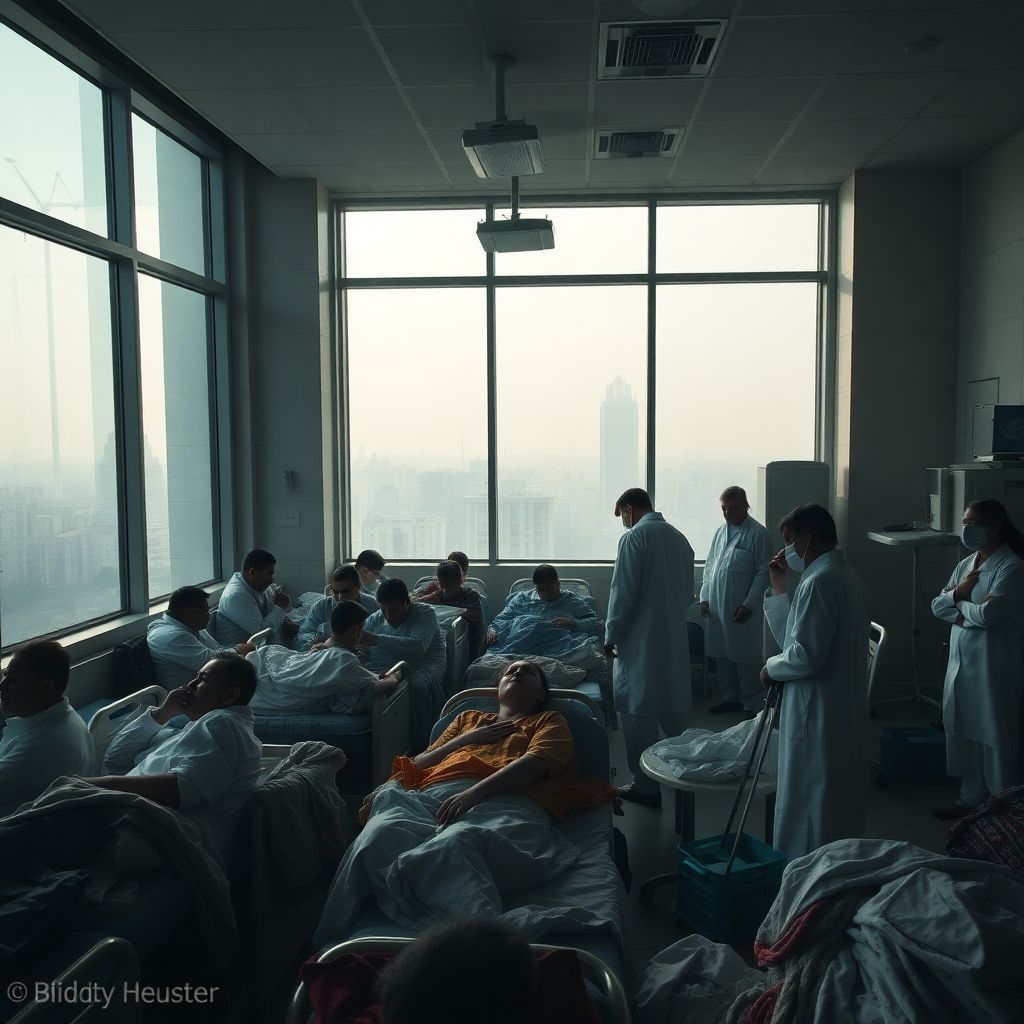
Climate crisis fuels surge in respiratory illnesses: hospital visits up 20 percent in two years
Rising temperatures driven by the climate crisis are increasingly damaging lung health and pushing more people into hospitals. Associate Professor Dr. Yasemin Saygıdeğer from Çukurova University Faculty of Medicine, Balcalı Hospital, Department of Pulmonology, reports that outpatient and emergency admissions for respiratory problems have risen by around 20 percent over the past two years.
According to Dr. Saygıdeğer, the climate crisis is no longer an abstract environmental issue but a direct medical threat. Heat waves, worsening air pollution, increased dust, higher humidity, prolonged pollen seasons and smoke from wildfires collectively place a heavy burden on the respiratory system. These environmental changes are now clearly reflected in hospital statistics and in the daily experiences of patients.
She explains that lung health is extremely sensitive to changes in temperature and air quality. Hot weather tends to trap pollutants near the ground, while stagnant air and high humidity make it harder for sensitive individuals to breathe. When this is combined with dust, pollen and smoke, the respiratory tract becomes inflamed, existing diseases are exacerbated and new complaints emerge.
Particularly at risk, Dr. Saygıdeğer emphasizes, are people with chronic airway diseases such as asthma and COPD, as well as older adults, children and pregnant women. During hot periods, these groups appear more frequently at health facilities with symptoms such as wheezing in the chest, shortness of breath, increased sputum production and a cough that lasts much longer than usual and does not resolve with simple measures.
She notes that many patients arrive in attack or exacerbation phases. Some either forget to take their medications regularly or are not under consistent medical follow‑up. In such cases, extreme heat and polluted air act as powerful triggers, destabilizing their condition and making hospital care unavoidable.
The problem, however, is not limited to individual vulnerability. Dr. Saygıdeğer underlines that prolonged periods of extreme heat and lack of access to adequate cooling have turned climate-related respiratory issues into a major public health challenge. People who cannot cool their homes or workplaces appropriately are more frequently exposed to high indoor temperatures, which can be just as dangerous as outdoor heat.
She highlights that individuals with low socioeconomic status, earthquake survivors, seasonal workers living in containers or tents and others residing in temporary or poorly insulated shelters are especially exposed to risk. Without sufficient cooling options, these groups endure long hours in overheated, often poorly ventilated spaces, which aggravates underlying chronic airway diseases and increases the likelihood of acute respiratory events.
Another neglected group, according to Dr. Saygıdeğer, consists of those who continuously work in hot environments. Agricultural workers and firefighters who stay outside for prolonged periods, employees in kitchens, laundries and other indoor workplaces with constant heat exposure are all significantly affected. These people inhale hot, frequently polluted air for hours, placing them among the most vulnerable to climate-driven respiratory harms.
From her own experience, Dr. Saygıdeğer notes that both she and her family, who live with asthma, are highly sensitive to rising temperatures. This personal and professional confrontation with heat-related breathing problems motivated her to search for structured solutions, ultimately leading to a new, European Union-supported project.
Under the title CLIMARESP-ADANA, the project focuses on the specific respiratory challenges in hot regions such as Adana. The aim is to understand how climate change influences lung health from multiple angles – social, clinical and molecular – and to generate concrete, realistic recommendations for protection and adaptation.
Within the scope of CLIMARESP-ADANA, researchers will engage closely with groups at highest risk: patients with asthma and COPD, workers exposed to hot indoor environments, outdoor laborers, low-income households, individuals with limited access to cooling and migrant workers. This diverse sample will help capture the full spectrum of climate-related respiratory stress in the city.
The team plans to conduct social surveys and semi-structured interviews to examine how people’s respiratory symptoms change during heat waves and periods of heavy air pollution. They will also look at how often and in what ways individuals use health services, how they perceive environmental risks, what their working and housing conditions are, and how they access cooling methods and protective behaviors.
By analyzing these data, the project seeks to map the current respiratory health situation in Adana, identify the main environmental and social drivers behind the problems and point out the gaps in protection and care. The findings will not remain in academic reports only; they are meant to inform practical, locally applicable measures.
Dr. Saygıdeğer states that once the research is completed, the results will be shared in a workshop bringing together patients, workers, clinicians, municipal representatives, public health officials, occupational health experts and civil society actors. In this multidisciplinary setting, the group will work through concrete solution proposals to mitigate climate-related respiratory risks and to support the most vulnerable communities.
Beyond the immediate project, experts stress that the climate-respiratory link requires long-term planning. Urban design, housing policies and workplace regulations all need to adapt to a warming climate. Increasing green spaces, improving building insulation, ensuring proper ventilation and supporting energy-efficient cooling solutions can significantly reduce heat and pollution exposure, especially in densely populated neighborhoods.
For individuals, pulmonologists recommend a set of practical strategies to protect lung health during hot and polluted days. Staying indoors during peak heat and pollution hours, using fans or air conditioning where safely possible, keeping windows closed when outside air quality is poor and avoiding heavy physical exertion under direct sun are among the key measures. People with asthma or COPD should always keep their inhalers and prescribed medications close at hand and follow their treatment plan strictly, particularly during heat waves.
Another important aspect is awareness of early warning signs. Persistent or worsening cough, new wheezing, tightness in the chest, difficulty breathing, unusual fatigue and a sudden increase in sputum should not be ignored. For chronic patients, any significant change in their baseline symptoms warrants a prompt medical consultation before the situation escalates into a severe attack.
Healthcare systems also need to prepare for the growing respiratory burden of the climate crisis. Hospitals and clinics in hot regions must anticipate seasonal surges in demand, especially during extended heat waves and major pollution events such as wildfires or dust storms. This may require additional staffing, better triage systems and stronger coordination between emergency departments, pulmonology clinics and primary care providers.
Climate-related respiratory problems do not affect all regions and communities equally. Cities like Adana, which already face high baseline temperatures, intense sun and frequent air stagnation, are on the frontline. However, as global temperatures continue to rise, many other regions will likely experience similar patterns of increased respiratory complaints and hospital admissions.
Finally, experts argue that integrating patients’ lived experiences into research and policy is crucial. People who actually live with asthma, COPD or other chronic lung conditions are often the first to notice subtle environmental changes. By listening to these experiences and combining them with clinical and molecular findings, projects such as CLIMARESP-ADANA can develop more precise risk maps and more targeted protection strategies.
In sum, the 20 percent increase in respiratory-related outpatient and emergency visits in just two years is not a coincidence but a clear signal of how quickly the climate crisis is reshaping public health. As temperatures climb and pollution episodes intensify, societies will need coordinated medical, social and environmental responses to protect lung health – starting with the most exposed and least protected groups.