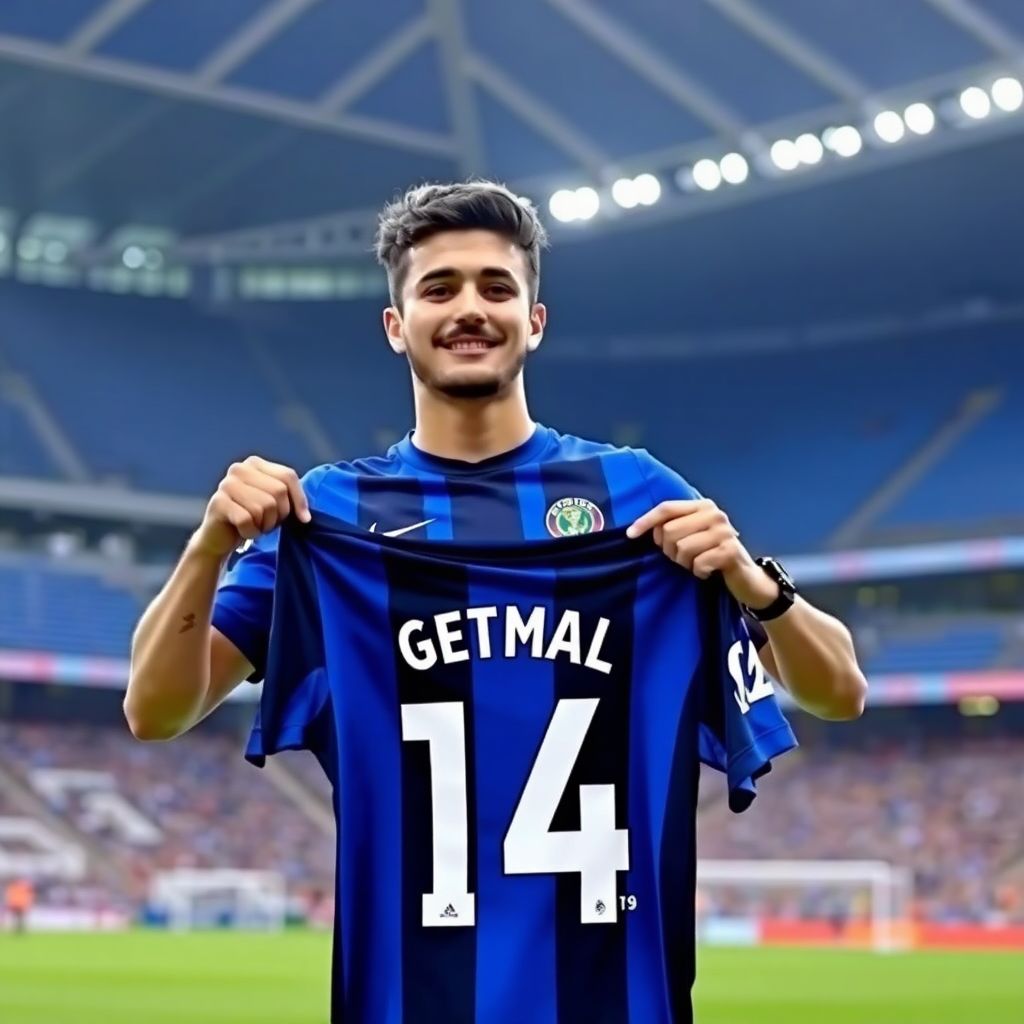
Enes Ünal is on the verge of a return to Spain. The Turkish international striker, currently on the books of Premier League side Bournemouth, is set to wear the Getafe shirt again after the La Liga club reached a broad agreement over his transfer. Only the final signatures and formalities are missing before the move becomes official.
The deal will take Ünal back to a league and a club where he previously delivered some of the best football of his career. During his earlier spell at Getafe, the Turkish forward established himself as one of the most influential attacking players in La Liga, combining work rate, pressing intensity and a consistent goal threat. His return is seen in Spain as a low-risk, high-upside move, while in Turkey it is interpreted as a strategic step to regain rhythm and continuity before the peak years of his career.
For Bournemouth, Ünal’s exit closes a relatively short chapter. The Premier League side brought him in to add depth and versatility up front, but injuries and adaptation issues limited his impact. The English club now opts to free up a foreign-player slot and salary space, while recovering a transfer fee from Getafe. From their perspective, sending a player back to an environment where he has already proved himself may be the most logical solution for all parties involved.
For the Turkish national team, this move could be crucial. As the main centre-forward of the A National Team, Ünal needs regular minutes at a competitive level to maintain his place and sharpness. At Getafe, he is expected to receive exactly that: a leading role in attack, a system that suits his characteristics, and a coach that already knows his game. Regular La Liga football against top opponents should help him stay at the level required for international competitions.
The Spanish club, meanwhile, is counting on more than just his goals. Ünal’s ability to press defenders, work between the lines and open space for wingers and attacking midfielders makes him a complete modern striker. Getafe have often relied on physical, disciplined football, and the Turkish international’s profile fits perfectly into that identity. His familiarity with the league, the language and the dressing room reduces the adaptation period to almost zero.
This transfer also reinforces the broader trend of Turkish players finding stability and development opportunities in Spain. La Liga’s technical demands, tactical sophistication and high tempo help forwards like Ünal refine both their off-the-ball movement and their decision-making in the final third. A successful second spell at Getafe could turn him into one of the most established Turkish exports in European football.
At the same time, the transfer market around Turkish clubs remains particularly dynamic. Fenerbahçe coach İsmail Kartal has recently had to address persistent rumours about the future of key players, including Fred. The Brazilian midfielder’s situation has been the subject of intense speculation, with questions over whether he might leave, forcing Kartal to clarify his status repeatedly. For a team fighting on multiple fronts, the potential loss of such a central figure would be a serious blow.
Beşiktaş, on the other hand, appears to have secured what many fans call a “jackpot” addition, a move described as “ballı kaymak” in the local jargon – a deal that seems too good to be true in terms of quality and conditions. Strengthening a squad that has struggled for consistency has become a necessity, not a luxury, and every new arrival is weighed against the club’s long-term rebuilding strategy.
The atmosphere in Turkish football is also shaped by events off the pitch. The release of a prominent ultrAslan figure – one of the leaders of Galatasaray’s most famous supporter group – has reignited debates over the influence of fan leaders on club politics and stadium culture. Questions such as “How big can a tribune leader become?” are being asked more frequently as supporters’ movements gain visibility and impact on decision-making and matchday environments.
On the European stage, Turkish clubs continue to fight for precious coefficient points. Fenerbahçe’s recent victory not only lifted morale but also directly improved the country’s ranking in UEFA’s table. Every win or draw in continental competitions now has an added layer of importance, potentially determining how many teams Turkey can send to European tournaments in future seasons.
New signings and emerging talents are also in the spotlight. Archie Brown has underlined that “our job is not finished yet,” reflecting a mindset that results so far are merely a starting point rather than an end goal. His words capture the mentality of many players arriving in Turkey: they see it as a platform for both collective success and personal development.
Elsewhere, coach Fabio Ingolitsch has summed up one of the core truths of the game with a simple statement: “The better team won.” His remarks came after a match where his side fell short against a more efficient opponent, reinforcing the idea that tactical discipline and quality in key moments remain decisive at the highest levels.
Transfer gossip continues to swirl around European stars too. Dusan Vlahovic is reportedly not coming alone: another of coach Vincenzo Italiano’s trusted players is said to be on the move alongside him, fuelling speculation about a mini-reunion at a new club. Such double transfers can change the balance within a dressing room overnight, importing not just talent but also pre-existing on-field chemistry.
Fenerbahçe, chasing big targets, faces what is described as the “last obstacle” before completing a major move. The club’s ambitions have sharpened the focus on a clear “quality gap” that must be closed to compete with Europe’s elite. Names like Vedat Muriqi and Romelu Lukaku are constantly mentioned, each bringing a different profile: Muriqi with his aerial dominance and familiarity with Turkish football, Lukaku with his power and experience at the top level.
Lukaku in particular is at the centre of medical and sporting debates. Some medical assessments reportedly state that his injuries “are not serious, he can be signed,” raising the core question: should Fenerbahçe trust those evaluations? The decision will depend on a calculated risk assessment, balancing potential fitness concerns against the enormous upside of a fully fit Lukaku in the Super Lig.
Meanwhile, the saga of high-profile stars continues in other clubs. The phrase “Try to bench Talisca if you can” is often used to highlight how difficult it is to leave such a talent out of the starting XI. For coaches, these luxury problems – fitting multiple stars into one system – can be almost as complex as coping with a lack of depth.
Sergen Yalçın’s name surfaces again in the context of a painful financial memory: the 18 million euro decision that “burned” his tenure. That sum, associated with a costly transfer or contractual commitment, stands as a warning example of how misjudged investments can haunt a club and its coach for years, both in sporting and economic terms.
On the basketball side, Fenerbahçe is also experiencing significant shifts. The departure of Beko as a major sponsor and the conspicuous silence of Ülker have created an atmosphere of uncertainty. Yet behind the scenes, a surprise sponsor is said to be ready to step in, potentially reshaping the financial structure and marketing strategy of the club’s basketball branch.
Galatasaray, never far from the headlines, has adopted a notably more aggressive stance in the transfer market, launching approaches “from four directions” at once. The club is determined to add depth and star power, with interest in players like Sallai underlining the ambition to strengthen both the starting XI and the bench. Reports that “the bird of fortune has landed on Galatasaray’s head” refer to a combination of positive developments: favourable negotiations, opportunities in the market and increased financial room to manoeuvre.
Squad planning continues at the micro level too. The question of who will inherit Mauro Icardi’s iconic number 9 shirt has sparked internal competition and fan speculation. Shirt numbers in modern football have become part of a player’s brand and identity, and the choice of the new number 9 will carry symbolic weight in the dressing room and in the stands.
In the midst of all this, attention is also turning to fixture lists and deadlines. One of the regular talking points is whether certain players will be ready “in time for the Çorum match,” with injuries and late transfers testing the depth of squads across the league. Coaches must integrate new signings quickly while keeping key players fit for a congested calendar.
Within this broad, hectic football landscape, Enes Ünal’s return to Spain stands out as a move that makes sense on every level. It offers Getafe a proven La Liga striker, gives Bournemouth clarity in their squad planning, and provides the Turkish national team with a forward who is likely to enjoy regular, high-intensity football. If Ünal can replicate or even surpass his previous performances in Spain, his transfer back to La Liga may be remembered as one of the most well-judged decisions of this busy transfer period.