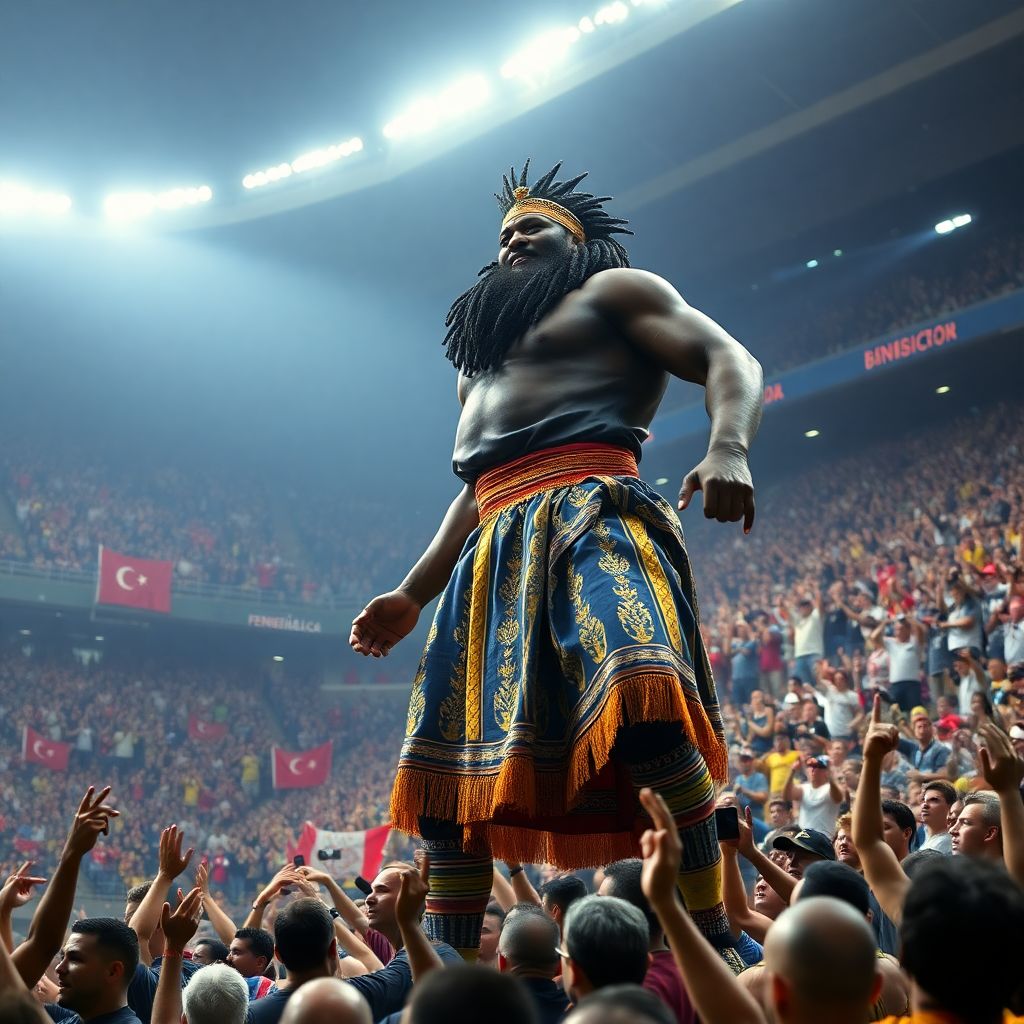
Fenerbahçe stuck with the “Pehlivan” dream: Lukaku chase reshapes transfer strategy
Fenerbahçe’s hunt for a world-class centre-forward has taken yet another dramatic turn. After weeks of talks with several high-profile strikers across Europe, the club has now firmly redirected its focus toward Italy. At the center of this renewed pursuit stands Romelu Lukaku – the powerful Belgian forward whom club president Aziz Yıldırım admiringly described during the World Cup as “built like a pehlivan,” a traditional Turkish wrestler known for strength and resilience.
This “pehlivan” remark has since become a symbol of the club’s transfer ambitions: Fenerbahçe want a striker who can dominate physically, lead the line alone, and instantly raise the team’s competitive level. Behind the scenes, negotiations around Lukaku have reportedly heated up, with both the player’s situation in Italy and Fenerbahçe’s financial plans creating a narrow but real window of opportunity.
Why Fenerbahçe turned to Serie A
Fenerbahçe initially explored multiple options across different leagues, contacting several global stars in search of a marquee number 9. However, high wage demands, complicated contract situations and transfer fees pushed the club to scan markets where opportunities might emerge from internal club conflicts or tactical reshuffles.
Italy offered exactly that. Lukaku’s complex recent years – loan deals, fluctuating form, and uncertainty about his long-term future – have opened the door for an ambitious side willing to offer him a central role and emotional reset. Fenerbahçe see themselves as that club: a historic giant desperate to reclaim domestic dominance and make a statement in Europe.
Lukaku’s profile: why the “pehlivan” label matters
Aziz Yıldırım’s “pehlivan” comment was not just a joke. In Turkish football culture, a “pehlivan-like” striker means:
– Physically imposing, hard to dispossess
– Able to fight with two central defenders throughout 90 minutes
– Dangerous both in the air and with his back to goal
– Mentally tough in high-pressure matches and hostile atmospheres
Lukaku fits this template almost perfectly. His mix of power, pace, and experience in top leagues aligns with what Fenerbahçe have been missing: a striker who can turn half-chances into goals and scare opponents before the match even kicks off.
Tactical impact: how Lukaku would change Fenerbahçe
Should Fenerbahçe manage to pull off this move, the entire attacking structure would shift around him:
– Wingers could play narrower, feeding off Lukaku’s layoffs and second balls.
– Full-backs would have a clear target for crosses and cut-backs.
– The midfield could push higher, knowing there is a strong focal point to hold the ball under pressure.
– Set pieces would become a genuine weapon, with Lukaku as the primary aerial threat.
In a league where many teams sit deep and defend in numbers, having a striker who can physically break defensive lines and win duels in the box is priceless. This is why the club appears willing to stretch its limits to bring him in.
Fenerbahçe’s broader transfer puzzle
While the Lukaku story dominates headlines, Fenerbahçe’s summer plan doesn’t stop there. The club has been monitoring several attacking and creative profiles, including surprising names from Italy and beyond. One of the most intriguing mentions has been Asllani – a move that, if it materializes, would point to a strategy of combining physical power up front with intelligence and control in midfield.
At the same time, Fenerbahçe’s management is aware that transfers are not only about big names but about timing and squad balance. Every move has to consider:
– Foreign player quotas
– Wage structure and dressing-room harmony
– The need to stay competitive in the title race and in European qualifiers
This is also why the Lukaku pursuit is so delicate: one huge signing can redefine expectations, but it can also reshape the economic reality of the club.
Rivals on the move: Galatasaray, Beşiktaş, Trabzonspor
Fenerbahçe’s window is unfolding in parallel with equally intense activity at their rivals.
Galatasaray are pushing hard to remain the strongest squad in the league. While “the Russians have stepped aside” in one of their transfer races, leaving them as the last big club standing for a target, they are simultaneously working on other fronts. Big names keep surfacing around them too: Rafael Leão reportedly off the table, Kevin De Bruyne floated as a dream scenario, and the ever-present talk about Mauro Icardi’s future. The expectation is that Icardi will be in Istanbul next week, and the central question is whether he will put pen to paper once again.
Beşiktaş, on the other hand, are getting ready for a challenging European play-off path. The phrase “Czechs done, next up Croats” captures their situation: one stage passed, another demanding opponent ahead. Their squad still needs clarity in key positions, and how they navigate these ties will shape both their coefficient and their appeal to potential signings.
Trabzonspor, meanwhile, continue to make headlines with their own transfer moves. A deal that will reportedly earn one of their stars less than he could have made at Liverpool underlines the emotional and footballing logic that sometimes outweighs pure money. This also shows that Turkish clubs can still attract players by offering importance and central roles.
Lessons from others: Kayserispor’s fall, Erzurumspor’s rise
Away from the big three, the league offers cautionary and inspirational stories. The question “Why did Kayserispor go down?” lingers as a reminder that mismanaged squads, late reactions in the transfer market and off-pitch instability can quickly drag a club from mid-table to relegation.
In contrast, Erzurumspor are “coming loud and strong,” building a project based on hunger, discipline and carefully selected signings rather than star names. These two examples serve as a backdrop for Fenerbahçe’s own decision-making: money and big brands alone do not guarantee success if the squad is unbalanced or the atmosphere is toxic.
Anadolu clubs and the global scouting race
The transfer window is not just about the giants. Çorum FK’s move for a Venezuelan centre-forward highlights how Turkish clubs outside the top three are widening their scouting networks to South America, Africa and lesser-known European markets. They hunt for the next hidden gem rather than compete financially for already established stars.
The case of Endrick – heavily hyped and tracked by big European clubs – underlines how expectations shape perceptions. While some speculate whether he fits the profile of the “desired striker” for major Turkish sides, the reality is that his path is likely to remain anchored to Europe’s elite. Still, the idea of such young phenoms shows how clubs constantly look for the perfect blend of potential and immediate impact.
The Osimhen factor and the modern striker’s mindset
In parallel to Lukaku’s story, Victor Osimhen’s situation illustrates how difficult the relationship between star forwards and their clubs can become. Another “team searching player,” he remains at the center of recurring crises and public disagreements. Statements about how a certain club “gives me spirit and hunger” capture the psychological dimension that matters as much as salary and trophies.
Fenerbahçe are fully aware of this. Any deal for a striker of Lukaku’s level must consider his mental state: whether he sees Istanbul as a step down, a fresh start, or a platform to dominate and rebuild his reputation.
Uğurcan Çakır and the price of injuries
Elsewhere, Trabzonspor are grappling with their own key-figure drama. With Uğurcan Çakır ruled out of the Villarreal match, the phrase “only one eye left” has come to symbolize the club’s fragile defensive situation. Losing a captain and first-choice goalkeeper in critical matches shows how thin margins can be in European football.
For Fenerbahçe, this serves as another warning: depth is crucial. Signing a star striker means nothing if injuries strike key defenders, goalkeepers or midfielders. The squad must be built as a complete structure, not just a billboard for one famous name.
The Salah obsession and the power of narrative
In England, media and fans continue to discuss Mohamed Salah “morning and night.” The fascination with his story – from his mother’s prayers being “answered” to his transformation into a global icon – reflects how narratives wrap themselves around players. It’s not just about goals and assists, but about identity, religion, family and resilience.
Turkish clubs are not immune to this narrative power. A signing like Lukaku would not only impact results on the pitch, it would reshape the club’s story, the dressing-room dynamic, and even how young fans choose their idols.
TV, money and the political dimension of football
The phrase “Süper Lig free-to-air” hints at the constant tension around broadcasting rights and accessibility. Clubs dream of more visibility, more revenue and more global reach, yet fans demand easier access and lower barriers. In this environment, big transfers become tools in a larger political and economic game.
Fenerbahçe’s rumored threats to complicate Galatasaray’s Champions League path are part of this same competitive ecosystem. Qualifying for the group stage is not just about prestige; it’s direct cash, coefficient points, and increased attractiveness for new signings. Every club knows that blocking a rival’s European journey can be almost as valuable as winning a trophy.
“If anyone can do it, Aziz Yıldırım can”
Within Fenerbahçe circles, there is a deeply rooted belief: “If anyone can pull off a transfer like this, it’s Aziz Yıldırım.” His presidency has long been associated with ambitious, headline-grabbing moves. Whether it was bringing in big names in the past or standing firm in political battles, he cultivated an image of someone who thrives under pressure and in high-stakes negotiations.
That myth now collides with the modern realities of Financial Fair Play, stricter budgeting and a highly competitive global market. Yet it still influences expectations: supporters look at the Lukaku saga and think that, somehow, this is exactly the kind of challenge Yıldırım would relish.
Where this leaves Fenerbahçe now
Fenerbahçe are, in many ways, “stuck” with the “pehlivan” standard they set for themselves. After talking to multiple world-class forwards and letting the public know that a top-tier striker is the priority, the club has limited room to retreat to a more modest option without facing disappointment and criticism.
The Lukaku pursuit has become a test of ambition:
– Can the club match the financial and sporting conditions necessary to convince such a player?
– Will the Italian side holding his rights agree to a structure that works for all parties?
– And if the deal collapses, does Fenerbahçe have a Plan B that still satisfies the demand for a powerful, decisive centre-forward?
The coming weeks will answer whether the “pehlivan” comment remains a nostalgic compliment from a World Cup broadcast or becomes the starting line of one of the biggest transfers in recent Turkish football history. For now, Fenerbahçe stand at a crossroads: either they turn admiration into action and land a striker who fits that warrior image, or they must quickly redefine what kind of forward can realistically lead them back to glory.