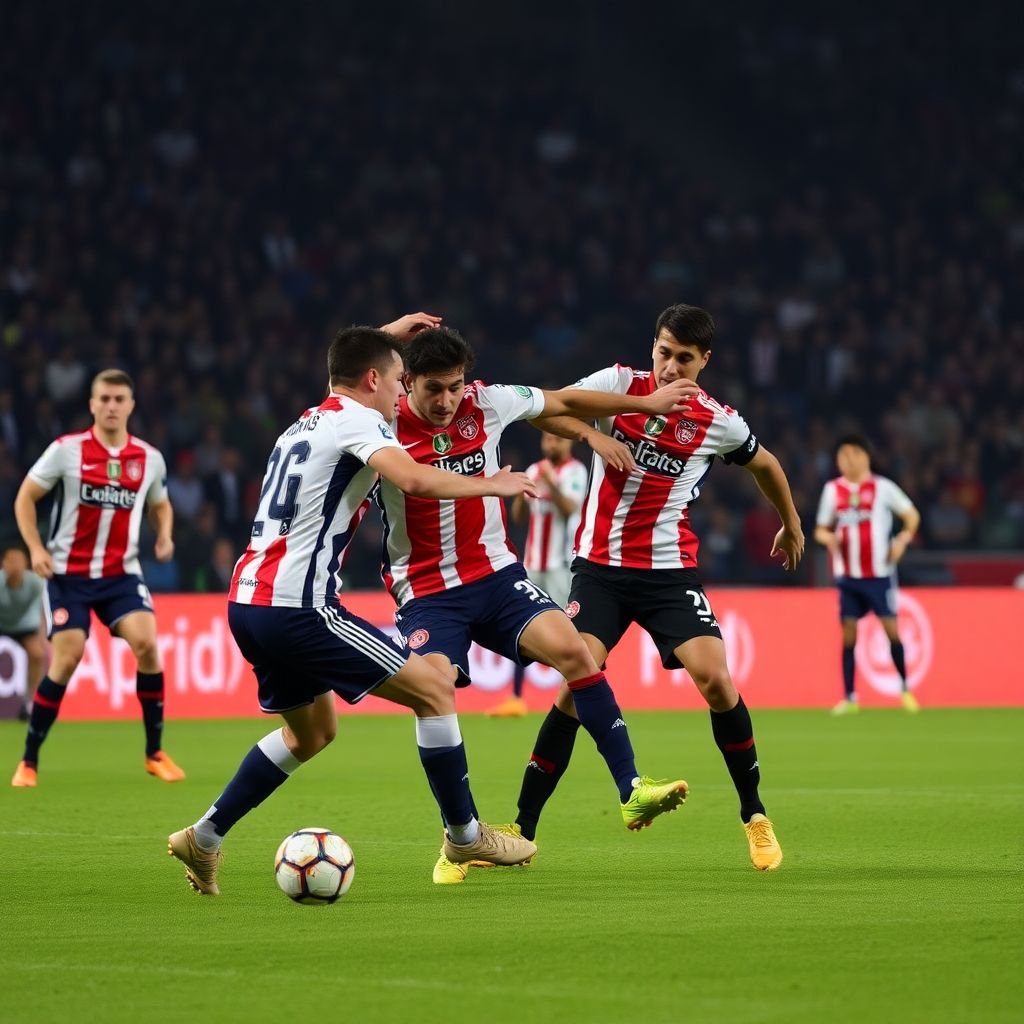
Emergency hunt for a goal‑scorer
Czech side Hradec Králové is not a spectacular team, but it plays exactly at the limit of its potential. They are physical, they do not shy away from contact and, above all, they cross the midfield line without wasting time. Their main principle is simple: move the ball forward quickly, avoid sterile circulation and turn every possession into a direct threat.
Against exactly this type of opponent, two things become vital: one‑touch passing at high speed and the ability to stay calm under pressure. Beşiktaş, especially in the first half, managed to create several clear chances by doing just that. There were moments when they could – and should – have taken the lead. If Oh’s shot that crashed against the post had gone in, the entire course of the match might have been different.
Yet the major structural problem kept resurfacing: the instability in winning the ball back after losing it. Beşiktaş could not consistently execute the so‑called “five‑second rule” – that aggressive counter‑pressing right after a turnover. Every time possession was lost, the team needed too long to reorganize, giving Králové more room and confidence than they deserved.
Cerny embodied that inconsistency in a painful way. In the decisive moments he was shockingly slow, almost detached from the game. In the first half he wasted two huge opportunities, failing to even test the goalkeeper. At this level, such wastefulness is not a minor detail; it changes the psychology of the match. Early in the second half he missed another chance so clear that it defied logic. An attacking player who repeatedly fails in “simple” finishes inevitably drags down the whole front line.
On the other side, young İlhan once again tried to fulfill his role with discipline and energy. He is clearly still developing, but at least he offers movement, pressing and a willingness to take responsibility. Ouattara, however, looked like a player dropped into a foreign film without subtitles. He has not yet adapted to the team’s rhythm, he clearly lacks match fitness, and his timing was off both with and without the ball. You can see the potential, but in this match he resembled someone still stuck in pre‑season mode.
The midfield duo of Orkun and Salih was one of the few encouraging signs. When they managed to connect passes and set the tempo, Beşiktaş looked more fluid and controlled. The problem is that the forwards did not sync with them. Had the strikers read their movements better – dropping between the lines at the right times, attacking the space behind the defense with more intelligence – we would probably be describing a much more comfortable victory. A team with that midfield base, plus a reliable center‑forward, would look unrecognizably more dangerous.
The first 15 minutes of the second half brought exactly the kind of siege Beşiktaş supporters want to see. The opponent was pinned back, second balls were collected, and the game tilted almost completely towards Králové’s penalty area. In that spell, however, an old, painfully familiar truth once again screamed from the scoreboard: Beşiktaş lacks a true number 9 who knows how to finish what the team builds. Territorial dominance and pressure are meaningless if there is no cold‑blooded striker to convert them into goals.
Ouattara’s dismissal with two completely avoidable yellow cards is simply unacceptable at this level. When the team has finally taken control of the game, you cannot afford that kind of amateurism. A professional must understand the match context, the referee, the scoreline, and the fragility of momentum. Instead, Beşiktaş was forced to play with ten men and spend precious energy covering the gap left behind.
In spite of everything, coach Italiano’s reaction from the touchline changed the story. The introduction of Semih and Ndidi, combined with his decision not to allow the team to retreat and defend too deep, brought the breakthrough. Rather than protecting a fragile draw, Italiano insisted on keeping the line high, pressing forward and continuing to search for the winning goal. That courage was rewarded, and Beşiktaş eventually found the net they had been chasing all evening. This victory carries enormous weight – not just in terms of points, but in terms of belief.
It is fair to say that the three points belong primarily to the head coach. Italiano read the match well, adjusted at the right time and refused to surrender the initiative. The team’s weaknesses are obvious, almost brutally so, yet within those limitations he extracted the maximum. Beşiktaş still needs time to turn into a fully coherent unit, but tactically this was a statement from the bench: with the right guidance, this squad can compete.
However, there is one issue that can no longer be postponed: the glaring lack of a top‑class striker. You can cover up some tactical flaws with hard work, you can compensate for a missing winger with tweaks in shape, but you cannot make up for the absence of a reliable finisher. The team creates phases of intense pressure, they reach the edge of the box with numbers, and then the attack dies because there is no killer in the penalty area. The problem is not new, but it is becoming urgent.
This crisis is magnified by the uncertainty around key players such as Ndidi and the inconsistent contribution of names like Onana and El Musrati. Neither has truly integrated into the collective structure; they float on the periphery of the game instead of becoming its engine. In such a context, every missed shot by Cerny or misread run by Oh feels twice as heavy. The margin for error is too small for so many pieces to be out of sync.
The internal debate is sharp: what is more urgent, a right‑winger or a center‑forward? From a structural point of view, both are vital. The right flank currently lacks a player who can both stretch the pitch and contribute with goals and assists. Without that, the opponent can tilt their defensive block towards the left and central zones, reducing Beşiktaş’s unpredictability. At the same time, every coach will tell you: if you are forced to choose, nothing is more decisive than a striker who guarantees numbers.
Midfield, too, cannot be ignored. If Ndidi eventually leaves, the need for two – maybe even three – high‑level central midfielders becomes obvious. Modern football demands volume, technique and tactical intelligence in the middle of the park. If a new signing in that area does not arrive, Mario could be converted into a more central role, provided he reaches the physical level the coach demands. Between him and Amir, logic suggests only one will remain a core part of the project. Such internal “mini‑rebuilds” can work, but they cannot replace genuine quality coming from outside.
The match against Králové is therefore more than just an isolated European tie; it is a mirror held up to the club’s transfer strategy. When a team spends two months chasing a single high‑profile target and then suddenly turns to “emergency options” up front, doubts naturally grow. Opposition clubs are quietly building solid squads line by line, while Beşiktaş still debates whether to prioritize midfield, right wing, or center‑back. The clock, however, does not stop – the league is about to begin.
The supporters feel this tension deeply. They see a side that occasionally plays good football, presses high, and shows fighting spirit, yet they also see a squad that is one or two injuries away from serious trouble. Their message is blunt: without at least one elite center‑forward and a quality right winger, this season will again be a constant struggle. It is not only about dreams of trophies, but about the basic ability to compete every three days without collapsing physically and mentally.
In the middle of all this, the pressure on the board is intensifying. Fans are tired of slow negotiations, half‑finished transfer plans and last‑minute improvisations. The feeling grows that the club is paying for every day lost in hesitation. A strong transfer window is not just a matter of names; it is a message to the dressing room that their efforts will be supported. Players like Semih, İlhan or Oh cannot carry the entire offensive burden while still learning their trade. They need experience and quality around them.
From a sporting perspective, the formula is not complicated:
– Two dynamic central midfielders who can run, press and play forward under pressure.
– One right winger with end product, able to beat his man and finish moves.
– At least one, ideally two, center‑forwards who live inside the box and punish even half‑chances.
If Beşiktaş fails to address these gaps, matches like the one against Králové will become a recurring pattern: long periods of dominance, a flurry of missed chances, unnecessary red cards and, sooner or later, costly dropped points. The win this time should not mask the warning signs.
In the end, the sentence that sums up the situation is painfully clear: an emergency search for a goal‑scorer is underway – and it must end successfully, fast. Without that final piece of the puzzle, no tactical nuance, no brave substitution and no inspirational team talk will be enough to push Beşiktaş where it wants to be.