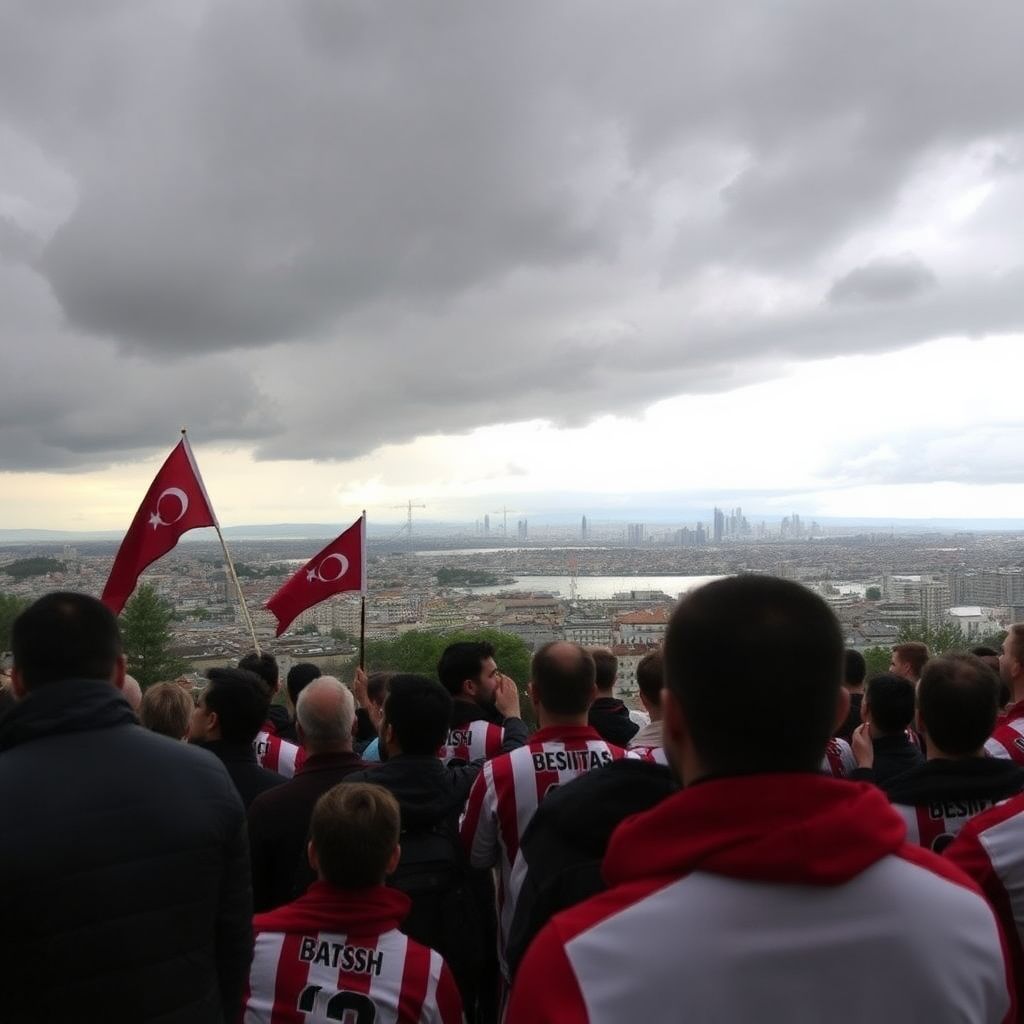
Hooked on a tyrant’s trail while Europe is at the door – that’s exactly where Beşiktaş finds itself today.
For ten days we’ve burned daylight on “Did he come, did he go? Was it Salah? Was it Trabzon? Was it an Arab club? Did he walk away from the table?” gossip. While we argued over shadows, the calendar kept moving. On Thursday, Beşiktaş steps onto the pitch for the second qualifying round. If this hurdle is cleared, rivals like St. Truiden, Lillestrøm, Kairat Almaty, Levski Sofia, OFI, Víkingur Reykjavík and Thun are waiting – all mid-level clubs, all within reach. Survive that phase and the road opens towards the Europa League, towards nights that define a season.
And what are we doing instead of preparing for those nights? We’ve let ourselves be dragged behind a “cruel” agenda, chained to transfer sagas and backstage drama. While we argue over rumours, the real story – the team that actually wears the jersey – is almost treated as an afterthought.
Look at the squad: a player like Trossard, a genuine star, has arrived. We haven’t even had the chance to really savour what he can bring. In goal, Nübel is standing there giving genuine reassurance between the posts, and we’ve barely found time to say “mashallah.” In midfield, Salih Özcan and Orkun are forming a poisonous double pivot, breaking lines, winning duels – and we still haven’t celebrated this partnership with the pride it deserves.
From this point on, everyone in the club – management, president, technical staff, players, and supporters – has to lock their focus onto the team. The necessary reinforcements must be completed without delay and with a clear plan, but always with the current squad’s psychology in mind. Every transfer rumour, every public statement affects the players’ state of mind. This can either knit the dressing room together or tear threads loose.
Anyone who claims to be a Beşiktaş supporter – especially those who speak publicly, those whose words echo around the fanbase – carries a responsibility. The victories this team secures, no matter who the opponent is or how the match unfolds, must not be belittled or brushed aside. Treating wins as insignificant, constantly attaching an asterisk, only sows confusion and disappointment inside the squad. These are the first seeds of crisis.
Thursday’s match has quietly become even more important than the Midtjylland tie. The team is at a crossroads where concentration is not optional but mandatory. Physical preparation alone isn’t enough: what really matters now is mental sharpness, togetherness, and the belief that they can grind out results even when the performance isn’t perfect.
We advanced on Thursday, returned home, and according to tradition we should have done one thing first: celebrate and congratulate. Yes, criticism and analysis are also part of the game, but they come *after* you acknowledge the achievement. There was indeed a sizeable group that joined the celebration, that recognized the value of progressing. But there were also those who turned up their noses, unimpressed, and those who couldn’t wait to say they disliked the football on display.
The chorus we keep hearing is tiresome: “They went down to ten men in both games; otherwise you would never have beaten them.” The repetition of this line has become nauseating. In truth, that sentence is nothing more than a defense mechanism from people who previously said, before the Midtjylland ties, “You cannot beat this team.” Now they’re looking for a way not to swallow their own words. That’s all.
Why did the opponent go down to ten men? Because in certain periods Beşiktaş’s game was irritating, suffocating, and nerve-wracking for them. The pressure, the duels, the refusal to let them settle on the ball – that kind of approach pushes rivals to the limit, and sometimes over it. Denying an opponent the comfort to play their own game doesn’t just disrupt their tactics; it frays their nerves. That part is clear as day.
We watched a side that entered the tie fully expecting to win end up drowning in disappointment. A team that had been scoring freely in its recent matches suddenly couldn’t find the net. The frustration, the red cards, the wasted chances – each one of these is a separate source of tension. None of that happens by accident.
No one is saying Beşiktaş delivered a flawless masterclass. The performance had strong passages and weak ones; the structure still needs time. There were stretches where the football was convincing, and others where the team simply clung on. The point is not that Beşiktaş played brilliantly from start to finish, but that they were persistent, convinced of what they were doing, disciplined in their tasks, and determined to spoil the other team’s rhythm. That is their starting point right now.
And that alone is no small thing. This victory, this qualification, must never be treated as trivial. Respecting the opponent begins with respecting yourself and your own effort. When a squad shows good intentions, follows a tactical plan, and works in a disciplined manner, that deserves applause and encouragement. When players sense that they are appreciated for their fight as much as for their flair, they gain new energy, new hunger.
From here on, the club has two parallel duties: to keep building the team on the pitch and to improve the atmosphere around it. Transfers in the right positions are indeed necessary: a deeper squad for long European and domestic campaigns, players who can change the tempo, options that raise internal competition. But just as important is clarity. Bringing players in is not enough; explaining the plan, making the hierarchy clear, and managing egos are critical. Footballers are not chess pieces – they feel every rumour, every headline, every dismissive remark.
The supporters also stand at a junction. Being demanding is part of the identity at a big club, but there is a difference between being demanding and being destructive. Constructive criticism asks: “How can this be better?” Destructive criticism asks: “How can I prove I was right when I said this would fail?” Right now Beşiktaş needs the first type. Point out tactical flaws, fitness issues, lack of creativity in the final third – but do it without denying the value of winning, of advancing, of fighting to the last minute.
European qualification rounds are unforgiving. Matches often come before tactical structures are fully settled, when new signings are still blending in, when legs are heavy from preparation. This is precisely why determination and discipline, more than perfect football, decide who goes through. In such a context, Beşiktaş’s ability to “ruin” the opponent’s plan – to push them into mistakes and cards – is a weapon that must be sharpened, not mocked.
The new names in the squad need space and support to show their true level. Trossard is the kind of player who can tilt games in European nights with one moment of quality. Nübel is the type of goalkeeper who can keep you alive when the team bends but doesn’t break. The Özcan-Orkun partnership can become a midfield axis that controls tempo and wins second balls in hostile stadiums. These are not details; they’re the spine of a competitive side.
Mentally, the coaching staff has to hammer home a simple message: no victory is meaningless, no qualification is “by chance,” and no opponent is beaten solely because “they went down to ten men.” You force those situations with pressure, tempo, and resilience. If the players internalize that, they stop seeing wins as accidents and start seeing them as the natural result of their work.
Just as importantly, inside the club walls there must be unity between management and technical staff. Transfer strategies, contract situations, and media communication should not contradict the coach’s vision. When the squad feels that coach and board are pulling in the same direction, trust grows. With trust comes freedom on the pitch – the freedom to take risks, to be creative, to play with personality.
In this delicate phase, the smallest word, the tiniest gesture from the stands, can tip the scale one way or the other. Applause after a hard-fought 1-0 can be worth more than fireworks after a 5-0. The message is: “We saw your effort. We recognize the difficulty. Keep going.” That message, repeated week after week, can transform a team’s ceiling.
Beşiktaş stands at the entrance to a European path that is neither impossible nor guaranteed. The rivals ahead are beatable, but they will not beat themselves. The club has a chance to build a new story, with new faces, new habits, and perhaps new glory nights. That chance grows every time we choose to value effort and discipline instead of chasing the next controversy.
So let’s step away from the tyrant of endless speculation and fix our gaze on the pitch, on the team, on what is actually being built. The road is long, the football is not yet polished – but the intention, the fight, and the discipline are there. These must be nurtured, not mocked.
May the path be clear, and may those who are on the field find the motivation, ambition, and support they deserve.