FETÖ-linked terrorist who attempted to assassinate President Erdoğan captured after 10 years on the run
A fugitive member of the FETÖ terrorist organization, wanted for attempting to assassinate President Recep Tayyip Erdoğan during the failed coup attempt on 15 July 2016, has been captured in Afyonkarahisar after a decade on the run under a Red Notice.
The Ministry of Interior announced that B.K., a former army captain and helicopter pilot expelled from the military, was detained in a coordinated security operation. He was among the special forces team that carried out the assassination attempt against President Erdoğan in the Marmaris district of Muğla on the night of the coup attempt.
According to the ministry’s statement, intelligence units had been tracking B.K., who had been the subject of an international Red Notice for 10 years due to his role in the coup-related crimes. He was ultimately located and apprehended in Afyonkarahisar by teams from the Counterterrorism (TEM) Branch.
The arrest was the result of joint work conducted under the coordination of the General Directorate of Security’s Intelligence Department. Intelligence divisions from Afyonkarahisar and Eskişehir Provincial Security Directorates carried out a combined operation, gathering and analyzing information that eventually led them to the fugitive suspect.
Authorities stated that during the coup attempt on 15 July 2016, B.K. served within an elite special forces unit assigned to the operation targeting President Erdoğan in Marmaris, where the president had been staying on holiday. The unit was deployed by helicopter, and B.K., acting as a helicopter pilot and an officer, played a direct operational role in the mission that aimed to capture or kill the president.
The statement emphasized that B.K. was officially sought with a Red Notice due to his involvement with the FETÖ armed terrorist organization and his participation in the assassination squad. After years of evasion, he was tracked down and taken into custody by Afyonkarahisar Counterterrorism Branch teams without any major incident.
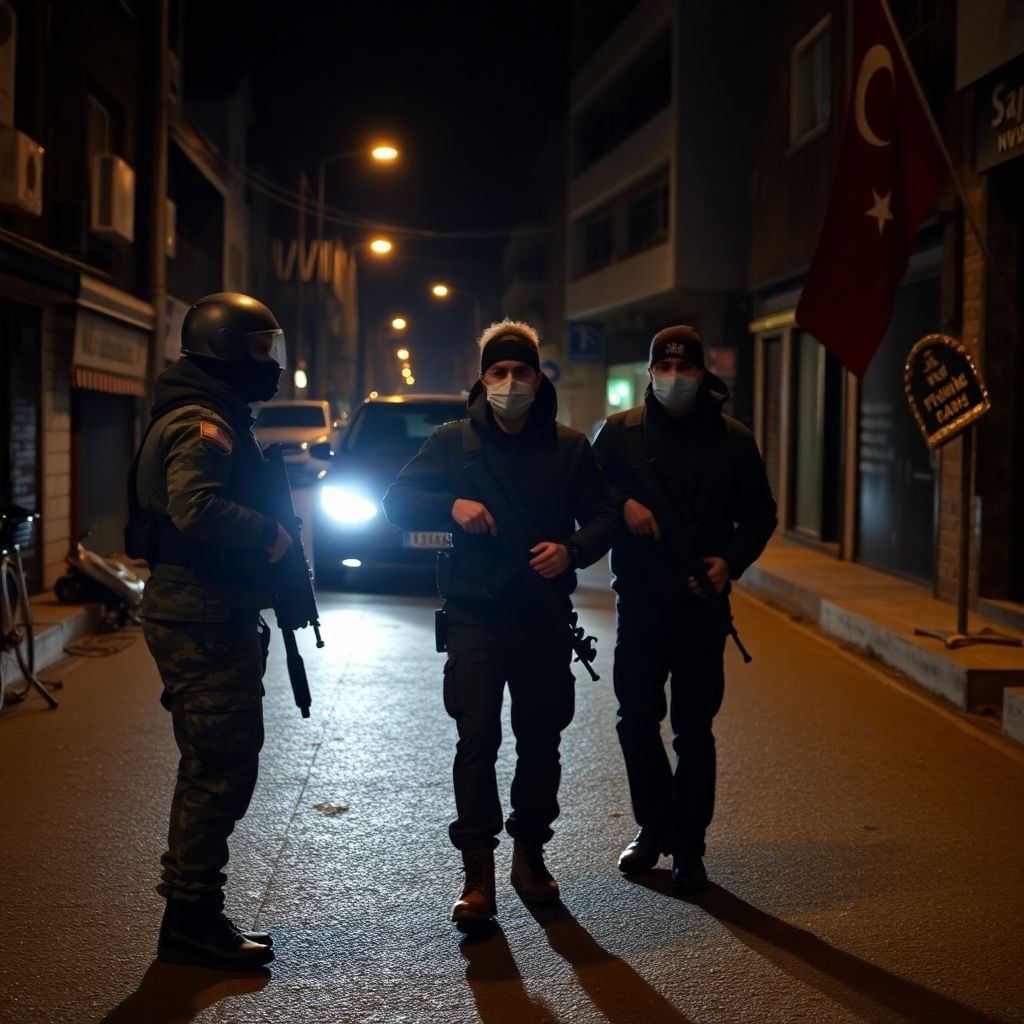
Moments of the arrest were captured on camera. Footage shows security forces surrounding the suspect and placing him under detention, confirming his identity before transferring him for further questioning. The video is expected to be used as part of the case file and as evidence of his capture after a long period of being a wanted fugitive.
The ministry underlined that the operation demonstrates the continued efforts of Turkish security institutions to pursue and neutralize all individuals involved in the 15 July coup attempt, regardless of how much time has passed. Investigations into FETÖ structures at home and abroad are said to be ongoing, with a particular focus on those who played active roles in violent acts during the coup night.
B.K. is now expected to face charges related to attempting to assassinate the president, attempting to overthrow the constitutional order, membership in an armed terrorist organization, and other terror-related crimes. Legal proceedings will be carried out by the relevant judicial authorities following his interrogation by counterterrorism units.
The Marmaris assassination attempt was one of the most critical episodes of the 15 July 2016 coup plot. While President Erdoğan managed to leave the hotel shortly before the raid, security personnel and police officers were attacked, and several people lost their lives or were injured. The operation against the presidential protection team became a symbol of the brutality and determination of the coup plotters.
Since 2016, many members of the special forces unit involved in the assassination attempt have been identified, arrested, and tried. However, several suspects managed to escape and were placed on wanted lists, both domestically and internationally. B.K.’s capture closes another chapter in the pursuit of those who took part in the attack.
Security experts note that the arrest in Afyonkarahisar illustrates how long-term intelligence gathering, surveillance, and cooperation between provincial directorates can eventually corner fugitives who attempt to live under false identities or with the support of clandestine networks. Operations of this type often involve months of technical tracking, monitoring of financial movements, and human intelligence.
Officials also highlight that the continued arrests of long-sought suspects serve a dual purpose: they contribute to the judicial process surrounding the coup attempt, and they send a message that crimes committed on 15 July will not be forgotten or go unpunished, no matter how much time passes.
In parallel with the developments related to the coup-era fugitive, another dramatic incident occurred in the Balıkesir province. Balıkesir Metropolitan Municipality Mayor Ahmet Akın was slightly injured while following the response to an ongoing forest fire in the Susurluk district.
Akın was on the ground monitoring firefighting efforts and broadcasting the situation live on social media when embers, carried by strong winds, struck him. The sparks and burning fragments of wood, whipped up by the gusts around the fire line, flew toward the area where he was standing and hit him during the live broadcast.
Initial information indicates that the injuries were minor and that Akın continued to coordinate and follow the firefighting operations after receiving immediate assistance. The incident once again underscored the dangers faced by firefighters, local officials, and volunteers working close to active fire fronts, particularly when wind speed and direction can change suddenly.
The forest fire in Susurluk has been described as difficult to control due to terrain and weather conditions. Fire crews on the ground, supported by aerial assets where possible, have been battling to contain the flames and protect nearby settlements and agricultural lands. Local authorities have called on residents to remain vigilant and follow official instructions for safety.
Environmental specialists warn that such fires not only cause immediate destruction of forested areas, wildlife habitats, and agricultural fields, but also increase the risk of soil erosion and long-term ecological damage. They note that effective early intervention, accurate coordination between institutions, and public awareness are crucial in preventing small fires from turning into large-scale disasters.
The two separate developments – the capture of a long-wanted FETÖ suspect and the intensification of firefighting efforts in Balıkesir – reflect the dual security and safety challenges Turkey continues to face: on one hand, the ongoing struggle against terrorism and the remnants of the 15 July coup network; on the other, the growing impact of natural and human-induced disasters like forest fires.
Authorities reiterate that counterterrorism operations and legal processes against those involved in the failed coup will continue, while at the same time emergency services and local administrations are working to strengthen disaster preparedness, rapid response capacity, and inter-agency cooperation in the face of increasingly frequent fire incidents.