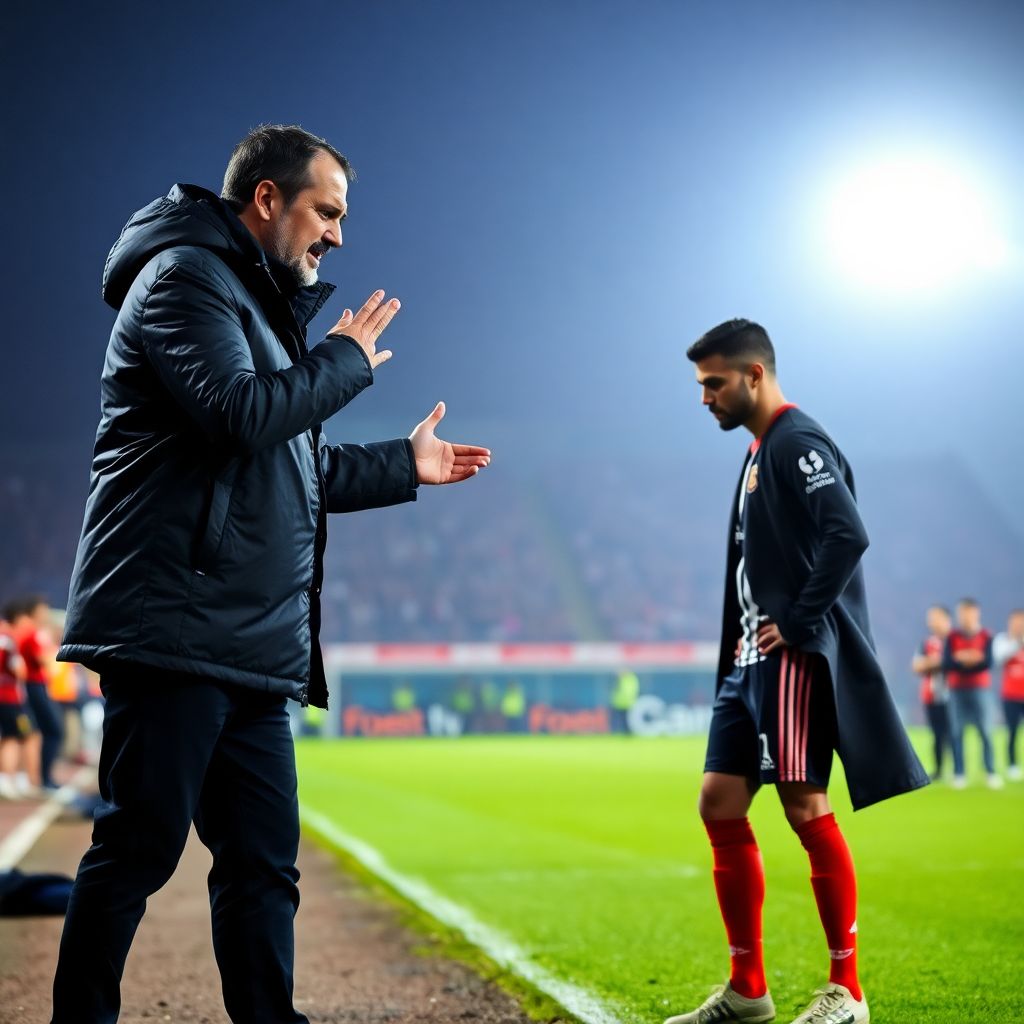
İsmail Kartal puts the blame on Asensio – and a system question explodes at Fenerbahçe
Fenerbahçe’s first serious tactical fault line of the 2026-27 season appeared much earlier than expected, and it surfaced in the away match against Górnik. The crisis did not come from the scoreline alone, but from the failure of a key experiment in the starting XI: Marco Asensio being deployed in the role usually given to Bartuğ Elmaz.
Kartal, who has built his game model on intensity, vertical transitions and collective pressing, trusted the Spanish star with a central, more responsible role. On paper it looked bold and creative; on the pitch, it collapsed quickly. Asensio was almost invisible in attack, contributed next to nothing defensively and, according to internal data, produced a negative ball progression figure of -2.3 metres – a striking number for a player tasked with carrying the team forward.
Asensio fails the tempo test
In Kartal’s system, the midfielder in that zone must do three things at once: protect the ball under pressure, trigger the high press by closing passing lanes, and drive the play vertically as soon as possession is won. Asensio, used to operating as a half-space playmaker or an inverted winger with more freedom and less defensive burden, looked out of rhythm from the opening minutes.
He lost duels in the central corridor, struggled to resist Górnik’s physical pressure and could not secure the first pass after Fenerbahçe recovered the ball. Instead of connecting the lines, he slowed them down. Every time he dropped deep to receive, the team lost metres rather than gaining them – hence the symbolic -2.3 metres in ball carrying, a number that encapsulates how much he drifted backwards instead of driving play forward.
Kartal’s harsh in-game verdict
The most telling moment came at the end of the first half. Unhappy with the way his midfield was being overrun, Kartal made a clear and uncompromising decision: Asensio was taken off at the break. In his explanation to the staff and players, he did not hide the tactical root of the problem: “We couldn’t hold the ball, so we came under pressure.”
His solution was immediate and very much in line with his footballing principles: he brought on İsmail Yüksek. With Yüksek in the middle, Fenerbahçe suddenly gained bite, aggression and vertical thrust. The duels that Asensio had been losing were now being won, the second balls were recovered, and the team’s defensive block moved 10-15 metres higher.
Kartal effectively used Yüksek as a stabilizer. Once the centre of the pitch was secured, Fenerbahçe were able to impose their tempo, dictate where the game was being played and control transitions. The change did not simply correct a bad performance; it reopened a much bigger debate.
Is there a place for Asensio in Kartal’s system?
As soon as the match ended, one core question hung in the air: is there a real tactical space for Marco Asensio in İsmail Kartal’s high-tempo, physically demanding system?
The problem is not Asensio’s quality – few doubt his talent – but the compatibility between his profile and what Kartal’s model asks of that role. The coach wants midfielders who:
– Press aggressively and consistently,
– Cover large distances at high intensity,
– Recover the ball and immediately turn defence into direct attacks,
– Protect central areas with discipline and defensive awareness.
Asensio, by contrast, is a technically refined player who shines when he can receive between the lines, turn under minimal pressure and look for the final pass or shot. He is far more of a luxury creator than an engine-room warrior. Against Górnik, the gap between those two realities became impossible to ignore.
The cost of “luxury” players in modern pressing systems
Modern football has increasingly less room for free riders, especially in the central third of the pitch. Teams that rely on coordinated pressing and high blocks often sacrifice a bit of individual flair for relentless work rate and tactical obedience. When even the centre-forwards are asked to initiate the press, a slow or passive player in midfield becomes an obvious weak link.
In this context, fielding Asensio in a role comparable to Bartuğ Elmaz or İsmail Yüksek is a tactical gamble bordering on contradiction. Every time Fenerbahçe lost the ball, the first pressing wave was broken precisely where Asensio stood. Górnik used that weak point, played around him and repeatedly found space to launch transitions.
Kartal’s decision at half-time was therefore not an emotional reaction to one bad half, but a logical, even inevitable, adjustment to a structural mismatch.
What role could suit Asensio better?
The story does not have to end with “Asensio has no place.” Instead, the real question is: what type of role would make sense for him under Kartal?
Several options appear on paper:
1. Right-sided playmaker in a 4-2-3-1
Asensio could operate as a right-sided attacking midfielder, with a strong and dynamic double pivot behind him. This would reduce his defensive exposure and allow him to drift inside to link play and shoot from distance.
2. Central “10” with two destroyers behind
If Kartal opts for a 4-3-1-2 or similar, Asensio could be the free creative outlet in front of two intense, ball-winning midfielders who cover his defensive shortcomings.
3. Impact substitute against tired legs
In matches where Fenerbahçe have already worn down their opponents physically, introducing Asensio for the final 25-30 minutes could maximize his technical qualities without demanding 90 minutes of high-intensity running.
Each of these ideas would require Kartal to adjust his current structure and accept a trade-off: more creativity and shooting threat in exchange for a small drop in defensive intensity.
Kartal’s philosophy leaves little room for compromise
However, Kartal’s coaching career shows a clear pattern. He rarely sacrifices the collective tempo of his team just to accommodate a star name. The system comes first; individuals must adapt to it, not the other way around. His post-match comment that the Górnik game “turned into a test match” is revealing – he framed the encounter as an experiment, and Asensio’s trial in the Bartuğ role failed.
This is why the half-time substitution has been interpreted by many as more than a simple in-game tweak. It looks like an early-season verdict: within this exact version of Kartal’s high-pressing model, there is no safe place in midfield for a player who cannot match the physical and defensive requirements.
Tactical message to the rest of the squad
By pulling a high-profile signing at the break and bluntly explaining the reason, Kartal also sent a strong message to the dressing room. Reputation, transfer fee and past achievements will not guarantee a spot on the pitch. Only those who can keep the team’s tempo and fulfil the tactical roles will stay on the grass.
For younger players like Bartuğ Elmaz or hard-working midfielders like İsmail Yüksek, this is an encouraging signal: effort, tactical discipline and intensity are being valued at least as highly as technical flair. For creative players, it is a warning that they must adapt physically or accept more limited, situational roles.
What happens next for Fenerbahçe and Asensio?
The situation is still fluid. One poor performance and a brutal stat line do not mean the end of Asensio’s story at Fenerbahçe. Pre-seasons and early-season games are precisely where coaches test bold ideas and discover what does not work before the decisive fixtures arrive.
Kartal now has several paths:
– Persist with Asensio, but in shorter bursts or different positions.
– Remodel the attacking structure slightly to protect him defensively.
– Use him mainly in matches where Fenerbahçe expect to dominate possession and face a low block rather than intense pressing.
How the Spanish star responds will be just as decisive. If he can improve his defensive effort, increase his off-the-ball work and adapt his game to a more demanding physical framework, he may yet carve out a role. If not, he risks becoming a luxury option used sparingly, despite his name and pedigree.
A defining case in the bigger project
Ultimately, the Asensio episode in the Górnik match is more than a one-off tactical note; it is an early indicator of how ruthless Kartal intends to be in shaping Fenerbahçe’s identity this season. The coach has drawn a firm line: no one, not even a Spanish star with a glittering CV, is exempt from the demands of his high-octane system.
Whether Asensio adapts to that reality or forces Kartal to rethink parts of his plan will be one of the season’s most intriguing internal battles at Fenerbahçe. For now, though, the verdict from Górnik is clear: in this role, in this system, Asensio failed the test – and Kartal did not hesitate to send the bill his way.