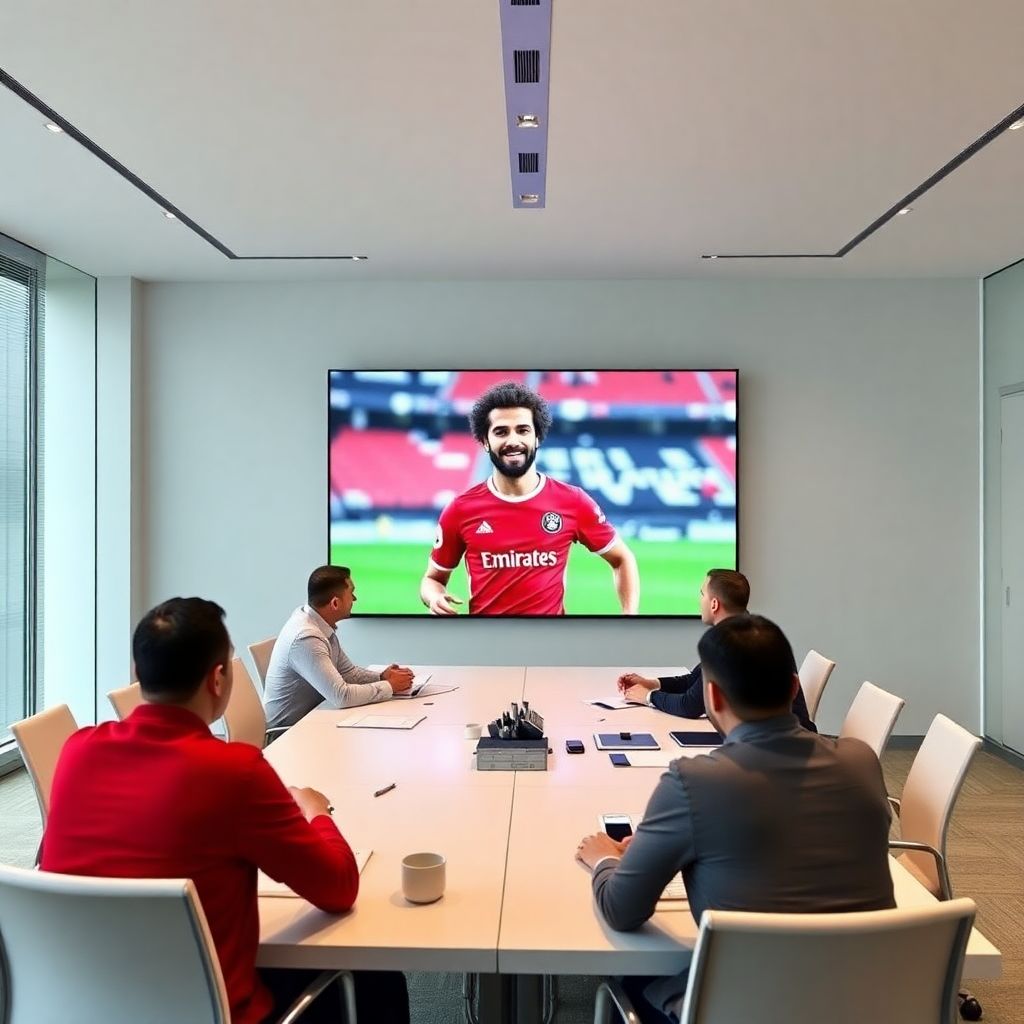
Beşiktaş transfer strategy takes shape: what happens if Salah signs?
Beşiktaş have accelerated their squad planning for the new season, and the roadmap is now much clearer. The club’s management has identified three positions as non‑negotiable for reinforcement: centre forward, central midfield and left-sided centre-back. Regardless of how the negotiations on the wings conclude, these three areas are viewed as the spine of the new team and will be strengthened.
According to the latest information from within the club, one of the key variables in the plan is the potential arrival of Mohamed Salah. If the high-profile transfer were to materialise, it would have a direct impact on the fate of Vaclav Cerny. In that scenario, Cerny is expected to remain in the squad, with the right flank rotation being built around Salah and the Czech winger.
The technical staff believe that a Salah-Cerny duo on the right side would give Beşiktaş both depth and variety. Salah’s ability to cut inside, attack the half-spaces and finish attacks would be complemented by Cerny’s direct wing play and crossing threat. This combination is seen as a way to maintain a consistently high tempo on the flank throughout a long and demanding season with domestic and European fixtures.
While the wings are important, the club is adamant that the core of the squad must be upgraded. In attack, Beşiktaş are searching for a powerful centre-forward who can both finish chances and act as a reference point for the team. The profile being targeted is a physically dominant striker who can hold up the ball, battle with centre-backs and open spaces for the incoming wingers and attacking midfielders.
In midfield, the club wants an all‑round, box‑to‑box option. The ideal signing would be capable of contributing to the build-up phase, offering defensive cover in transitions and arriving late in the box to support the attack. The goal is to pair such a dynamic player with the existing more creative and more defensive options in the squad, thereby achieving real balance in the middle of the park.
On the defensive side, the focus is on a left-footed centre-back or at least a defender comfortable on the left side of the central defence. The coaching staff consider this role crucial for a clean build‑up from the back. A left-sided stopper with good passing range can help the team progress the ball under pressure, switch play more effectively and correct positional imbalances when the full-backs push forward.
The Joe Willock chapter, meanwhile, is close to being closed. Beşiktaş have long admired the English midfielder and explored the possibility of bringing him in, but the financial demands of his club have become a major obstacle. Newcastle United’s request for a fee in excess of 20 million euros has effectively pushed the deal out of Beşiktaş’s reach under their current budget framework.
This price tag is viewed as disproportionate to the club’s broader transfer strategy, which aims to combine a few experienced players with high-impact potential and several younger, developing talents. Rather than committing such a large sum to a single player, Beşiktaş are leaning towards spreading their resources across multiple positions and maintaining flexibility for late-window opportunities.
As a result, the club has turned its attention in midfield to names that are not yet prominently associated with Beşiktaş in the public domain. These are players considered to possess significant upside and the potential to grow in value over time. The scouting department has been working intensively on profiles that fit both the tactical needs of the coach and the economic parameters of the board.
The same applies to the search for a left-sided centre-back. Beyond the defenders already mentioned in previous reports, Beşiktaş have drawn up a list of alternative candidates. Some of them play in less high-profile leagues but have been closely monitored for their physical attributes, reading of the game and comfort on the ball. The club’s intention is to avoid overpaying for “name value” and instead secure a defender who fits the team’s playing model.
If the Salah transfer were to be completed, its impact would extend far beyond the right wing. The Egyptian star’s presence would instantly raise the club’s international profile, boost commercial revenues and increase the team’s pulling power in negotiations with other targets. Players and agents often look at the overall project, and adding a global star can convince other high-level footballers to consider Beşiktaş as a serious contender.
Tactically, Salah’s arrival would also reshape the attacking structure. The team could line up with Salah on the right, an inverted winger or creative forward on the opposite flank, and a powerful centre-forward through the middle. That trio, supported by an energetic, two-way midfielder and an attack-minded playmaker behind them, could make Beşiktaş one of the most dangerous offensive sides in the league and a threat in European competitions.
However, club insiders are aware that such a transfer would require careful financial planning. Wages, signing fees and bonuses for a player of Salah’s status would be substantial. Beşiktaş are therefore trying to ensure that, even in the case of a marquee signing, the overall wage structure and long-term sustainability of the squad are not compromised. This is why the board continues to negotiate firmly and explore alternative plans.
If Salah does not join, the right flank will still be staffed, but in a different way. Cerny would have a more central role in the rotation, and the club could either trust existing squad members to provide depth or look for a more modest signing to add competition. In that scenario, the priority and the largest portion of the budget may shift even more clearly towards centre-forward, midfield and left centre-back.
Within the club, there is also an understanding that the style of the new signings must be compatible. A physically dominant striker will be most effective if the team can deliver crosses and early balls into the box; a box‑to‑box midfielder needs a system that gives him freedom to press and break forward; a left-sided centre-back must be protected by a coherent pressing structure to showcase his passing game rather than constantly defend deep.
For that reason, the coaching staff and recruitment team are working in close coordination. Statistical scouting, live observation and detailed video analysis are being combined to reduce risk. The aim is not to assemble a collection of individually impressive names, but to build a cohesive unit that can consistently compete for the league title and go deep in European tournaments.
In summary, Beşiktaş’s transfer blueprint is becoming increasingly defined: regardless of what happens with Salah, reinforcements in attack, midfield and at left centre-back are guaranteed. If Salah signs, Cerny is expected to stay, forming a potent right-wing pairing that could become a key weapon for the team. If not, the club will still pursue a powerful striker, a dynamic midfielder and a left-sided central defender, adjusting the allocation of resources accordingly.
What remains certain is that the club view this transfer window as a turning point. With carefully chosen additions and a clear tactical plan, Beşiktaş aim not only to be part of the title race, but to build a squad capable of challenging for trophies on multiple fronts and restoring the team to a central place in European football discussions.