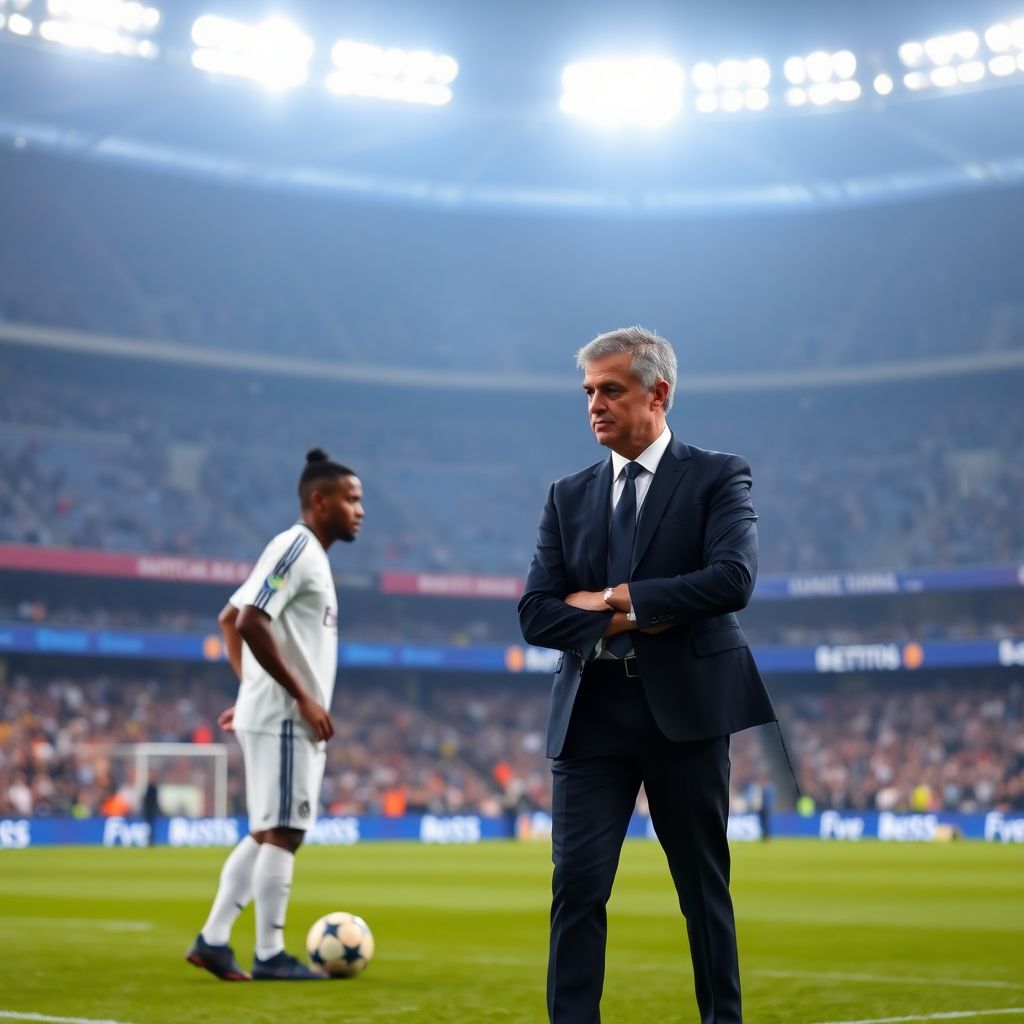
Mourinho sets sights on Davinson Sánchez: after Osimhen, another Galatasaray star on Real Madrid’s list
The Italian sports press reports that, following Victor Osimhen, another name from the Turkish Super Lig has appeared on Real Madrid’s transfer radar: Galatasaray centre-back Davinson Sánchez. According to these claims, head coach José Mourinho is personally monitoring the Colombian defender and has marked him as a serious option for strengthening Madrid’s back line.
Mourinho’s defensive rebuild and why Sánchez fits
Real Madrid are expected to reshape their defence in the coming windows. Veteran names are approaching the final stage of their careers, while long-term injuries and contract situations are forcing the club to think ahead. In this context, Mourinho is said to be pushing for a powerful, athletic central defender who can handle high-pressure matches at Champions League level.
Davinson Sánchez fits that profile:
– Strong in one‑on‑one duels and aerial battles
– Comfortable defending large spaces, an essential trait in an attacking side
– Experienced in top leagues after spells in England and Turkey
– At an age where he combines maturity with potential resale value
Mourinho has long favoured physically dominant defenders who are aggressive, quick over the ground and tactically disciplined. Sánchez’s performances at Galatasaray have reportedly convinced the Portuguese coach that he could adapt quickly to Real Madrid’s demands.
From Galatasaray to Madrid: the second big-name target after Osimhen
The same Italian reports suggest that Real Madrid’s scouting network has been particularly active around players linked to Serie A and the Turkish Super Lig. Osimhen, who made his name in Italy, is already known to be on the club’s long-term attacking shortlist. Now Davinson Sánchez is described as “the next big name” they are tracking from Galatasaray.
For Galatasaray, such interest is a double-edged sword. On the one hand, it is a confirmation that the club’s recent recruitment policy is working: players arrive, shine on the European stage and attract attention from the very top. On the other, repeated approaches from giants like Madrid make it increasingly difficult to keep a core group together for more than a couple of seasons.
Davinson Sánchez’s big-game credentials
One of the arguments in favour of Sánchez is his track record in high‑stakes encounters. The Colombian has already shown he can perform against the biggest stars. In recent international duty, he earned praise for limiting Cristiano Ronaldo’s impact, effectively neutralising the Portuguese forward and helping push his team ahead of heavy favourites in a decisive match.
This ability to handle elite attackers in pressure situations is exactly what clubs like Real Madrid value. It is also part of the narrative driving up his reputation across Europe: Sánchez is no longer seen as a defender still searching for consistency, but as a matured centre-back who can lead a back line when it matters.
Galatasaray’s balancing act: sporting ambition vs market reality
For Galatasaray, the situation around Sánchez highlights a broader dilemma. The club is trying to compete in Europe while operating within financial fair play and domestic economic constraints. Selling a defender for a major fee could support several incoming transfers, but would also leave a hole at the heart of the defence.
The board faces familiar questions:
– Hold on to Sánchez and gamble on a deep European run?
– Or cash in at the top of his value and trust their scouting to find the next hidden gem?
The answer will depend not only on Real Madrid’s offer but also on Galatasaray’s wider transfer strategy, including their response to interest in other key players and their negotiations with European clubs for potential reinforcements.
Turkish market fever: Frankfurt’s Can Uzun response
The heightened attention around Davinson Sánchez sits within a wider trend: European clubs targeting talent in Turkish football. Eintracht Frankfurt’s reply to Galatasaray regarding Can Uzun is a case in point. The German club reportedly signalled that talks would start around a 35 million euro price tag, a figure that underlines how aggressively prices have risen for promising attacking talents.
For Turkish clubs, this means two things: selling at high fees is increasingly possible, but buying players of similar quality becomes more difficult as valuations climb. Sánchez’s future will inevitably be compared to these benchmarks, especially if Real Madrid really step forward.
Fenerbahçe’s bold moves: Guendouzi-Greenwood swap scenario
While Galatasaray manage interest in their defensive leader, Fenerbahçe are making headlines with a different kind of deal. Reports speak of a potential swap involving Matteo Guendouzi and Mason Greenwood, a move that would radically reshape their midfield and attacking options.
Coach İsmail Kartal, who in the past is said to have been unconvinced by certain profiles, now faces the challenge of integrating big personalities and contrasting styles into a cohesive unit. Such transfer gambles show how Turkish clubs are no longer just buyers or sellers; they are trying to play at the same strategic level as Europe’s biggest teams.
Beşiktaş lagging behind in the transfer race
In contrast, Beşiktaş are being criticised for a lack of activity. The club reportedly entered their pre-season camp without any new signings, fuelling frustration among supporters and observers. While other giants strengthen key areas, Beşiktaş “hit zero” in transfer terms, according to local commentary.
Even so, negotiations are ongoing. The club is locked in an unusual bargaining process in at least one deal: the selling club asked for 20 million, Beşiktaş tested the waters with a 10 million offer, and the two sides are engaged in a tug-of-war that reflects the club’s delicate financial position.
Well-known transfer insiders have also updated on Beşiktaş’s broader plans, indicating that the board is trying to move but struggling to finalise agreements. The gap between expectations and reality remains wide.
A battle for Bahia’s defender and the Adil Demirbağ reality
The fight for a centre-back from Bahia underlines just how intense the competition in the Turkish market has become. After Fenerbahçe showed interest, Beşiktaş reportedly jumped into the race, turning the Brazilian defender into the subject of a mini transfer war between the Istanbul rivals.
Meanwhile, domestic options such as Adil Demirbağ have not attracted the same level of attention. Despite rumours, insiders insist that none of the traditional “big three” have made a concrete move for him. This contrast shows the growing preference for international profiles, especially in defensive positions, even as local talents hope for a breakthrough.
Fenerbahçe vs Beşiktaş: Tadic steps in
The rivalry between Fenerbahçe and Beşiktaş is not limited to the pitch. In yet another transfer twist, Fenerbahçe are said to have stolen a march on Beşiktaş in a particular deal thanks to the influence of Dusan Tadic. The experienced Serbian reportedly used his personal connections and status within the dressing room to convince a target to choose the yellow‑navy blue side.
This episode exemplifies how player power and dressing‑room leaders increasingly shape transfer outcomes. In a market where money is not the only deciding factor, the presence of respected figures like Tadic can tip the scales.
Off the pitch: early elimination, private jets and camp debates
The football summer is also full of side stories. One national team’s early elimination from a major tournament led to an immediate and symbolic decision: the cancellation of a planned private jet, underlining the gap between pre‑tournament ambitions and the harsh reality of results.
At club level, the debate around the Topuk Yaylası training centre continues. Some see it as a state‑of‑the‑art, luxurious camp designed to give players ideal conditions. Others describe it as an “isolated exile”, far from family and urban life, questioning whether extended stays there genuinely benefit performance or simply create a bubble disconnected from reality.
Media rights battle: English-style adjustment to the TV pool
Another major storyline concerns the live broadcast pool. A reorganisation inspired by English models is being prepared, and influential figures such as Aziz Yıldırım and Dursun Özbek are deeply involved. The goal is to rebalance revenues, modernise broadcasting structures and make the league more attractive to international audiences.
How the money is shared will directly impact clubs’ transfer power. More competitive TV income could allow Turkish sides to resist offers for stars like Davinson Sánchez for longer, rather than being forced into sales at the first big bid.
Financial and emotional subplots: Hamdi Ulukaya and returning “Özbekler”
Beyond the pitch and boardroom, personalities from the business world are watching developments closely. For figures like Hamdi Ulukaya, known for their emotional ties to Turkish football and investment in the country’s image abroad, each negative headline or missed opportunity in European competitions is described as something that genuinely “hurts inside”.
At the same time, the story of the “Özbekler” returning home while a player from Congo ends up staying in England captures the unpredictability of modern careers. Some plans lead to a homecoming, others to unexpected stays in foreign leagues, reflecting how rapidly football destinies can change.
Global stage: Messi’s “immortality” and Africa’s World Cup push
International football remains a constant backdrop. Lionel Messi continues to defy his age, once again “discovering immortality” in the eyes of commentators as he carries Argentina on his back through yet another tournament. Every decisive dribble, pass and goal reinforces the sense that he is stretching the normal limits of a footballer’s career.
Africa, meanwhile, is writing its own chapter. With nine qualifications in ten attempts for certain stages of major competitions, teams from the continent are dismantling old stereotypes. The idea of an “African embargo” on the World Cup is being replaced by a narrative of relentless progress, physical dominance and tactical maturity.
Austria’s repeated embarrassment and memories of the past
Another recurring theme in European football is Austria’s struggle on the big stage. Once again, disappointment and a sense of shame dominate the aftermath of a major tournament failure. Commentators note the bitter irony: 44 years after a notorious humiliation, a similar scenario has unfolded, reopening old wounds and prompting questions about structural problems that remain unresolved.
Domestic transfer notes and curiosities
Elsewhere, Bursaspor continue to rebuild with yet another transfer, using modest means to assemble a competitive squad. Each new arrival is a reminder that the club is trying to climb back step by step, even if they no longer control the headlines.
There are also more individual stories that capture public curiosity, from the latest moves of figures like coach Fatih Terim, who keeps trying to explain his philosophy and decisions in interviews, to the personal trajectory of Elif Aksu, whose name still surfaces in media reports that blend sport, lifestyle and celebrity culture.
What it all means for Davinson Sánchez and Galatasaray
In the middle of all these narratives, Davinson Sánchez’s potential move to Real Madrid symbolises the new reality of Turkish football. The Super Lig has become a stage where talents can quickly jump to the very top of Europe, but also a market where constant change makes long-term planning difficult.
If Mourinho and Madrid decide to turn interest into an official offer, Galatasaray will face a defining choice:
– Keep Sánchez as the defensive pillar of a team aiming for Champions League impact,
– Or accept a major fee, reinvest smartly and trust in their ability to rebuild once again.
Whatever the outcome, the Colombian defender has already achieved something that only a select few manage: he has placed himself firmly in the sights of one of the world’s biggest clubs, at a moment when every move in Turkish football is watched more closely than ever.