12th Judicial Package latest developments: will there be an amnesty and what is changing in criminal enforcement?
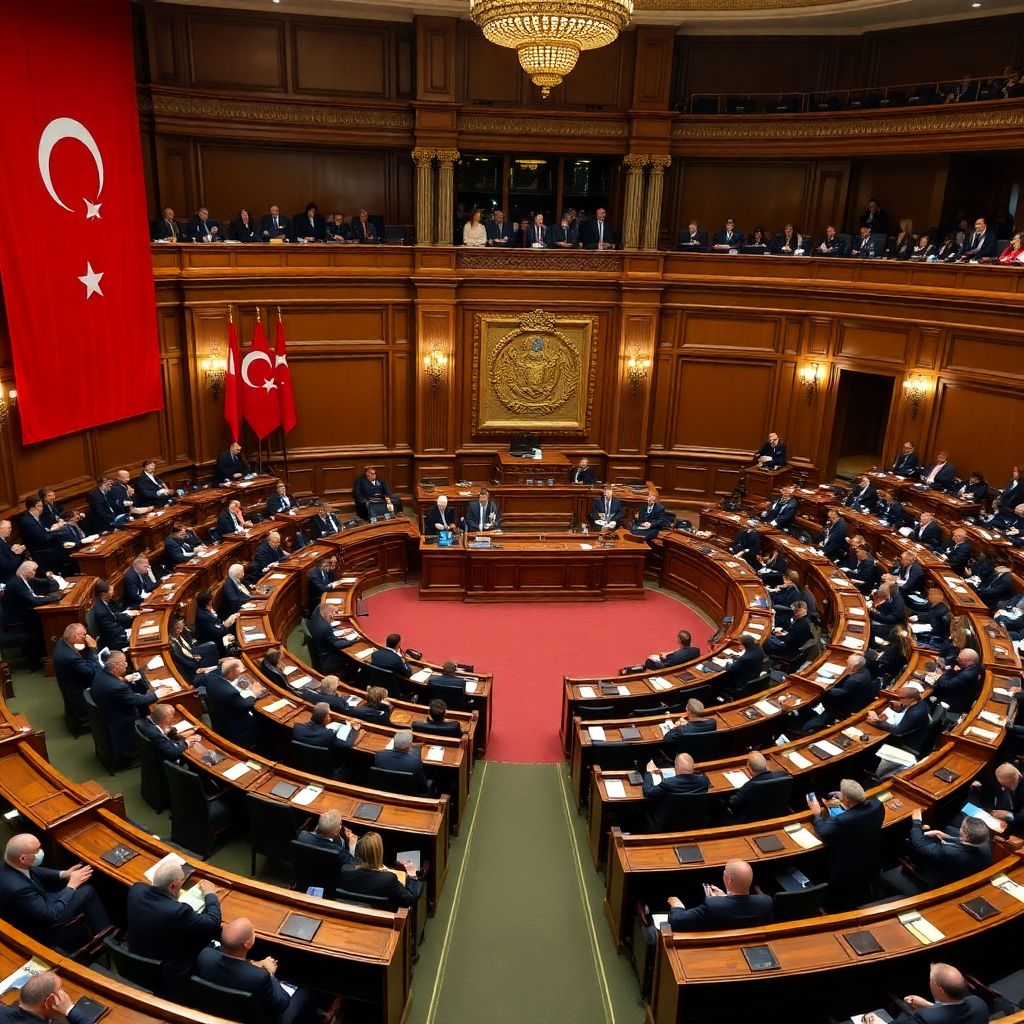
The 12th Judicial Package, currently on the legislative agenda, is expected to introduce far‑reaching reforms in Turkey’s justice and criminal enforcement system. While political debate focuses on whether “an amnesty is coming,” the draft primarily aims to rebalance the execution of sentences, ease prison overcrowding and accelerate judicial processes rather than provide a blanket release.
Lawmakers are working on regulations that touch key areas such as probation periods, conditional release, appeal procedures and digitalisation of courts. The Ministry of Justice has prepared the core articles with the dual objective of making the system more efficient and aligning sanctions more closely with the severity and nature of crimes.
When will the 12th Judicial Package be adopted?
The exact date on which the 12th Judicial Package will pass the Grand National Assembly and enter into force has not yet been officially announced. Parliamentary work has begun and the draft is being shaped in the Justice Commission, but the legislative process is still ongoing.
Discussions behind closed doors focus on the scope of sentence reductions, possible alternative sanctions and how far the reforms will extend to different categories of offenders. Because the package could directly affect the situation of tens of thousands of convicts and detainees, every new statement from officials is followed very closely.
Is there a general amnesty in the 12th Judicial Package?
The question that dominates public debate is whether this reform will bring a general amnesty. The clearest response so far has come from Minister of Justice Akın Gürlek, who has stated unequivocally during commission meetings that the 12th Judicial Package does not include:
– a general amnesty, nor
– any person‑specific sentence reductions or special remission mechanisms.
In other words, the package is being prepared as a structural and procedural reform rather than an exceptional measure to wipe out or drastically shorten existing sentences across the board. Expectations for a general amnesty are therefore not met in this draft.
Main pillars of the 12th Judicial Package
According to the information reflected in the public sphere, the package is built around several core axes intended to modernise the justice system and reduce caseloads:
1. Faster trials and digital transformation
One of the most prominent targets is to shorten the duration of court proceedings, especially in civil courts. To that end, the following steps are envisaged:
– Strengthening the digital infrastructure of courts
– Expanding electronic notification and communication channels
– Minimising bureaucratic delays in procedural steps
By speeding up service of documents and enabling more online transactions, authorities aim to reduce adjournments caused by procedural problems and ensure that cases reach judgment in a shorter, more predictable timeframe.
2. Alternative dispute resolution and notary reforms
The package further expands the use of mediation and similar alternative dispute resolution mechanisms. The intention is for many conflicts to be resolved before they ever reach court, which would:
– lower the workload of judges and prosecutors
– provide citizens with faster, less costly solutions
– promote negotiated settlements rather than lengthy litigation
In the field of notarial services, new rules are planned so that routine transactions can be carried out more quickly and efficiently. Citizens would be able to complete many processes with less paperwork and fewer visits, contributing to overall legal certainty in daily life.
3. Cybercrime, IBAN fraud and protection of children
A significant part of the package deals with crimes committed via digital channels. With the rise in online banking fraud, especially schemes involving misuse of IBAN numbers, more deterrent sanctions are being considered. The aim is to combat:
– fraudulent transfers and money‑muling via bank accounts
– crimes committed through social media and other digital platforms
Another sensitive area is the protection of children in contact with the justice system. New, more protective and pedagogical approaches are planned in proceedings involving minors, including:
– child‑friendly interview techniques
– structures that reduce the risk of secondary victimisation
– a stronger focus on rehabilitation and support rather than purely punitive measures
4. Appeals, regional courts and updates to the Penal Code
The package also contains adjustments to appeal (istinaf) and cassation (temyiz) procedures. The aim is to simplify and speed up these stages while preserving the right to a fair trial. In practical terms, this may mean:
– clearer criteria on which decisions can be appealed
– more streamlined processes in regional appellate courts
– harmonisation of procedures with current needs and caseloads
In parallel, updates to the Turkish Penal Code are planned to better reflect today’s criminal landscape, including new types of offences emerging in the digital sphere and social life.
Criminal enforcement and prison overcrowding
One of the central motivations behind the 12th Judicial Package is the pressure on prisons. Turkey has faced high occupancy rates for years, and policy makers are looking for ways to correct imbalances between the severity of crimes and the time actually served.
Without introducing a general amnesty, the package is reported to address:
– probation (denetimli serbestlik) rules
– criteria for conditional release
– possible use of alternative sanctions for low‑risk offenders
These adjustments are intended to ensure that dangerous offenders continue to serve significant portions of their sentences, while those convicted of less serious crimes may be supervised in the community under strict conditions. The overarching goal is a more proportionate and sustainable enforcement system.
Will there be sentence reductions disguised as amnesty?
A frequent concern is whether so‑called “technical” regulations might in practice operate like an amnesty. Officials emphasise that the reforms are designed as general, prospective rules rather than one‑time acts of forgiveness. Any changes to enforcement or probation periods are expected to be framed as:
– systematic reforms applied based on crime type and risk profile
– measures guided by the principles of public security and social reintegration
Thus, while some convicts might see changes in enforcement conditions if the law so provides, the government insists this should not be interpreted as a hidden general amnesty.
Special arrangements for lawyers
Minister Akın Gürlek has indicated that the package will also include specific measures aimed at improving the economic situation of lawyers. A key proposal is:
– mandatory representation by a lawyer for both parties in land registry (tapu) transactions above 30 million
This rule is designed to serve a dual purpose:
– protect citizens by ensuring that very high‑value real estate deals are handled with full legal oversight
– create a more secure and predictable income stream for lawyers who, according to the minister, have been facing significant financial difficulties
Broader professional regulations for lawyers may also be part of the package, with the stated aim of strengthening their role in the justice system and enhancing the quality of legal services.
How will citizens feel the impact in daily life?
If adopted as outlined, the 12th Judicial Package will affect not only convicts and legal professionals but also ordinary citizens in several ways:
– Faster civil and commercial disputes thanks to mediation and digital processes
– Less time and bureaucracy for notarial and registry transactions
– Stronger protection against online fraud and scams
– More child‑sensitive approaches in cases involving minors
The cumulative effect is intended to be a justice system that is more accessible, predictable and responsive to contemporary needs.
The political and social dimension
Any change touching on criminal enforcement naturally has a strong political and emotional dimension. Families of prisoners closely follow every new statement, hoping for broader relief, while others demand strict punishment and a firm stance on crime.
The government’s current line, as reflected in ministerial statements, is to prioritise:
– structural reforms over one‑off amnesties
– public security and victim rights
– gradual modernisation of procedures through digitalisation and alternative resolution tools
How society evaluates the package will depend largely on the final text adopted in parliament and the concrete outcomes once the reforms are implemented.
Incident in Niğde: fireworks factory explosion
While the judiciary package occupies the national agenda, another tragic event has drawn attention: an explosion at a fireworks factory in the Bor district of Niğde. Initial reports indicate that several people were injured and firefighting teams were deployed to bring the resulting blaze under control. The incident has once again put industrial safety and oversight of hazardous workplaces on the radar, underscoring the broader importance of effective regulation and enforcement across all sectors.
In summary, the 12th Judicial Package is shaping up as a comprehensive reform focused on speeding up justice, strengthening digital tools, refining criminal enforcement and updating legal institutions. It does not contain a general amnesty, but it may still bring meaningful changes to how and where sentences are served, how disputes are resolved, and how citizens interact with the legal system in everyday life.