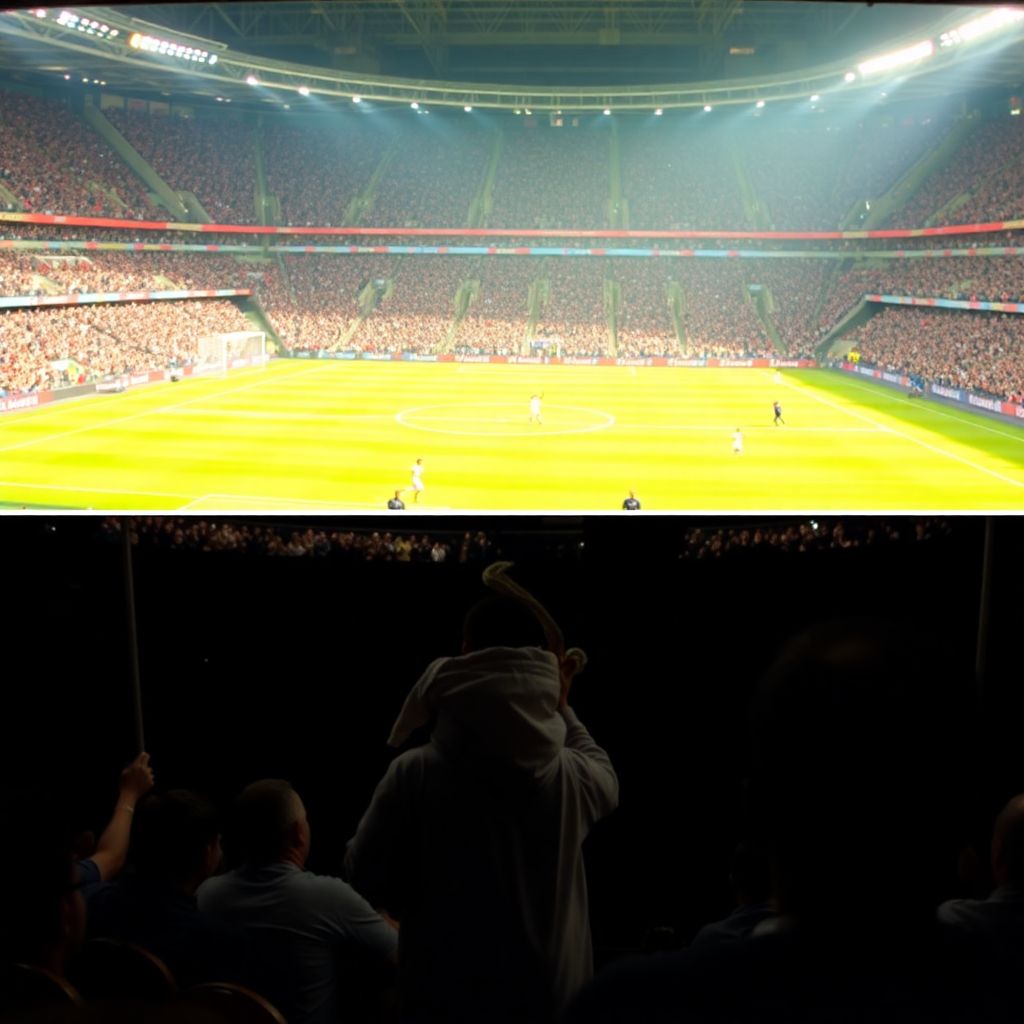
Harry Kane under a spell? Unbelievable last‑minute miss from point‑blank range
England’s goalless draw against Ghana at the 2026 World Cup will be remembered for one moment above all others: Harry Kane, one of the deadliest finishers of his generation, somehow failing to score from almost zero distance in the dying seconds. The miss left fans stunned, pundits speechless – and a self‑proclaimed Ghanaian shaman feeling completely vindicated.
Before the match, well‑known spiritualist Nana Kwaku Bonsam had claimed he had “bewitched” Kane to keep him from scoring against Ghana. For most of the evening it sounded like nothing more than colourful pre‑match theatre. But when England’s captain sliced wide from a position he would normally finish with his eyes closed, the narrative of a curse suddenly became impossible to ignore.
A chance he scores 99 times out of 100
The decisive scene unfolded in stoppage time. England, desperately pushing for a winner, flooded the Ghanaian penalty area. First came a powerful header from O’Reilly that crashed off the crossbar, leaving the keeper rooted to the spot. The rebound fell perfectly into Kane’s path, just a few metres from an almost open goal.
Everything seemed set for a classic Kane tap‑in: ideal height, no serious pressure from defenders, the keeper scrambling on the ground. Yet instead of guiding the ball into the back of the net, the striker mis‑hit his effort in astonishing fashion. The shot skewed away, harmlessly missing the target. In a stadium expecting an eruption of English celebration, there was only a collective gasp of disbelief.
For a forward with Kane’s reputation – clinical in big moments for both club and country – the miss was bordering on surreal. Social media instantly filled with slow‑motion replays and freeze‑frames of the incident, fans trying to understand how such a reliable finisher could fail from such close range.
The shaman who predicted Kane’s nightmare
Nana Kwaku Bonsam is no stranger to the football spotlight. Over the years, he has often claimed to influence matches through spiritual means, targeting rival stars before crucial games. Ahead of England-Ghana, he once again stepped forward, declaring that Kane had been placed under a special spell and would not be able to score.
Most observers treated those remarks as psychological warfare, an attempt to get into the English players’ heads and inject confidence into the Ghanaian camp. Nevertheless, as soon as Kane’s last‑minute sitter sailed wide, Bonsam’s earlier statements resurfaced in headlines and discussions. For his supporters, the bizarre miss was proof that his “work” had been successful. For skeptics, it was the perfect fuel for jokes and memes.
Whether one believes in curses or not, the timing and nature of Kane’s miss made the story almost too perfectly scripted. A world‑class striker, a World Cup match, a clear‑cut chance in stoppage time, and a pre‑announced spell by a local spiritual figure – all combining into one of the most talked‑about moments of the tournament so far.
England frustrated, Ghana delighted
From a purely sporting perspective, the 0‑0 draw was a bitter disappointment for England. They controlled possession for long spells and created the better chances, but lacked cutting edge in the final third. Kane’s late miss will overshadow much of what happened earlier, yet it was symptomatic of a broader attacking problem on the night.
Ghana, by contrast, executed their game plan with remarkable discipline. Compact at the back, aggressive in midfield and lightning‑quick on the break, they repeatedly frustrated England’s attempts to build rhythm. For Ghanaian players and fans, the result felt almost like a victory, especially given the emotional weight attached to keeping a superstar like Kane off the scoresheet.
Inside Ghana, the narrative quickly moved beyond tactics and into the realm of destiny and spiritual protection. The idea that a local shaman could “neutralise” one of the world’s most feared forwards resonated with many supporters, adding an extra layer of pride to an already significant result.
Kane’s mentality under the microscope
Kane has dealt with intense scrutiny throughout his career – from penalty heartbreaks to accusations of going missing in key moments – and each time he has generally responded with goals and resilience. This miss, however, will inevitably add another chapter to the debate about his performances on the biggest international stages.
Psychologically, such an error in a World Cup match can be heavy. Strikers live on confidence, and an incident like this can linger in the mind far longer than any conversation about spells or curses. Kane will have to quickly reframe the moment as a freak occurrence and focus on the games ahead, or the weight of expectations could start to feel suffocating.
Coaches and teammates will publicly back him, emphasizing how often he has delivered under pressure. Yet even for an experienced professional, watching that replay repeatedly – from every angle, in every highlight show – is not easy. How Kane responds in the next match could define not only his tournament, but also the public perception of his leadership of this England side.
The power of football myths and superstitions
Football has always been fertile ground for myths, rituals and superstitions. From players putting boots on in a specific order to coaches sitting on the same spot on the bench every match, the sport is full of attempts to control the uncontrollable. When a shaman’s warning appears to come true so spectacularly, it fits seamlessly into this tradition.
In many football‑mad countries, spiritual beliefs coexist naturally with tactical discussions. Fans might break down formations and pressing schemes while also talking about blessings, curses or protective rituals. Kane’s miss against Ghana instantly became one of those “this could only be football” stories – where logic and belief intertwine.
Such narratives persist because they offer emotional comfort. For Ghanaian fans, attributing Kane’s failure to a protective spell transforms a defensive effort into something almost mystical. For some England fans, blaming a curse can be easier than admitting their team simply lacked composure in front of goal.
Beyond the curse: tactical and technical realities
Strip away the mysticism, and there are still very real football explanations for what happened. Fatigue in the final minutes, a bumpy pitch, a slight misjudgment of the ball’s bounce after it struck the bar – all can play a role in a striker’s technique breaking down at the decisive instant. Even the best in the world are human; occasionally, fundamentals like body shape and balance betray them.
In addition, the pressure of knowing you might have the last chance of the game can tighten muscles and cloud decision‑making. Kane’s movement was sharp to reach the rebound, but in the fraction of a second needed to adjust his foot and angle, any tiny hesitation or misalignment could turn a routine finish into a shocking miss.
Coaches will likely use the clip in analysis sessions, not to ridicule Kane but to remind players that concentration and basics must hold firm until the final whistle. The episode underlines a simple truth: at the highest level, even minimal technical imperfections can completely change an outcome.
How the miss reshapes England’s World Cup path
Dropping points in a match England were expected to win may have significant implications for their route through the tournament. Instead of securing an early grip on qualification, they now face added pressure in the remaining group fixtures. Every misstep from this point on will be magnified.
For the coaching staff, the stalemate against Ghana raises crucial questions. How can they better support Kane in the box? Are there enough goal contributions coming from midfield and the wings? Does the team rely too heavily on its star striker in tight matches?
The answers will determine whether this match goes down as a strange footnote in a successful campaign, or as the first warning sign of a deeper problem in England’s attacking structure. The narrative, for now, is still in their hands – but the margin for error has narrowed.
Ghana’s defensive blueprint and mental edge
On the other side, Ghana can take enormous confidence from shutting out one of world football’s most prolific forwards. Their defenders stayed compact, tracked Kane’s movements intelligently and limited his opportunities inside the box for most of the game. When the one golden chance did arrive, fortune – or something more mystical, depending on your belief – was on their side.
Psychologically, denying Kane so dramatically gives Ghana a powerful mental advantage going into their next fixtures. Opponents will notice how effectively they handled England’s captain and may approach Ghana with increased caution. Within the Ghanaian dressing room, the message is clear: if they can survive England and Kane, they can stand up to anyone.
The lasting image of the group stage
Every World Cup group stage tends to be defined by one or two iconic moments – a wonder goal, a shock upset, or an unforgettable mistake. Kane’s point‑blank miss against Ghana already feels like one of those defining scenes. It will be replayed for years, not just because of the sporting drama but because of the added layer of the shaman’s prediction.
For Harry Kane, the challenge now is to ensure that this singular incident does not become the symbol of his entire tournament. A flurry of goals in the knockout stages would rewrite the story quickly. For Ghana and Nana Kwaku Bonsam, however, the narrative is already written: the night the “spell” worked and the world watched a superstar look suddenly mortal.
In a World Cup where every touch is scrutinized and every storyline amplified, this remarkable miss sits at the crossroads of sport, psychology and belief – proof once again that football’s most unforgettable moments often defy simple explanation.