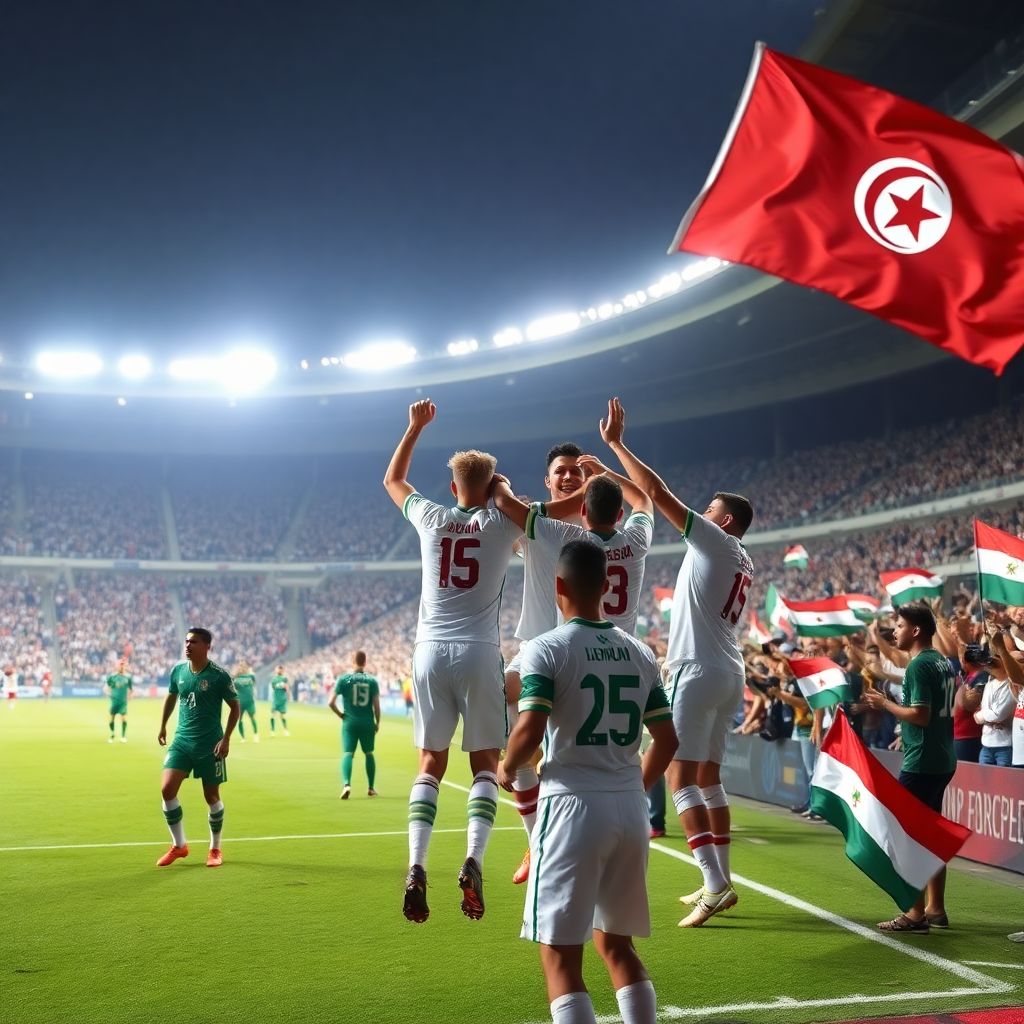
Algeria send Jordan home with dramatic comeback win
Algeria kept their 2026 World Cup dreams alive with a stirring fightback against Jordan, overturning a 1-0 deficit to claim a 2-1 victory in Group J and push qualification hopes to the final round of matches. For Jordan, however, the result was brutal: a second consecutive defeat that confirmed their early exit from the tournament as the fourth team mathematically eliminated.
Coming into the game under real pressure after losing their opening group match, Algeria knew anything short of three points would leave them on the brink. That tension clearly affected them in the early stages. Jordan started with confidence, defended compactly and struck first, taking a 1-0 lead that stunned the Algerian support and put the North African side in a perilous position in the group.
Going behind could easily have shattered Algeria’s fragile morale after their initial setback in the group, but instead it sparked the response the team desperately needed. The match gradually swung in Algeria’s favour as they raised the tempo, pushed their full-backs higher and began to pin Jordan back in their own half. The equaliser arrived as a product of sustained pressure rather than a moment of luck, and from that point the momentum completely changed.
The turning point was not just the goal itself, but the psychological shift that followed. Once Algeria levelled, they played with more freedom, started to combine more fluently in the final third and looked far closer to the side that had been expected to compete for a knockout place before the tournament began. Jordan, by contrast, seemed rattled. Their early composure faded, passes became rushed and they struggled to cope with Algeria’s increasing intensity.
The winning goal, which sealed the 2-1 comeback, reflected Algeria’s persistence. They continued to attack even when a draw might have kept them technically alive in the group. Instead of settling, they chased the victory that would properly revive their campaign, and were rewarded. The late stages of the match saw Jordan stretched and chasing shadows as Algeria controlled possession, protected their lead and saw out the result with far more assurance than they had shown in the opening half-hour.
From a group perspective, the implications are clear. Algeria, who started the day on zero points after losing their first game, now move into the final round of Group J fixtures with a realistic path to the last 16. Their destiny may still depend partly on other results, but the essential requirement has been met: they will go into the decisive match alive in the race, not already eliminated. The pressure remains, but it is now accompanied by belief.
For Jordan, the story is harsher. Two games, zero points: the defeat to Algeria, following an earlier loss in the group, leaves them with no mathematical chance of progressing. They become the fourth team to bow out of the 2026 World Cup, a painful conclusion given how competitive they looked in spells of both matches. Their early goal against Algeria, and phases of organised defending, showed that Jordan are not far away from being a stubborn tournament side. However, at this level, lapses of concentration and limited attacking depth are punished relentlessly.
Tactically, the match underlined the value of in-game adjustments. Algeria’s coaching staff reacted decisively after going 1-0 down, tweaking the midfield structure to get an extra player between the lines and encouraging more overlapping runs on the flanks. Those changes created overloads that Jordan struggled to handle. Once Algeria began to stretch the pitch horizontally, spaces opened up for shots from the edge of the area and cut-backs from wide positions, setting the stage for both goals.
The mental side of the contest was just as significant. Algeria handled adversity better in the key moments. Conceding first in a must-win game can lead to panic, but the squad showed character by staying within their game plan and trusting that sustained pressure would eventually bring chances. Jordan, on the other hand, could not convert a winning position into at least a point. Protecting leads is a hallmark of experienced tournament teams, and this is one area where Jordan will surely look to grow ahead of future qualifying cycles.
Looking ahead, Algeria’s final group match now takes on the feel of an early knockout tie. Depending on other Group J results, a win might be enough to secure passage, while a draw or defeat could still send them packing. The margins are thin, but the confidence gained from a comeback win on the World Cup stage is invaluable. Players who struggled in the first match now have a positive reference point; the squad has proof that it can react under pressure and turn a game around.
Jordan’s early elimination should not completely overshadow what this World Cup can mean for their footballing development. Just reaching the group stage offers exposure, experience against stronger opponents and a clearer picture of what must improve technically and tactically. The team showed they can compete in bursts; the challenge is to extend those periods over 90 minutes, find more creativity in possession and add depth so that substitutions lift the level instead of merely maintaining it.
In the wider context of the tournament, the Algeria-Jordan clash fits into a pattern of tight, emotionally charged group games where one moment swings entire campaigns. On the same matchday, other big names and stars have influenced results – Kylian Mbappé driving France to a comfortable 3-0 victory over Iraq, and Erling Haaland scoring twice in Norway’s thrilling 3-2 win against Senegal. Against that backdrop, Algeria’s comeback stands out as one of the more dramatic turnarounds of the group phase.
Ultimately, this encounter will be remembered in two very different ways. For Algeria, it may be the night their World Cup journey truly began, transforming a faltering start into a platform for a potential run to the knockouts. For Jordan, it will be the painful moment when their hopes of making history evaporated. What unites both sides, however, is the lesson that at a World Cup, every minute and every decision counts – and a single swing in momentum can rewrite an entire group.