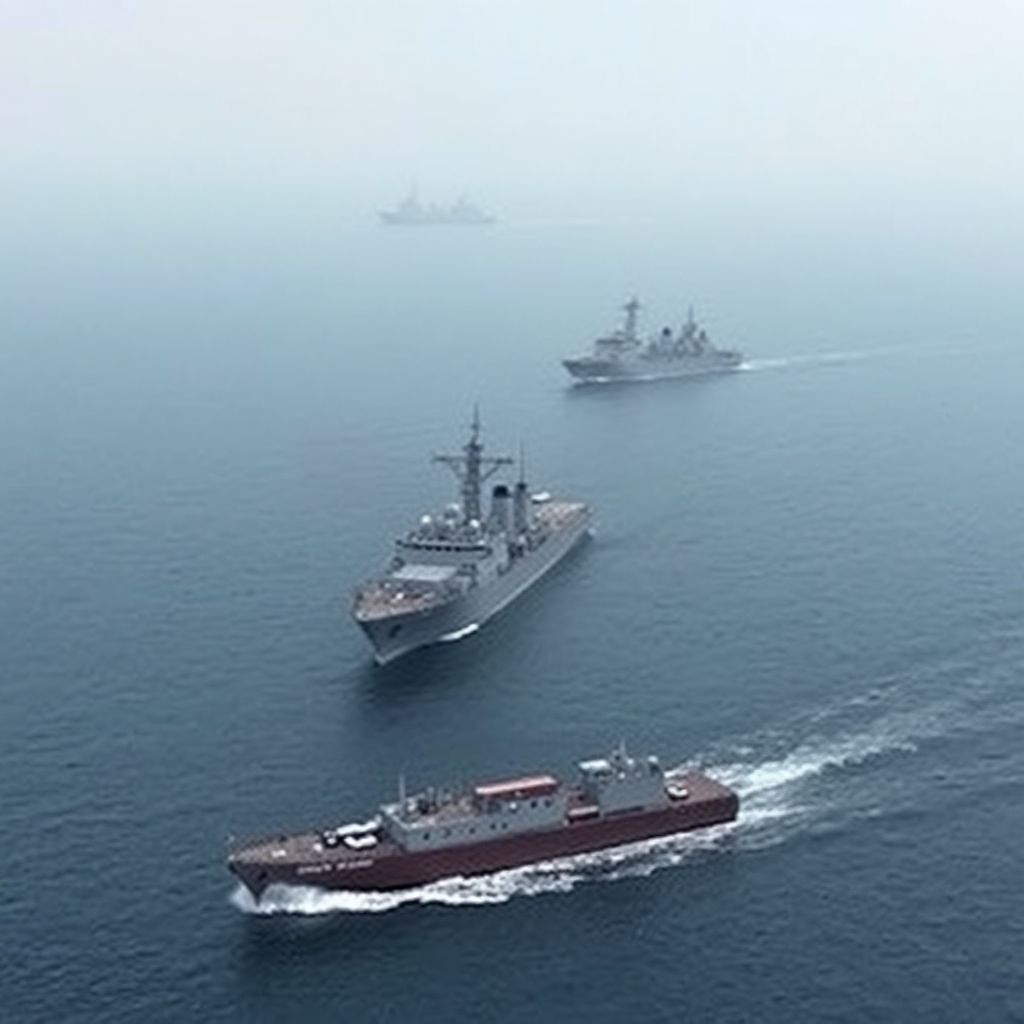
Iranian outlets are reporting that the Strait of Hormuz, one of the world’s most critical maritime chokepoints, remains completely shut to vessel traffic, with no ships allowed to pass until further notice.
According to reports carried by national media, authorities state that the southern sea corridor of the country is still closed to all civilian and commercial navigation. The blockade, which affects every type of vessel, is being enforced by the naval branch of the Islamic Revolutionary Guard Corps (IRGC Navy).
The Fars News Agency published a statement attributed to an unnamed senior military official. In this statement, the source emphasized that the Strait of Hormuz has not been reopened and that no ship is currently authorized to cross the passage. The official added that traffic will remain halted until a new directive is issued by the IRGC Navy.
This announcement follows an earlier declaration from the Khatam al-Anbiya Central Headquarters, the command structure believed to be directly responsible for managing wartime operations within the Iranian armed forces. In its previous communication, the headquarters explained that the decision to shut down the strait to maritime traffic was a response to what it described as the United States’ failure to honor its agreed obligations, alongside Israel’s ongoing attacks on Lebanese territory.
Iranian military sources portray the move as a form of strategic pressure. By targeting the flow of ships through the Strait of Hormuz, Tehran is signaling that security and stability in global trade lanes are directly linked to regional political and military developments, particularly in Lebanon and in broader US-Iran relations.
The strait is a narrow waterway connecting the Persian Gulf to the Gulf of Oman and the Arabian Sea, and it is essential for the export of oil and gas from the region. Any suspension of transit there has immediate implications for energy markets, shipping companies, and the insurance sector. While local media focus primarily on the political and military dimensions, analysts warn that a prolonged closure could shake global supply chains and increase volatility in energy prices.
Although Iranian reporting stresses that no ship is allowed to pass, it remains unclear how uniformly and how far-reaching this order is being applied at sea. The IRGC Navy is tasked with implementing the directive, and its units routinely patrol the area with fast boats, drones, and coastal missile batteries. The current statement suggests a blanket ban, but maritime observers will be watching closely for reports from commercial tankers and cargo vessels in the vicinity to gauge the practical enforcement.
Alongside the operational military messaging, the episode is being framed domestically as a demonstration of deterrence. Officials argue that as long as attacks in Lebanon continue and as long as Washington is, in their view, failing to live up to its commitments, Tehran reserves the right to use its geographic position to impact strategic waterways. The closure is presented not simply as a technical security measure, but as a political message directed at both regional adversaries and global powers.
The reference to US “mutabakat sorumlulukları” – essentially, responsibilities under previous understandings or arrangements – hints at deeper frustrations in Tehran over stalled negotiations and perceived breaches of past agreements. By explicitly tying the status of the Strait of Hormuz to these grievances, Iran is attempting to leverage a point of maximum global sensitivity to increase diplomatic pressure.
Within the country, the move is also likely aimed at a domestic audience. Demonstrating that Iran can, at least temporarily, control or disrupt traffic in one of the world’s most vital maritime passages serves to reinforce narratives of national strength and resilience in the face of external threats. Media coverage highlighting statements from senior commanders and central headquarters plays into this internal messaging strategy.
Internationally, the closure of the strait, even if short-lived, will undoubtedly be seen as an escalation. Neighboring Gulf states, heavily dependent on open shipping routes for their own exports, are particularly exposed. Many of them rely on the same corridor to move crude oil, liquefied natural gas, and various other commodities. Any prolonged disruption would force them to seek alternative export routes, which are more limited, costly, and less secure.
In addition to the geopolitical impact, shipping companies must now reassess the risks of routing vessels through or near the strait. Higher insurance premiums, rerouting through longer paths, or temporary suspension of some voyages are all possible consequences if uncertainty persists. Maritime security advisories will likely be updated frequently as more information emerges about how strictly the IRGC is enforcing the announced ban and whether exceptions might be introduced for humanitarian or specific commercial reasons.
Another unknown is the duration of this closure. The Iranian military’s statements clearly link the reopening of the Strait of Hormuz to changes in US behavior and to a halt or reduction in Israeli attacks on Lebanon. This means the situation at sea is now directly tethered to complex political and military dynamics on land. Any diplomatic initiative aimed at de-escalation in Lebanon or in US-Iran relations could, in theory, open the door for a phased relaxation of restrictions on maritime traffic.
Regional and global actors will be watching closely to see whether Tehran doubles down on this policy or leaves room for negotiation. For now, according to Iranian media and the unnamed military sources it cites, the directive is unequivocal: the Strait of Hormuz remains closed, and no vessel is permitted to pass unless and until a new, explicit order is announced by the IRGC Navy.