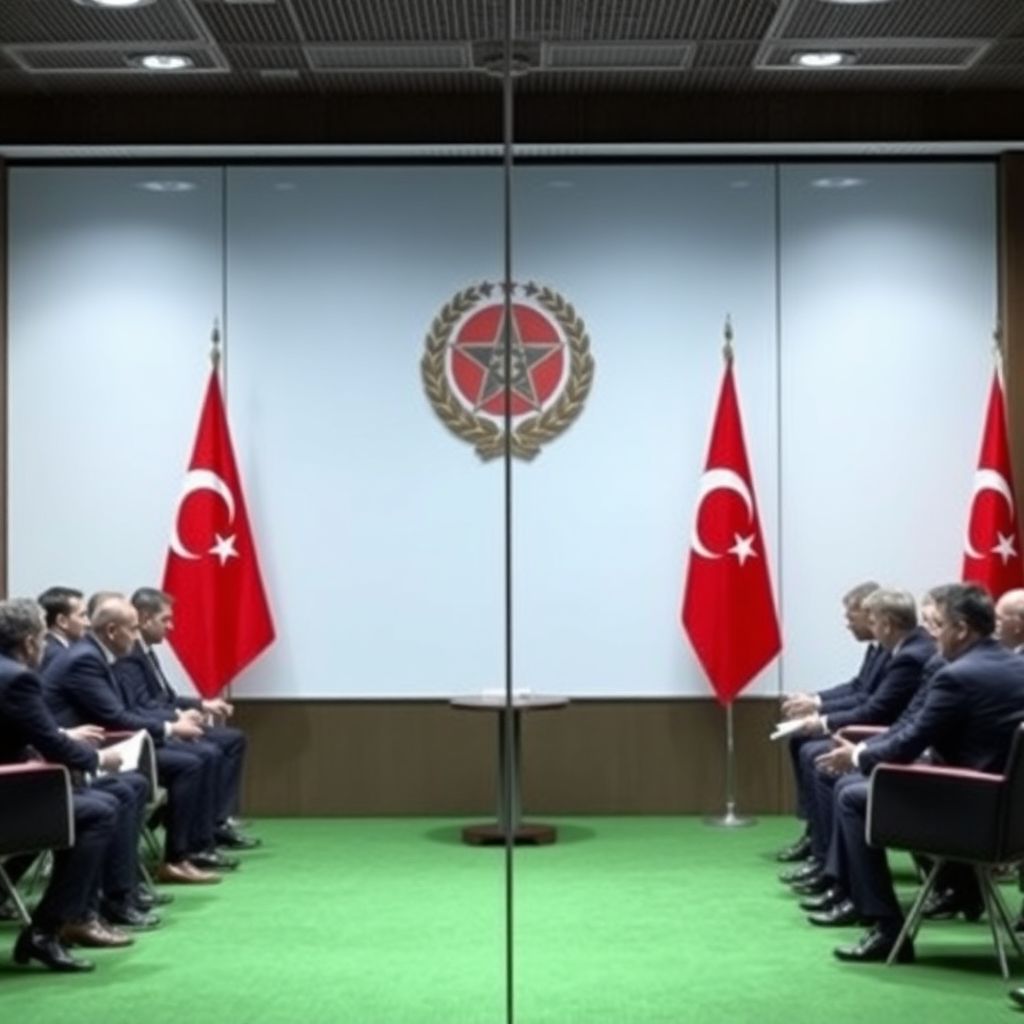
Election storm brewing in Turkish Football Federation
The calm that seemed to blanket Turkish football in recent months is rapidly giving way to a political tempest. In the wake of the national team’s World Cup campaign, calls for radical change inside the Turkish Football Federation (TFF) have resurfaced with unprecedented force. The opposition front within football circles has begun organizing to unseat the current TFF administration, led by president İbrahim Hacıosmanoğlu, and to push the federation toward an early election.
What initially looked like a purely political hareket is in fact rooted in a legal obligation. A definitive ruling by the Constitutional Court regarding the structure of the Arbitration Board, along with the demand to amend several articles in the federation’s statute, has put the TFF under direct pressure. The federation now has no choice but to convene a General Assembly to implement these mandatory statute changes.
This compulsory congress, however, is on the verge of turning into much more than a routine legal adjustment. A large group of clubs is preparing to transform the assembly into a full-scale electoral showdown. Their plan is clear: add an “election” clause to the congress agenda and use the platform as the stage for Hacıosmanoğlu’s exit.
Clubs losing patience
Behind the scenes, dissatisfaction with the current administration has been simmering for some time. Many clubs accuse Hacıosmanoğlu of using an excessively harsh and confrontational tone since his first day in office, a style they say has deepened existing fractures instead of healing them.
The discontent does not stop at rhetoric. Persistent criticism of the Central Refereeing Committee (MHK) and its performance has reached a chronic level. Club executives claim that controversial refereeing decisions have become routine, eroding trust in the system and damaging the credibility of domestic competitions. For them, the refereeing crisis is no longer an isolated problem but a symbol of a broader governance failure.
A major flashpoint is the “10+4 foreign player rule.” Many clubs have long demanded that this regulation be revised or completely restructured, arguing that the current framework hinders squad planning, market flexibility, and long-term sporting strategy. The perception that these demands are repeatedly ignored by the TFF has further strained relations between federation and clubs.
The latest public confrontation with Fatih Terim, popularly dubbed the “account” polemic, is widely seen as the moment the rope finally snapped. The tone and content of that dispute convinced many doubters that the relationship between the TFF leadership and a large section of the football establishment is beyond repair.
Galatasaray and Beşiktaş at the forefront
At the heart of the opposition stands a powerful axis: Galatasaray and Beşiktaş. These two traditional giants are leading the push for change, coordinating strategy and gathering support among other top-flight and lower-league clubs. Başakşehir has reportedly aligned itself fully with this bloc, strengthening the front that demands immediate elections.
Behind closed doors, an intense diplomacy traffic is underway. Club presidents have held a series of discreet meetings to map out the road to an early vote. Initially, a small group of clubs had argued that, under normal circumstances, the current administration still has a year left in its term and should be allowed to complete it. Yet the combination of sporting frustration, legal developments, and political missteps appears to have shifted the mood decisively. Most of the hesitant clubs are now said to have been persuaded; the dominant message in the corridors is “elections now.”
A new candidate waiting in the wings
While the TFF leadership officially insists on continuity, backstage preparations for a new era are already in full swing. Information leaking from the inner circles suggests that both the challenger’s name and his core team have largely been finalized.
Mustafa Eröğüt, who has been working with a professional group for roughly a year to design a comprehensive governance and football policy program, is expected to present himself as a candidate to run Turkish football. His project reportedly goes beyond a simple change of faces and aims to restructure decision-making processes, transparency standards, and the relationship between federation and clubs.
Eröğüt’s potential candidacy is being interpreted as a response to a growing demand for a more technocratic, less personalized management model. Supporters of this approach argue that Turkish football needs a long-term strategic plan built on institutional stability, modern governance, financial control, and youth development, rather than on short-term political maneuvers.
What the clubs really want
Behind the call for elections lie several concrete expectations that go beyond removing a single president:
– A more predictable and transparent refereeing system, with clearer criteria for appointments and sanctions.
– A foreign player regulation that balances competitiveness, local talent development, and European standards.
– Stronger financial oversight to prevent chronic debts and unsustainable spending.
– A merit-based approach to national team appointments and technical decisions, shielded from daily politics.
– A federation that listens to clubs not only during crises but as permanent partners in decision-making.
Clubs increasingly stress that without structural reforms, any change at the top risks becoming symbolic. They want guarantees that the next administration will commit to documented roadmaps, periodic public reporting, and open consultation mechanisms.
The legal clock is ticking
The turning point remains the Constitutional Court’s ruling on the Arbitration Board. The decision not only questions the current structure but also demands compliance with constitutional standards regarding independence and impartiality. This obliges the TFF to adapt its statutes in a clearly defined timeframe.
For the opposition, this legal necessity is the perfect legal and political lever. By insisting that the agenda of the mandatory General Assembly be expanded to include elections, they hope to transform a technical reform meeting into a referendum on the federation’s entire management style.
If the TFF attempts to limit the congress strictly to statute amendments, a new wave of tension is likely. In that scenario, clubs could resort to intensive lobbying, public statements, and even legal measures to force the inclusion of an electoral item.
Possible scenarios ahead
Several paths now lie in front of Turkish football:
1. Early elections during the statute congress:
The TFF agrees to add an election clause to the agenda. The congress turns into an open contest between Hacıosmanoğlu’s camp and the Eröğüt-led bloc, with the outcome redefining the direction of Turkish football.
2. Postponed but inevitable elections:
The federation pushes the elections to a later date while carrying out only the legally mandated statute changes. However, growing pressure from clubs may make it impossible to reach that later date without further crises.
3. Deepening institutional conflict:
If the TFF leadership resists both early elections and broader reforms, the relationship with major clubs could deteriorate to breaking point, threatening the unity and governance capacity of Turkish football.
Impact on the national team and domestic football
All these developments unfold under the long shadow of the national team’s World Cup performance. Results on the pitch have become both the trigger and the justification for the current political upheaval. For many stakeholders, the national team’s trajectory reflects deeper structural problems: inconsistent long-term planning, unstable technical management, and a federation more focused on daily firefighting than on strategic development.
Domestically, uncertainty at the top also affects transfer planning, broadcasting deals, and sponsorship negotiations. Clubs need clarity on key regulations – especially the foreign player quota and financial controls – before they can fully shape their budgets and sporting strategies for the coming seasons. Prolonged ambiguity could turn an already tense atmosphere into a full-blown crisis.
What comes after change?
Even if the opposition succeeds and a new administration takes over, Turkish football will still be facing a demanding agenda. Rebuilding trust among clubs, referees, players, and fans will require more than new names on the federation letterhead.
Concrete steps being discussed in football circles include:
– Establishing an independent refereeing supervisory body with representation from multiple stakeholders.
– Introducing clear performance benchmarks for all key officials within the TFF.
– Developing a unified youth development strategy, aligning club academies, school programs, and national teams.
– Strengthening dialogue platforms between the federation, clubs, coaches, and players to ensure continuous feedback rather than sporadic crisis talks.
A decisive season for Turkish football governance
The wind of change is now blowing strongly through the corridors of the Turkish Football Federation. What began as a legal necessity around the Arbitration Board has evolved into a broad-based challenge to the current power structure.
With Galatasaray, Beşiktaş, and their allies pushing hard for an immediate vote, and a prepared candidate like Mustafa Eröğüt waiting to step into the arena, Turkish football is entering one of the most politically charged periods in its recent history.
Whether this storm will clear the air and usher in a new era, or plunge the game into deeper instability, will depend on how the TFF leadership and the clubs manage the coming weeks. One thing, however, is already clear: the era of quiet acceptance is over, and Turkish football is bracing for a decisive showdown at the ballot box.