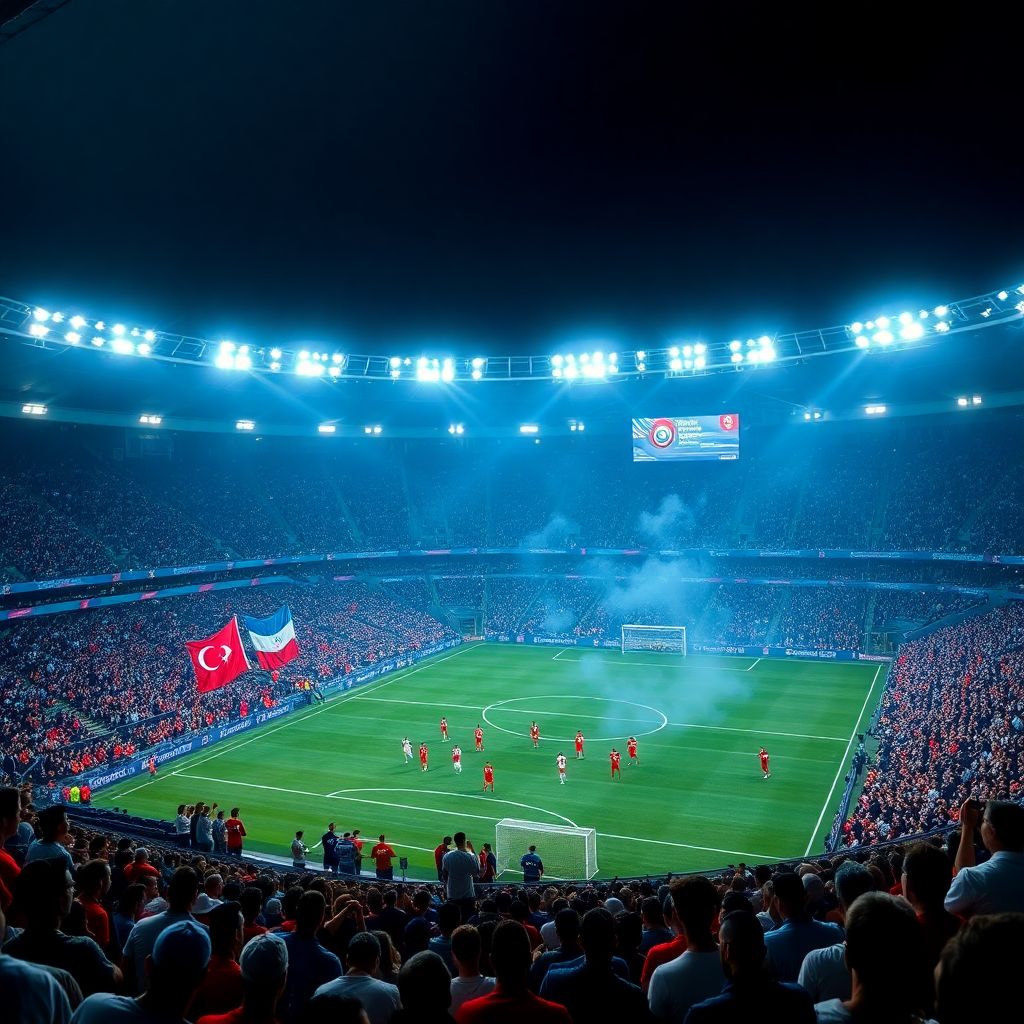
World Cup tomorrow: National Team ready to take the stage
The 2026 World Cup journey continues at full speed, and tomorrow the tournament schedule features five matches that could reshape the standings. Among them, all eyes in Turkey will be on the clash between the Turkish National Team and Paraguay – a duel that carries both psychological and tactical importance on the road to the knockout stages.
Turkey vs Paraguay: critical exam on the world stage
The national team steps onto the pitch against Paraguay with growing confidence but also with a clear awareness of the pressure. After inconsistent performances in the last major tournaments, this World Cup is seen as a turning point for a generation that wants to leave a permanent mark.
Paraguay, however, arrives with a chip on its shoulder. In the days leading up to the match, the South American camp has been shaken by accusations of “fakery” and internal controversy, yet this turmoil hasn’t stopped some of their players and staff from making bold and provocative statements about Turkey. They have promised an aggressive, high-tempo game and haven’t hesitated to speak “big words” about their chances, adding extra spice to an already tense encounter.
Montella’s defiant stance: “More Turkish than those who want to harm”
Head coach Vincenzo Montella, clearly fired up before the Paraguay match, sent strong messages both to his critics and to his players. Emphasising that he feels deeply connected to the country and the team, he said in essence: “I feel more Turkish than those who want to damage this environment.”
With this statement, Montella underlined that he stands behind his choices and his squad, and that the focus should be on unity and performance, not on off-pitch noise. Inside the dressing room, his words are seen as a rallying cry: the message is that the team must respond on the field, not in front of microphones.
Yunus Akgün’s admission: “We disappointed”
One of the clearest and most honest voices in the camp has been Yunus Akgün. The winger openly admitted that in previous tournaments and key qualifiers, the team failed to meet expectations: “We disappointed,” he confessed, summing up the feelings of many fans.
This candid admission, however, has been turned into a source of motivation. Within the squad, the players have made it a point to prove that they have learned from past mistakes – whether it’s tactical naivety, mental breakdowns under pressure, or the inability to finish games they started well. The Paraguay match is seen inside the camp as a test of maturity: can this team finally show it has grown?
Next stop: Germany – but only if Paraguay falls
In strategic planning, the Turkish camp is already quietly talking about the potential showdown with Germany, a footballing superpower and one of the favorites of the tournament. Yet everyone knows that looking too far ahead can be dangerous.
Paraguay is the immediate obstacle, and only with a convincing performance tomorrow can Turkey carry the necessary momentum into a likely clash with Germany. Winning is not just about three points; it is about sending a message to future opponents that this team is no longer the fragile side of previous tournaments but a serious contender that can withstand pressure and answer physically and tactically.
Kaan Ayhan provides stability: “Final word” in defence
At the back, Kaan Ayhan has emerged as one of the most important pillars of the team. His calmness on the ball, reading of the game and versatility have made him indispensable. Coaches and teammates alike underline that he often “puts the final word” in defensive situations – whether through precise interceptions, crucial clearances or well-timed tackles that stop attacks before they become truly dangerous.
In a tournament where even a single defensive mistake can change the course of a campaign, Ayhan’s experience and composure will be vital, especially against a physically strong and direct Paraguay side that loves to attack crosses and second balls.
Ersin Destanoğlu’s double signature: security for the future
While attention is on the World Cup, the clubs continue to shape their futures. Goalkeeper Ersin Destanoğlu has made headlines with a “double signature” – extending his contract while also agreeing new terms that secure both his own future and that of his club.
This move is seen as a sign that Turkish clubs are trying to avoid losing key assets on free transfers and are focusing more on long-term planning. For the national team, having a goalkeeper developing in a stable club environment can only be an advantage in the medium and long term.
Galatasaray’s drive: Ali Koç as unexpected motivation
At Galatasaray, one of the hottest talking points has been the psychological dimension of the rivalry with Fenerbahçe. Interestingly, club figures have hinted that Fenerbahçe president Ali Koç has become a “motivation factor” for them. Every statement, every move from the rival camp is carefully noted and turned into extra fuel inside Galatasaray’s dressing room.
Head coach Okan Buruk even made a historic admission, suggesting that certain periods in his managerial career, previously glossed over, played a critical role in shaping his current mentality. He has acknowledged mistakes and turning points in his past that prepared him for today’s pressure cooker environment.
Dursun Özbek’s message: stability above all
Galatasaray president Dursun Özbek continues to emphasise one word: stability. After years of turbulence, frequent coaching changes and unstable squads, the club leadership believes that continuity is the key to long-term success.
Özbek’s statements underline that rapid, reactionary decisions are no longer on the agenda. Instead, the focus is on keeping the technical staff, preserving the core of the team and building step by step. This policy is also meant to create a calmer environment around the players so they can concentrate on performance rather than politics.
Transfer summit: Buruk and Kavukcu work on the future
Behind closed doors, Okan Buruk and sporting management figure Mehmet Kavukcu have been holding a series of “transfer summits”. The aim is clear: to create a squad that can compete not only domestically but consistently in Europe too.
Profiles discussed include:
– A dynamic central midfielder who can contribute both defensively and offensively
– A winger with one-on-one ability to break down low blocks
– A defender comfortable in build-up play, reducing risk when playing out from the back
The priority is to avoid expensive mistakes and to sign players who can immediately adapt to the club’s footballing philosophy.
Fenerbahçe’s midnight signature: drama in the small hours
On the other side of the city, Fenerbahçe has been working the phones into the night. A “midnight signature” has reportedly been secured, with the deal kept under wraps until final details are resolved. The secrecy of the transfer and the timing – in the dead of night – has naturally stirred speculation.
Leaked comments around the deal suggested that if one of the parties had “jumped on it earlier”, the situation would never have escalated into such a dramatic late-night race. This underscores how fiercely contested the transfer market is, with rival clubs ready to intervene until the very last minute.
Transfer plans torn up: Fenerbahçe back to the drawing board
Despite that secretive signing, Fenerbahçe has also had to rip up some of its earlier blueprints. Several primary targets have either chosen different destinations or failed to agree on financial terms, meaning the original transfer strategy has “gone into the bin”.
This forced U-turn has compelled the club to:
– Re-evaluate scouting reports
– Turn to alternative lists of players
– Consider younger, more developmental signings instead of established stars
While this can be seen as a setback, some within the club view it as an opportunity to pursue a more sustainable squad-building model.
Asensio and Talisca: no return on the horizon
Among the names that have long been linked with Turkey are Marco Asensio and Anderson Talisca. However, the latest indications are that neither player is close to returning. Despite repeated rumours, neither has taken the dramatic steps that other stars once did – such as the memorable case of Skriniar, who pushed hard to force a transfer.
Negotiations and financial demands have proved to be major obstacles. The message from their camps is that they are not ready to “do what Skriniar did”, in other words to dramatically sacrifice personal comfort or guaranteed income just to sign for one of the Istanbul giants.
Galatasaray’s “perception wars” and Fenerbahçe’s bonuses
In the media sphere, there is constant talk of “perception wars” surrounding Galatasaray. Every refereeing decision, every disciplinary sanction, every comment from club officials is dissected and repackaged, sometimes in a way that shapes public opinion more than the facts on the pitch.
On the Fenerbahçe side, questions keep arising about player bonuses. Fans want to know whether promised incentive schemes have been honoured, particularly after big wins or critical derbies. The management, aware that motivation is often closely tied to financial trust, has to balance budget discipline with the need to reward performances and keep the dressing room happy.
Chain reaction in the transfer market: Pavlidis to Beşiktaş, Icardi to Benfica?
The summer market is also witnessing a potential chain reaction. One scenario being seriously discussed is Vangelis Pavlidis moving to Beşiktaş, which in turn could trigger Mauro Icardi’s departure to a European giant like Benfica.
Such a sequence of moves wouldn’t just change the balance of power in the domestic league, it would also redefine the attacking hierarchies of all clubs involved. Beşiktaş would gain a lethal finisher, while Galatasaray would lose its primary goal source – but free up a large salary to reinvest.
Greenwood on the radar: 55 million euro minimum
Mason Greenwood’s name has re-entered the transfer conversation with strong financial parameters attached. The new offers being spoken about start from a minimum of 55 million euros, setting a clear “floor” for negotiations.
While this fee makes the deal nearly impossible for Turkish clubs under current financial constraints, the fact that his name is still linked to wider transfer plans indirectly affects the market. When a top attacking talent is priced that high, other forwards and wingers instantly become more attractive and relatively more affordable.
Greenwood, image and risk: why big clubs hesitate
Behind the scenes, major European clubs are not only discussing Greenwood’s price tag but also the potential risk to their brand and image. Even those who believe in his footballing ability are aware that any decision around him would be scrutinised in detail.
This hesitation pushes clubs to re-check their strategy: is it wiser to invest huge money and accept PR risks, or to spread that budget across several less controversial signings? The answer to this question could determine not only Greenwood’s future but also the trajectory of multiple other attackers on the market.
Mexico perfect so far – but the critics are loud
In the World Cup itself, Mexico has started with two wins from two, a perfectly efficient record on paper. However, their football has come under heavy fire. Despite “getting the job done”, fans and pundits have criticised what they perceive as sterile possession and lack of attacking imagination.
In one of their matches, sections of the crowd even booed the team, frustrated by the slow build-up play and apparent fear of taking risks. This tension highlights a recurring theme in international football: sometimes winning isn’t enough if the way you win clashes with the expectations and traditions of your supporters.
Canada’s big win and Qatar’s hard edge
Another standout story has been Canada’s explosive victory, putting six goals past their opponent. Amid all the celebration, there was also a sombre moment: Kone’s injury. Described by observers as a “bone-breaking” challenge, it led to tears on the pitch and concern about his long-term health.
Qatar, meanwhile, has been labelled “bone-breaking Qatar” by some due to the physical nature of its play. Harsh tackles and aggressive marking have drawn criticism, with many arguing that referees must protect creative players better or risk seeing more serious injuries.
Aykut Kocaman, Aziz Yıldırım and missed opportunities
In the retrospective part of the football conversation, the name Aykut Kocaman keeps resurfacing. Questions like “Why didn’t it work out?” and “How did he drive Aziz Yıldırım crazy?” are once again being debated.
The narrative is that a combination of internal politics, clashing visions and mounting pressure prevented a potentially long-term project from flourishing. Kocaman’s conservative style, which can look cautious to fans, sometimes clashed with the club’s desire for more flamboyant football and immediate success. As pressure rose, small disagreements turned into unbridgeable gaps.
Between Kocaman and İsmail Kartal: the missing bridge years
Right after Aykut Kocaman and just before İsmail Kartal, there was a transitional period at Fenerbahçe characterised by instability. Frequent changes in coaching staff, confusion in transfer policies and the push-and-pull between long-term planning and short-term demands all left scars.
These “missing bridge years” are now viewed as a lesson. The club leadership is trying to avoid repeating that pattern: instead of creating yet another cycle of boom and bust, they want to build a more coherent identity, from academy to first team.
What tomorrow means for Turkish football
Tomorrow’s World Cup fixture against Paraguay is not just 90 minutes; it’s a symbolic test of where Turkish football stands. On the pitch, the national team must show tactical discipline, composure under pressure and the ability to turn emotion into controlled aggression. Off the pitch, clubs are wrestling with transfers, financial realities and perception battles.
If Turkey can combine the national team’s success with smarter, more stable club management and a more realistic approach to the transfer market, the next few years could herald a real step forward. A convincing performance against Paraguay would not only bring them closer to a potential showdown with Germany, it would also offer much-needed belief to a footballing public hungry for both results and identity.